
Why Are Family Trips Morocco So Unique for Families?
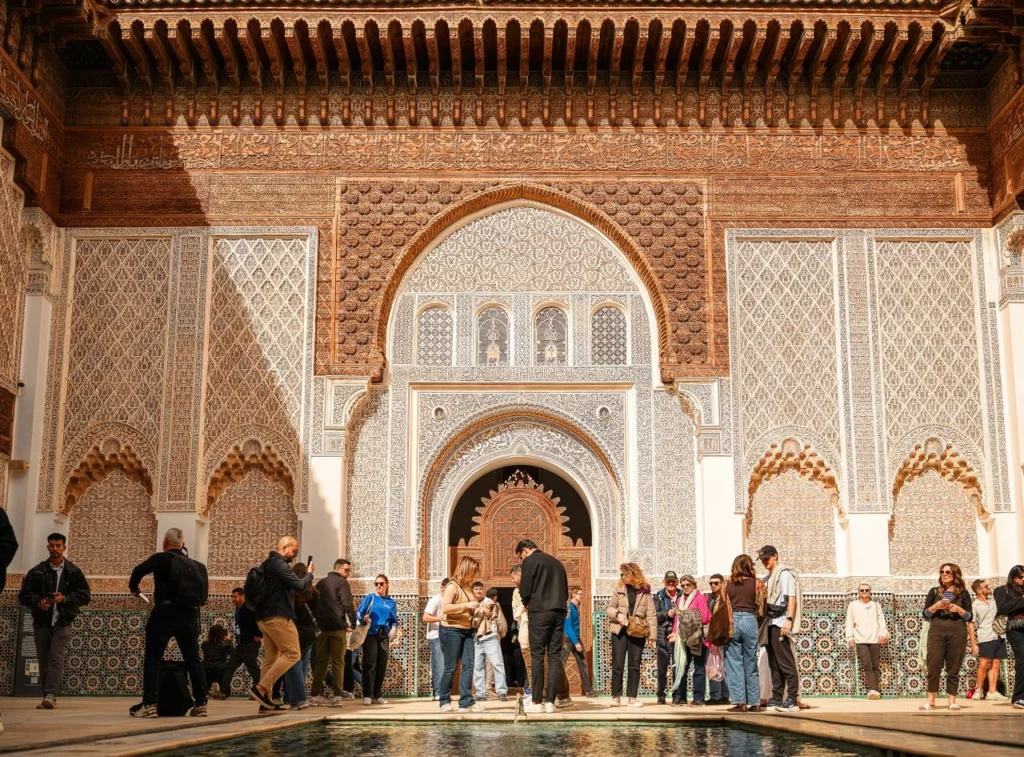
Many destinations entertain children. Morocco teaches them something deeper. That is why family trips Morocco create stronger memories than many standardized resort vacations. Families who travel across Morocco quickly notice that the country does not feel artificial or disconnected from daily life. Streets remain alive. Markets still function traditionally. Villages preserve old agricultural rhythms. Artisans continue using handmade techniques passed through generations. For children, this becomes more than a holiday. It becomes direct contact with another way of living. Morocco offers experiences that combine discovery, education, outdoor adventure, and human connection. A child can ride a camel in the Sahara, learn how bread is baked in an Amazigh village, watch fishermen unload sardines on the Atlantic coast, and explore medieval streets older than many European cities — all during the same journey. Parents also appreciate the diversity of landscapes and activities. Few countries allow families to move so easily between beaches, mountains, imperial cities, deserts, and green valleys within relatively short distances. The country’s cultural richness makes travel educational without feeling academic. Children learn naturally through observation, conversation, food, architecture, and movement. They hear different languages. They discover new environments. They meet local children in medinas, villages, and coastal towns. These interactions often become the most meaningful part of the trip. Unlike mass tourism destinations built mainly around entertainment infrastructure, family trips Morocco remain connected to living culture and local identity. Why Morocco Works So Well for Family Travel Family Trips Morocco and Climate Diversity One reason many families choose family trips Morocco is the country’s geographic diversity. Morocco contains multiple climate zones shaped by the Atlantic Ocean, the Mediterranean, the Atlas Mountains, and the Sahara Desert. This diversity allows families to travel comfortably during most of the year. The Atlantic coast remains mild even during summer because ocean winds regulate temperatures naturally. Cities such as Essaouira and Agadir rarely experience extreme heat compared to inland regions. Mountain areas in the High Atlas provide cooler temperatures during warmer months. Families often combine Marrakech with nearby mountain valleys to balance climate and activity levels. Spring and autumn remain especially pleasant for longer itineraries. During these seasons, families can comfortably explore: without severe weather conditions. This environmental variety explains why Morocco supports different travel styles within one itinerary. Is Morocco Safe for Families? Safety remains one of the first concerns for parents organizing international travel. Morocco continues to rank among the most visited countries in Africa and receives millions of international visitors annually. Large cities such as: contain well-developed tourism infrastructure including: Moroccan hospitality also shapes the travel experience strongly. Academic studies on North African social traditions often describe hospitality as a central cultural value across both urban and rural communities. Families traveling through Morocco frequently notice how warmly local people interact with children. In villages, medinas, cafés, and coastal towns, children naturally become points of connection between travelers and local communities. Unlike highly individualistic tourism environments, Morocco still maintains strong public social interaction. Streets, squares, markets, and cafés remain active gathering spaces where daily life happens openly. For many children, this social atmosphere becomes fascinating because it differs strongly from more isolated urban lifestyles elsewhere. Family Trips Morocco and Cultural Learning Travel becomes more meaningful when children learn through direct experience instead of passive observation. Morocco functions almost like an open-air cultural classroom. Walking through a medina introduces families to: Children see artisans working manually with: In cities such as Fes, traditional production methods still survive inside the old medina. Tanneries continue using centuries-old leather techniques. Potters shape clay manually. Carpenters carve cedar wood using traditional geometric patterns. These experiences expose children to forms of labor and craftsmanship rarely visible in modern industrial societies. Food also becomes educational during family trips Morocco. Moroccan cuisine reflects centuries of Amazigh, Arab, Andalusian, Jewish, African, and Mediterranean influences. Children discover: Cooking workshops often become one of the most interactive family activities because they combine storytelling, sensory discovery, and participation. Imperial Cities and Historical Discovery Family Trips Morocco Through Living History Morocco’s imperial cities offer something increasingly rare in modern tourism: urban continuity. In cities such as Marrakech and Fes, medieval urban structures still organize daily life. Children walking through these cities do not simply observe monuments isolated behind barriers. They move through living historical environments where: This immersion creates a stronger connection with history than traditional museum visits alone. Marrakech introduces families to southern Morocco’s commercial history. Founded by the Almoravids during the 11th century, the city connected caravan trade routes crossing the Sahara with northern Morocco and Al-Andalus. The red walls, palm groves, gardens, and markets create an environment full of movement and color. Younger travelers often become fascinated by: Meanwhile, adults appreciate the historical layers visible through architecture and urban organization. Fes offers a different atmosphere. The city developed as Morocco’s intellectual and spiritual center. Its medina remains one of the largest pedestrian urban zones in the world. Families exploring Fes discover: The city encourages slower exploration and deeper observation. Atlas Mountains and Amazigh Villages Family Trips Morocco Beyond Tourism Centers Many families discover their most authentic memories outside major cities. The Atlas Mountains reveal another Morocco shaped by Amazigh agricultural traditions and mountain village life. In valleys near: children observe farming systems adapted to steep terrain and seasonal water management. Stone villages blend naturally into mountain landscapes. Terraced agriculture still supports local communities. Families often participate in: These activities feel authentic because they remain connected to real daily life rather than staged performances. Children also interact naturally with village kids through football games, shared meals, or simple curiosity. These moments often become more memorable than organized attractions. The slower rhythm of mountain life helps families disconnect from screens and constant stimulation. Nature becomes part of the travel experience directly. Sahara Desert Experiences for Families Family Trips Morocco and Desert Geography For many children, seeing the Sahara for the first time becomes unforgettable. The desert creates a completely different environmental experience compared to cities or coastlines. Silence, open space, and changing
Moroccan Riad History, Architecture and Hidden Life
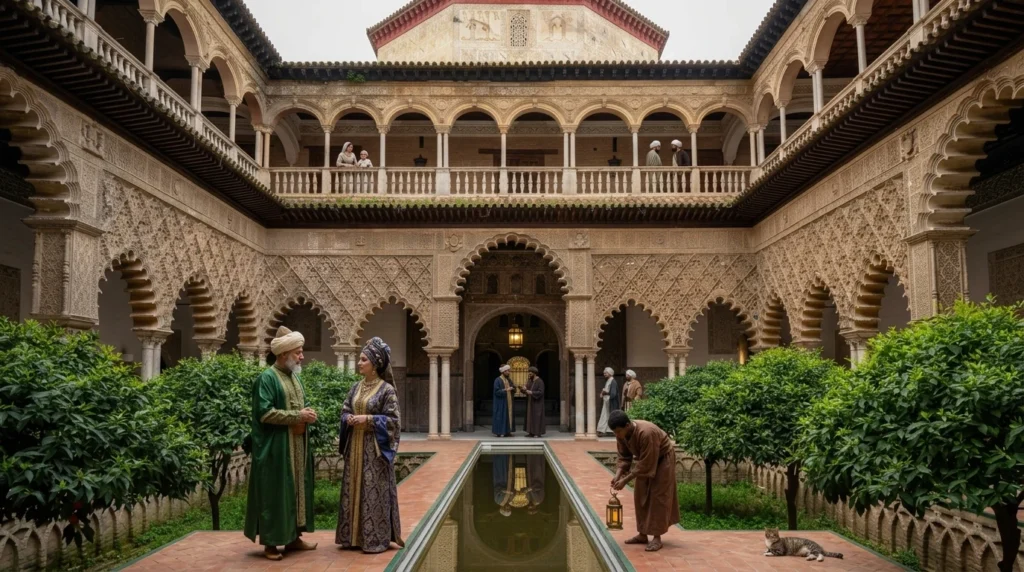
TRAVEL TIPS Moroccan Riad History, Architecture and Hidden Life Uncategorized May 23, 2026 authentiquetours Moroccan Riad History, Architecture and Hidden Life Uncategorized (9) Popular Posts Moroccan Riad History, Architecture and Hidden Life Moroccan Dynasties History: Amazigh Kingdoms and Imperial Cities Moroccan Kasbahs Architecture, and Rich History Ultimate Marrakech Historical City Guide You will probably read the word “riad” many times before visiting Morocco. Every travel guide mentions riads. Hotels use the term everywhere. Social media presents riads as symbols of luxury and exotic design. Yet many travelers still do not really understand what a riad is or why it became such an important part of Moroccan urban culture. That’s why I will Try to talk about Moroccan Riad history, architecture, its role through the time and differente other related sides. The study of Moroccan riad history reveals much more than beautiful decoration. Riads explain how Moroccan cities functioned socially, climatically, and architecturally for centuries. These homes protected family privacy, regulated interior temperatures, and reflected social organization inside medieval medinas. Unlike modern hotels, riads originally served as private urban residences for wealthy families, merchants, scholars, and political elites. Their architecture developed slowly through the influence of Amazigh construction traditions, Islamic urban planning, and Andalusian artistic heritage. Today, riads attract travelers searching for authentic experiences. However, their true historical role remains far deeper than tourism marketing. Understanding Moroccan riad history helps explain the structure of Morocco’s imperial cities and the cultural values that shaped daily life behind medina walls. Moroccan Riad History and the Meaning of Interior Space A riad is a traditional Moroccan house organized around a central courtyard. The word “riad” comes from the Arabic word ryad, meaning garden. This garden forms the heart of the house. Most riads contain: The architecture focuses inward rather than outward. Exterior walls usually appear simple and closed. Windows facing the street remain small or limited. The beauty exists inside the home. This design reflects important cultural and environmental principles. In traditional Moroccan society, family life remained private. The house protected intimacy from the busy streets of the medina. At the same time, the courtyard improved ventilation, light, and thermal comfort. Academic researches on Amazigh and Mediterranean urbanism explains that inward-focused homes became common because they responded efficiently to climate and social organization. In cities such as Fes and Marrakech, dense urban neighborhoods required architecture that balanced privacy with environmental adaptation. Origins of Riads in Morocco The development of riads in Morocco accelerated between the 11th and 15th centuries. This period coincided with the rise of dynasties such as the Almoravids, Almohads, and Marinids. These dynasties expanded major urban centers and strengthened commercial and intellectual networks across North Africa and Al-Andalus. Many historians connect the evolution of riad architecture to Andalusian migration after the Christian Reconquista in Spain. Muslim and Jewish families arriving from cities such as Cordoba, Seville, and Granada brought advanced artistic and architectural traditions to Morocco. These influences merged with local Amazigh construction methods and Moroccan urban traditions. The result created the classic riad style known today. The oldest riads appeared mainly in wealthy districts close to mosques, markets, and political centers. Merchants, judges, scholars, and administrative elites often occupied these homes. Their social position influenced the size and decoration of the riads they built. Climate Intelligence in Traditional Riads One of the most remarkable aspects of Moroccan riad history involves environmental adaptation. Riads function as natural climate systems designed centuries before modern air conditioning. The central courtyard creates airflow inside the house. Thick walls reduce heat transfer during summer. Fountains and vegetation increase humidity and freshness. Shaded galleries protect rooms from direct sunlight. This architectural intelligence becomes especially important in inland cities where temperatures rise significantly during summer months. In Marrakech, for example, traditional riads remain noticeably cooler than many modern concrete buildings. Researchers studying sustainable architecture increasingly analyze riads because they demonstrate passive cooling strategies based entirely on spatial organization and local materials. The inward design also reduced noise from crowded medina streets. Once the entrance door closed, the interior became calm, quiet, and protected from outside activity. Difference Between a Riad and a Hotel Modern tourism often confuses riads with boutique hotels. Historically, however, riads were private family homes rather than commercial accommodations. A traditional riad differs from a standard hotel in several ways. Hotels prioritize: Riads prioritize: Traditional riads rarely contain long corridors or large public lobbies. Rooms open directly toward the courtyard. This organization creates a more intimate atmosphere. Riads also differ from ordinary medina houses. Wealthier families usually occupied riads because they required larger plots of land and expensive decorative craftsmanship. Many riads included: These artistic elements reflected the social and economic status of the family living inside the house. Moroccan Riad History and Elite Families The social history of riads reveals the structure of traditional Moroccan urban society. Riads generally housed: Their position inside medinas allowed direct access to commercial and intellectual life. Large families often lived together around the same courtyard. Several generations shared different floors and rooms while remaining connected through the central patio. The organization of interior spaces reflected social customs. Reception salons near entrances welcomed male guests and business visitors. Private family areas remained deeper inside the residence. Women also played an important role in riad life. The inward architectural design allowed domestic and social activities to develop privately while maintaining natural light and open space. Where Riads Exist in Morocco Riads exist mostly inside Morocco’s historic medinas, especially in imperial cities shaped by dynastic power and urban growth. The largest concentrations appear in: Each city developed its own architectural variations according to climate, political role, and available materials. Fes and Intellectual Urbanism Fes contains one of the oldest and largest medinas in the world. Riads in Fes often reflect intellectual prestige and religious influence. Many families connected to scholarship and administration occupied these residences. The architecture emphasizes refined decoration, carved woodwork, and dense urban integration. Marrakech and Commercial Power Marrakech developed as a commercial capital connected to trans-Saharan trade
American Legation Tangier History and Morocco–US Relations
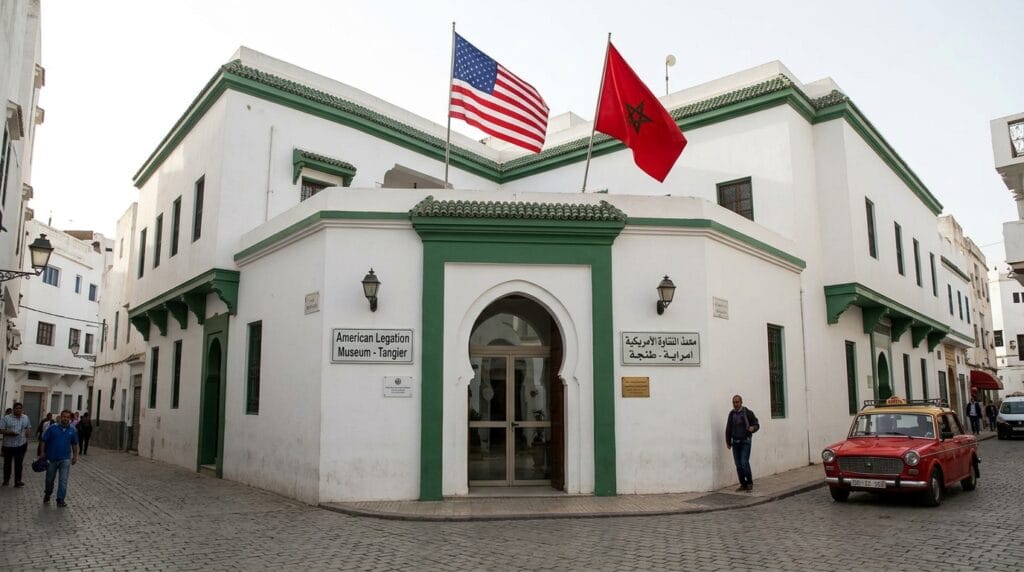
Before talking about the American Legation Tangier History, it is important to mention that the city is one of the most fascinating places in Morocco. For centuries, it connected Africa, Europe, and the Mediterranean world. Traders, diplomats, explorers, and empires all passed through this coastal city. At the center of this international history stands the American Legation. The building is one of the most important diplomatic landmarks in Morocco. It also represents a unique chapter in American history. The American Legation became the first overseas property owned by the United States government. The story of the Legation is closely tied to Tangier’s strategic location and Morocco’s early relationship with the United States. This article explores the American Legation Tangier history, the rise of Tangier as an international city, and the origins of Moroccan-American diplomacy. A Brief History of Tangier Tangier is among the oldest cities in North Africa. Its history stretches back more than two millennia. Many civilizations controlled the city because of its strategic position near the Strait of Gibraltar. The Phoenicians first developed trading activity in the region. Later, the Carthaginians and Romans expanded the city’s influence. During Roman rule, Tangier was known as Tingis. It became an important administrative center in Roman North Africa. In the 7th century, Muslim dynasties brought Tangier into the Islamic world. The city became linked to Andalusia, the Mediterranean basin, and trans-Saharan trade routes. Tangier later attracted European powers. Portugal occupied the city in the 15th century. In 1661, Tangier passed to England through a royal marriage alliance. The British abandoned Tangier in 1684 after pressure from Sultan Moulay Ismail. The city then returned to Moroccan authority. During the 18th and 19th centuries, Tangier grew into a major diplomatic and commercial center. Foreign powers established consulates and trade offices there because of the city’s geopolitical importance. Today, Tangier remains one of Morocco’s most historic and international cities. American Legation Tangier History and the Strategic Importance of Tangier Tangier occupies one of the most strategic locations in the world. The city overlooks the Strait of Gibraltar, where the Atlantic Ocean meets the Mediterranean Sea. Only a short distance separates Morocco from southern Spain. This narrow maritime corridor became essential for trade, military power, and diplomacy. For centuries, Tangier controlled access between: Its position made the city attractive to empires and commercial powers. Merchant ships traveling between continents often passed near Tangier. Caravan routes from sub-Saharan Africa also connected to the city’s port. Products transported through Tangier included: Because of this strategic importance, several nations sought diplomatic influence in Tangier. The United States understood this geopolitical value very early. This explains why the city became central to the American Legation Tangier history. Morocco and the United States: A Historic Diplomatic Friendship The relationship between Morocco and the United States began shortly after American independence. In 1777, Sultan Sidi Mohammed Ben Abdallah officially recognized the United States of America. Morocco became one of the first countries to recognize the new American republic. This recognition happened only one year after the American Declaration of Independence. At that time, the United States was still searching for international legitimacy. Morocco’s decision carried diplomatic and economic importance. The Moroccan Sultan wanted to encourage peaceful trade and maritime cooperation with the United States. In 1786, both nations signed the Moroccan-American Treaty of Friendship. The treaty established: Today, this agreement remains one of the oldest active diplomatic treaties in American history. This friendship later led to the creation of the American Legation in Tangier. Why the United States Opened the American Legation in Tangier During the 18th and 19th centuries, diplomatic missions were often called legations instead of embassies. Tangier became an ideal location for an American diplomatic presence. The city already hosted several foreign consulates and international representatives. The United States needed a secure diplomatic center in North Africa to: Tangier’s coastal position also allowed easier communication with Europe and the Atlantic world. In 1821, Sultan Moulay Suleiman officially gifted a building in Tangier to the United States government. This diplomatic gift symbolized the friendship between Morocco and America. The building became the American Legation and entered diplomatic history as the first overseas property owned by the United States. This moment remains central to the American Legation Tangier history. The American Legation Building in Tangier The American Legation is located inside Tangier’s historic medina. The building combines Moroccan architectural traditions with diplomatic history. Over time, the property expanded through renovations and nearby acquisitions. The complex includes: The architecture reflects the international character of Tangier while preserving Moroccan artistic traditions. Unlike modern embassies, the American Legation feels intimate and cultural. The structure resembles a traditional Moroccan riad. Today, the building serves several purposes: It remains one of the most important landmarks connected to the American Legation Tangier history. The Diplomatic Role of the American Legation For decades, the American Legation served as the center of American diplomacy in Morocco. Diplomats working there managed: Tangier’s international environment gave the Legation additional strategic value. During the late 19th and early 20th centuries, several European powers competed for influence in Morocco. Diplomats in Tangier closely monitored international developments. The Legation became an important point of contact between Morocco and the United States during periods of political transformation. It also strengthened long-term cooperation between both nations. Tangier as an International Diplomatic City Tangier became famous worldwide for its international atmosphere. During the 19th and 20th centuries, the city attracted: Its strategic location and multicultural identity transformed Tangier into a cosmopolitan center. Several famous cultural figures spent time in Tangier, including: The city developed a reputation for intellectual exchange and international culture. The American Legation became part of this unique diplomatic environment. American Legation Tangier History Through Museum Collections Today, the American Legation preserves important collections linked to Moroccan-American relations. Visitors can discover: One exhibition explains the Moroccan-American Treaty of Friendship. Another explores the diplomatic history of Tangier. The museum also highlights Morocco’s multicultural heritage and international connections. Researchers consider the Legation an important academic
Ultimate Marrakech Historical City Guide
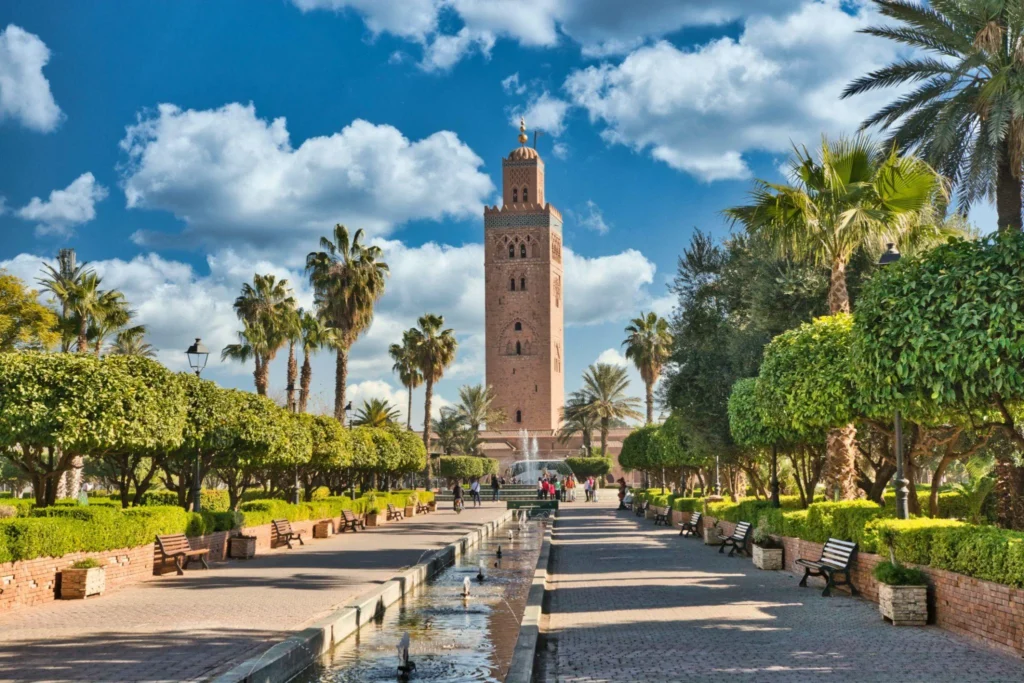
Discover the Heart of Morocco’s Imperial Red City Marrakech is one of Morocco’s most famous destinations. Known as the Red City, it combines history, architecture, culture, and trade in one vibrant place. As one of Morocco’s four imperial cities, Marrakech played a major role in shaping the country’s political and economic history. This Marrakech historical city guide explores the city’s origins, its walls and gates, its economic importance, and its most famous monuments, including the Koutoubia Mosque, Menara Gardens, El Badi Palace, and Bahia Palace. History and Foundation of Marrakech Marrakech was founded between 1070 and 1072 by the Almoravid dynasty. The city was created by Abu Bakr ibn Umar, a leader of the Almoravids, who chose this area because of its strategic position near caravan trade routes between the Sahara and northern Morocco. The city quickly became an important political and military center. The Almoravids built mosques, markets, homes, and defensive structures. Marrakech later became the capital of a vast empire that extended across North Africa and into Muslim Spain. Because of its location, Marrakech became a meeting point for merchants, scholars, and travelers. Gold, salt, leather, spices, and textiles passed through the city from sub-Saharan Africa and the Mediterranean world. Today, the city remains one of the most important destinations in any Marrakech historical city guide. Political and Economic Importance of Marrakech For centuries, Marrakech was one of the most powerful cities in Morocco. Under the Almoravids and later the Almohads, it served as the political capital of large empires. The city was not only a center of government. It was also a major economic hub. Trade caravans crossed the Sahara and brought wealth to Marrakech. The city’s markets became famous for crafts, textiles, leather goods, metalwork, and spices. During the Saadian dynasty in the 16th century, Marrakech reached another golden age. Wealth from trade and diplomacy funded large palaces, gardens, and mosques. Even after the capital moved to other cities, Marrakech remained an important commercial center. Its traditional souks still support thousands of artisans today. This long economic history is a key part of every Marrakech historical city guide. Marrakech Walls and Gates: Purpose and Defense One of Marrakech’s most famous features is its red defensive walls. These walls stretch for nearly 19 kilometers around the old medina. The walls were mainly built during the 12th century under the Almoravid ruler Ali ibn Yusuf. They were designed to protect the city from attacks and control access to the medina. The walls were made from local red clay and lime, which gave Marrakech its nickname: The Red City. Several historic gates still stand today: Bab Agnaou Bab Agnaou is one of the most beautiful gates in Marrakech. Built during the Almohad period in the late 12th century, it served as the ceremonial entrance to the royal Kasbah district. Bab Doukkala This gate connected Marrakech with routes leading toward northern Morocco. It was an important entrance for travelers and merchants. Bab el-Khemis This gate became famous for trade and weekly markets. Merchants and caravans used it to enter the city. The walls and gates helped protect political power, economic wealth, and the population of Marrakech. They remain an essential part of the city’s identity and any Marrakech historical city guide. The Three Main Parts of Marrakech Modern Marrakech can be divided into three main areas. Each one reflects a different period of the city’s history. 1. The Medina The medina is the historic center of Marrakech. It is filled with narrow streets, traditional houses, markets, and historic monuments. This area contains the famous souks, Jemaa el-Fna square, and many old riads. The medina is also a UNESCO World Heritage Site. The medina represents the traditional heart of Marrakech and remains central to every Marrakech historical city guide. 2. The Kasbah District The Kasbah was the political and royal area of Marrakech. It included palaces, administrative buildings, and military structures. This district contains important monuments such as: The Kasbah symbolized royal authority and imperial power. 3. Ville Nouvelle (New City) The Ville Nouvelle was developed during the French Protectorate in the 20th century. Unlike the medina, this area has: Today, neighborhoods like Gueliz and Hivernage are part of this modern side of Marrakech. Iconic Historical Sites of Marrakech Koutoubia Mosque The Koutoubia Mosque is the most famous monument in Marrakech. Built during the 12th century by the Almohads, it became a symbol of the city. Its minaret rises about 77 meters high and can be seen from many parts of Marrakech. The mosque is known for: The name “Koutoubia” comes from the Arabic word for booksellers because many manuscript sellers once worked nearby. The Koutoubia Mosque influenced later Islamic monuments, including the Giralda in Seville. Today, it remains one of the top attractions in every Marrakech historical city guide. Menara Gardens The Menara Gardens were created during the Almohad period in the 12th century. The gardens were designed as: At the center is a large water basin connected to underground irrigation systems that brought water from the Atlas Mountains. The famous pavilion near the basin was added later and became one of Marrakech’s most photographed landmarks. The Menara Gardens show how nature, engineering, and architecture worked together in medieval Morocco. El Badi Palace The El Badi Palace was built in the late 16th century by the Saadian Sultan Ahmad al-Mansur. The palace celebrated his victory at the Battle of the Three Kings in 1578. El Badi was once one of the most luxurious palaces in Morocco. It included: Although much of the palace was later destroyed, its ruins still show the scale of Saadian wealth and ambition. Today, visitors can walk through the enormous courtyards and imagine the palace’s former glory. Bahia Palace The Bahia Palace was built during the 19th century and represents Moroccan art at its finest. It was constructed by Si Moussa and expanded by his son Ba Ahmed, a powerful grand vizier. The palace includes: The name “Bahia” means brilliance or beauty. Unlike El Badi
Moroccan Dynasties History: Amazigh Kingdoms and Imperial Cities
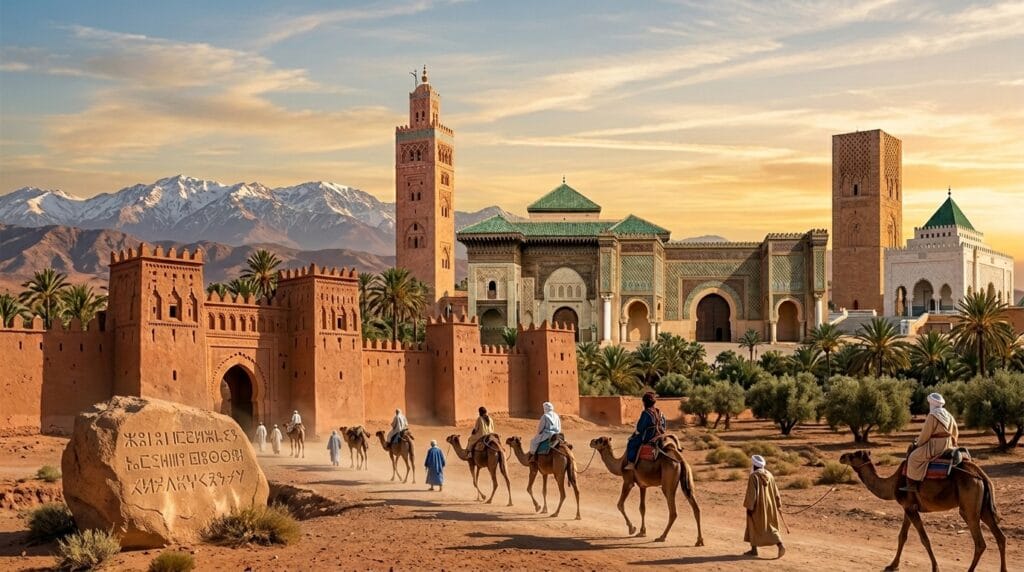
More Than 3000 Years of Moroccan History The study of Moroccan dynasties history reveals one of the oldest continuous political and cultural traditions in North Africa. Archaeological discoveries at sites such as Jebel Irhoud show human presence in Morocco dating back hundreds of thousands of years. Organized societies later emerged through Amazigh kingdoms, Phoenician trade networks, Roman influence, and Islamic states. Morocco’s political history as a kingdom extends for more than twelve centuries, while the cultural roots of its populations go back over 3000 years. Morocco was originally inhabited by Amazigh populations, often called Berbers in older historical literature. The term “Amazigh” means “free people.” Long before the arrival of Arab dynasties or Islamic expansion, Amazigh tribes organized political systems, trade routes, and agricultural societies across the Atlas Mountains, the Sahara, and Mediterranean regions. Academic research on the medieval Maghrib identifies the Almoravids, Almohads, Marinids, and several later dynasties as indigenous Amazigh powers that shaped Morocco and much of western Islamic civilization. Unlike many regions where dynasties disappeared entirely, Morocco preserved a continuous monarchy through successive ruling houses. Each dynasty transformed cities, architecture, trade systems, and political institutions. The imperial cities of Fes, Marrakech, Meknes, and Rabat still reflect the ambitions of these ruling families. The Idrisid Dynasty and the Birth of the Moroccan State Moroccan Dynasties History and the Foundation of Fes The Idrisid dynasty marked the beginning of the first Moroccan Islamic state. Idris I, born around 745 CE, founded the dynasty in 788 CE after fleeing Abbasid persecution in the Middle East. He established authority among Amazigh tribes in northern Morocco and created the foundations of a centralized kingdom. His son, Idris II, born in 791 CE, expanded the kingdom and founded the city of Fes in 808 CE. Fes quickly became an intellectual, religious, and commercial center. Its position near caravan and agricultural networks allowed the city to grow into one of the most important capitals in the Islamic West. The Idrisids ruled approximately from 788 to 974 CE. During this period, Morocco developed independent political institutions distinct from Abbasid control. The dynasty also encouraged the migration of scholars, craftsmen, and merchants from Al-Andalus and Ifriqiya. These movements shaped the urban and cultural identity of Fes. The city became famous for the University of Al Quaraouiyine, founded in 859 CE by Fatima al-Fihri. Historians often describe it as one of the oldest continuously operating universities in the world. The intellectual role of Fes emerged directly from Idrisid political stability and urban planning. The Almoravid Dynasty: Amazigh Expansion and the Foundation of Marrakech Moroccan Dynasties History and the Rise of Marrakech The Almoravid dynasty emerged during the 11th century among Sanhaja Amazigh tribes in the Sahara and southern Morocco. The dynasty began as a religious and political reform movement before transforming into a major empire extending across Morocco and Al-Andalus. Academic studies describe the Almoravids as one of the first major Amazigh imperial powers in western Islamic history. Yusuf Ibn Tashfin, born around 1009 CE, became the most important Almoravid ruler. In 1070 CE, the Almoravids founded Marrakech as their capital. The city’s location near Atlas trade routes allowed control over trans-Saharan commerce linking gold, salt, and textiles. The Almoravids ruled from approximately 1040 to 1147 CE. During this period, they unified large parts of Morocco and crossed into Iberia to confront Christian kingdoms. Their victory at the Battle of Sagrajas in 1086 temporarily slowed Christian expansion in Al-Andalus. Marrakech became the symbol of Almoravid authority. The dynasty developed irrigation systems, mosques, markets, and defensive walls. The city also gave Morocco its international name in many European languages, derived from “Marrakesh.” Architecturally, the Almoravids expanded the use of rammed earth construction, geometric decoration, and monumental urban planning. They reinforced the role of Marrakech as a commercial capital linking Europe, sub-Saharan Africa, and the Mediterranean. The Almohad Dynasty and the Imperial Transformation of Morocco Moroccan Dynasties History and the Almohad Revolution The Almohad dynasty emerged in the 12th century among Masmuda Amazigh tribes of the High Atlas Mountains. Ibn Tumart, born around 1080 CE, founded the ideological basis of the movement. After his death, Abd al-Mu’min transformed the movement into a vast empire stretching from Libya to Spain. The Almohads ruled from approximately 1121 to 1269 CE. Historians consider them one of the most powerful medieval Islamic empires. Their administration centralized political authority more strongly than previous dynasties. The Almohads transformed several imperial cities. In Marrakech, they expanded palaces, mosques, and fortifications. They also developed Rabat as an imperial project. Sultan Yaqub al-Mansur, born around 1160 CE, ordered the construction of the Hassan Tower around 1195 CE. The unfinished mosque complex reflected the dynasty’s ambition to create one of the largest Islamic monuments in the western Mediterranean. The Almohads also built: Their architecture emphasized symmetry, monumental proportions, and refined geometric decoration. Economically, the Almohads controlled Mediterranean and Atlantic trade routes. Their navy became one of the strongest in the medieval western Mediterranean. Their currency circulated widely across Europe and North Africa. The Marinid Dynasty and the Intellectual Age of Fes Moroccan Dynasties History and the Marinid Cultural Renaissance The Marinids, another Amazigh Zenata dynasty, rose to power after the decline of the Almohads. They ruled Morocco approximately from 1244 to 1465 CE. Abu Yahya ibn Abd al-Haqq, born in the early 13th century, helped establish Marinid political control. However, Sultan Abu al-Hasan Ali, born around 1297 CE, became one of the dynasty’s most powerful rulers. The Marinids chose Fes as their capital and transformed it into the intellectual center of Morocco. They built madrasas, mosques, fountains, and caravanserais throughout the city. Among the most important Marinid constructions: Marinid architecture became famous for extremely refined decoration in: Academic studies identify the Marinid period as one of the high points of western Islamic decorative arts. The Marinids also attempted to preserve Muslim territories in Iberia by supporting Granada against Castilian expansion. However, internal divisions and external pressure gradually weakened the dynasty. The Wattasid Dynasty and the Portuguese Pressure Moroccan
Family Trips Morocco: Best Destinations for All Ages
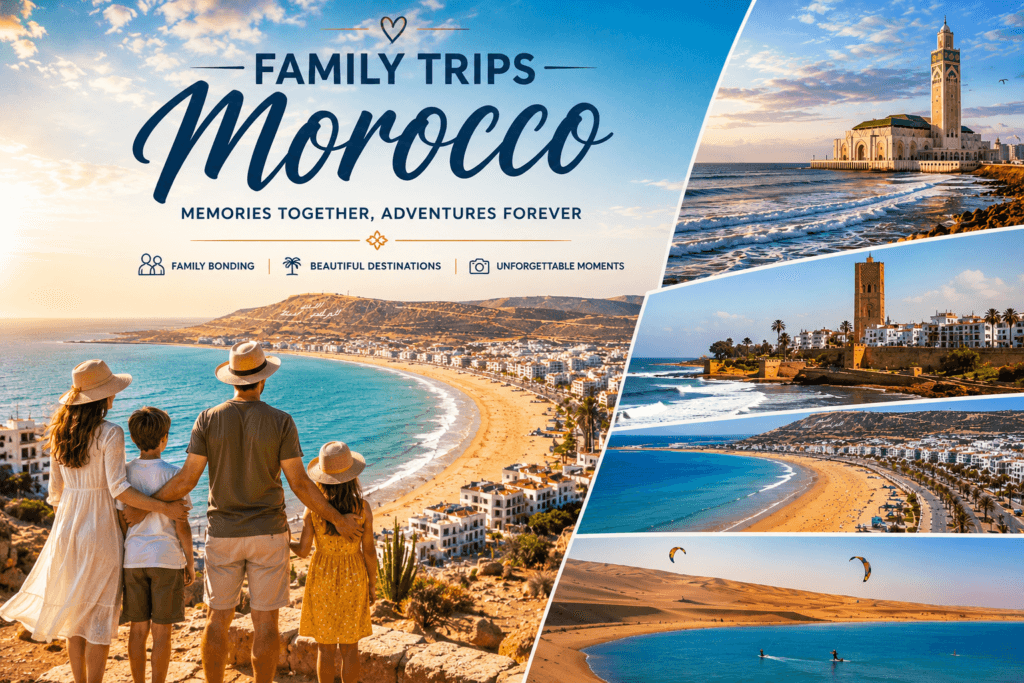
Family Trips Morocco: Safe, Educational and Authentic Adventures Planning family trips Morocco offers much more than a simple vacation. Morocco combines history, nature, culture, and outdoor activities within relatively short travel distances. Families can explore imperial cities, Atlantic beaches, mountain valleys, and desert landscapes during the same journey. This diversity creates an experience that remains both entertaining and educational for children and adults. Morocco also benefits from a strategic geographic position between Europe and Africa. Major international airports connect the country to many global destinations, making travel relatively accessible for families. The climate varies by region and season, allowing visitors to choose between coastal relaxation, mountain exploration, or desert discovery throughout the year. Unlike destinations focused only on resorts or entertainment parks, family trips Morocco encourage cultural learning through architecture, crafts, food traditions, and local history. Markets, kasbahs, medinas, and natural landscapes become open-air classrooms where children discover new environments directly through experience. Why Morocco Is a Good Destination for Families Safety and Stability for Travelers One of the main concerns for parents is safety. Morocco remains one of the most visited countries in Africa and receives millions of international travelers every year. International travel reports and publications such as World Tourism Organization regularly identify Morocco as a major tourism destination with developed tourism infrastructure. Large tourist areas such as Marrakech, Agadir, and Tangier offer: As in any destination, travelers should remain attentive in crowded areas, but Morocco generally offers a stable environment for organized family travel. Diverse Landscapes in One Country One major advantage of family trips Morocco is geographic diversity. Families can experience: within the same itinerary. Children often enjoy changing environments during travel. A journey can begin in a busy medina, continue through mountain villages, and end beside the Atlantic Ocean. This constant variation helps maintain curiosity and engagement throughout the trip. Family Trips Morocco: Educational Value of Traveling in Morocco Travel in Morocco introduces families to centuries of history and cultural exchange. Children discover: Museums, medinas, kasbahs, and archaeological sites create opportunities for interactive learning outside school environments. Food also plays an important role. Cooking classes and local markets help children understand spices, ingredients, and culinary traditions. Marrakech and the Atlas Region for Families Marrakech: A City of Colors and Discovery, One Of The Best Family Trips Morocco Marrakech offers one of the most dynamic experiences for family trips Morocco. Founded in the 11th century by the Almoravids, the city historically served as a commercial and political center connecting sub-Saharan trade routes with northern Morocco. Families often enjoy the sensory atmosphere of the medina. The streets contain: The city also includes educational historical sites such as: These monuments help families understand Moroccan architecture and dynastic history. Family Activities Around Marrakech The region surrounding Marrakech provides many outdoor activities suitable for children and parents. Families can enjoy: Air balloons mule riding in the Atlas Mountains cooking workshops pottery experiences gardens and parks camel rides In areas near the High Atlas, children discover mountain agriculture, terraced farming, and Amazigh village life. Places such as Terres d’Amanar combine adventure parks with ecological education. Activities include zip lines, climbing, and nature workshops. The Sahara Desert: Adventure and Cultural Learning Why the Desert Fascinates Families The Moroccan desert creates one of the most memorable experiences during family trips Morocco. The transition from cities to dunes introduces children to completely different landscapes and lifestyles. Regions near Merzouga and the Erg Chebbi dunes allow families to: The desert environment also teaches children about adaptation to extreme climates and water management. Educational Aspects of Desert Travel Middle Morocco and the Atlas Landscapes Forests, Mountains and Cooler Weather Middle Morocco offers a different environment compared to southern desert regions. Areas around: feature cedar forests, lakes, and mountain landscapes. Families traveling with children often appreciate the cooler climate, especially during summer. Wildlife and Nature Discovery The cedar forests around Azrou contain populations of Barbary macaques. Children often enjoy observing wildlife in natural environments. Mountain landscapes also support: This region adds ecological diversity to family trips Morocco. Agadir and Atlantic Coast Family Trips Morocco Relaxed Coastal Atmosphere Agadir offers one of the most family-friendly beach environments in Morocco. After the 1960 earthquake, the city was rebuilt with modern urban planning and wide avenues. Families appreciate: The mild Atlantic climate makes Agadir suitable throughout much of the year. Activities for Families in Agadir Children and parents can enjoy: Nearby areas such as Taghazout introduce families to surf culture and fishing traditions. Essaouira: Coastal Culture and Artistic Heritage Essaouira offers a calmer atmosphere than larger cities. Founded in the 18th century as a strategic Atlantic port, the city combines Moroccan and European urban planning. Families enjoy: The medina remains relatively accessible compared to denser urban centers. Children often enjoy watching fishermen unload catches or observing traditional boat construction near the port. Northern Morocco for Families Tangier: Gateway Between Continents Tangier occupies a strategic location between Europe and Africa. Families visiting the city discover how geography influenced trade, diplomacy, and migration. Attractions include: Its mix of Mediterranean and Atlantic influences creates a unique atmosphere. Tetouan and Andalusian Heritage Tetouan reflects strong Andalusian influence due to migration from Spain after the Reconquista. Its medina contains white houses, narrow streets, and artisan workshops. Families interested in architecture and history often appreciate the city’s calmer atmosphere. Chefchaouen: The Blue Mountain Town Chefchaouen attracts families through its mountain setting and blue-painted streets. Located in the Rif Mountains, the city provides: Children often enjoy exploring the blue alleyways and small squares. The surrounding mountain environment also supports outdoor activities and nature discovery. Moroccan Food and Family Experiences Food plays a major role during family trips Morocco. Traditional dishes such as: introduce children to new flavors and culinary traditions. Cooking workshops allow families to participate directly in preparing meals. These activities combine entertainment with cultural learning. Best Seasons for Family Trips Morocco Morocco’s climate varies by region. Spring and Autumn Ideal for: Summer Best for: Winter Good for: This climatic diversity allows families to travel
Moroccan Kasbahs Architecture, and Rich History
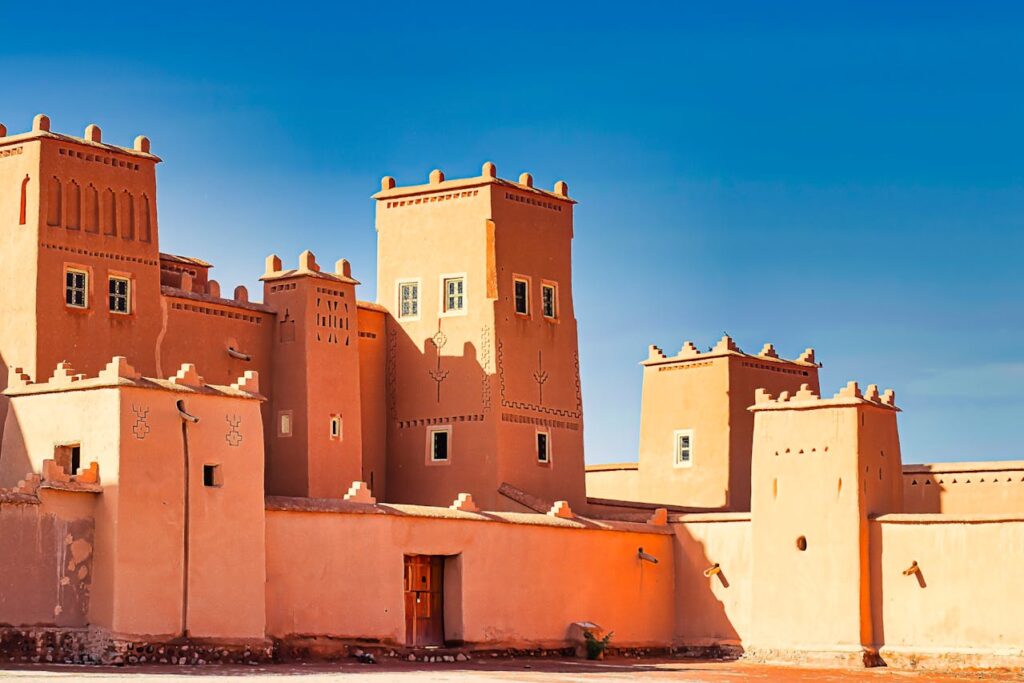
Moroccan Kasbah Architecture, Materials, Techniques and History The study of Moroccan kasbahs architecture reveals a deep connection between environment, society, and construction techniques. Kasbahs are not simply buildings. They are systems shaped by climate, local materials, and historical needs. These structures appear mostly in southern Morocco, especially in pre-Saharan regions, where communities adapted to harsh conditions through intelligent design. Unlike monumental stone architecture found in imperial cities, kasbahs rely on earth. Builders used what the land provided. They transformed soil into walls, palm trunks into roofs, and geometry into defense. This architecture reflects a balance between function and environment. It also reflects social organization, where power, protection, and trade intersect. To understand kasbahs, one must examine how they are built, where they exist, and why they played such an important role in Moroccan history. What Is a Kasbah? A kasbah is a fortified residence, often associated with local leaders or powerful families. It differs from a ksar, which refers to a fortified village. While ksour group multiple families within defensive walls, kasbahs usually serve as private strongholds or administrative centers. These structures often rise above surrounding landscapes. They stand near oases, valleys, or strategic routes. Their placement allows control over movement, resources, and trade. In many regions, kasbahs acted as both homes and symbols of authority. Construction Materials: Building from the Earth Moroccan kasbahs rely on earthen construction techniques, especially rammed earth, also known as pisé or tabia. This method uses compacted soil mixed with water and organic materials such as straw. Builders collected soil directly from the surrounding area. They selected mixtures based on local composition. Clay provided cohesion. Sand reduced cracking. Straw improved flexibility. In some regions, lime was added to increase durability and resistance. The process followed several steps: This technique created thick walls, often exceeding one meter at the base. Mudbrick also appeared in some kasbahs. Builders shaped bricks from clay and dried them in the sun. These bricks formed structural and decorative elements. Wood played a secondary but essential role. Palm trunks and cedar beams supported roofs and ceilings. Reeds and branches filled gaps and added flexibility. The result was a structure entirely integrated into its environment. The color of the kasbah matched the surrounding land because it came from that land. Thermal Intelligence and Environmental Adaptation Kasbah construction reflects a deep understanding of climate. Thick earthen walls act as natural insulation. They absorb heat during the day and release it slowly at night. This process keeps interiors cool in summer and warm in winter. Builders also designed small windows to reduce heat exposure. Courtyards allowed air circulation. Towers captured wind and improved ventilation. These features show how architecture responded to environmental constraints without modern technology. The use of earth also created breathable walls. Unlike concrete, earthen materials regulate humidity. This improves indoor comfort and preserves structural stability. Structural Design and Defensive Features Kasbahs were built with defense in mind. Their design reflects constant concern for security. Most kasbahs include: These features allowed inhabitants to monitor movement and respond to threats. The towers often display geometric decoration. These patterns serve both aesthetic and symbolic purposes. They also reinforce structural stability by distributing weight. Inside, the layout follows a hierarchical organization. Lower levels store goods and animals. Upper levels house living spaces. Rooftops provide observation points. Interior Architecture and Decorative Elements While the exterior appears austere, the interior of kasbahs can be highly refined. Some kasbahs include: In examples like Kasbah Taourirt, interiors show influence from imperial architecture. Rooms feature intricate ornamentation, combining functionality with artistic expression. Ceilings often use reed frameworks covered with earth or plaster. This technique reduces weight while maintaining insulation. It also reflects local craftsmanship and available materials. Geographic Distribution of Kasbahs in Morocco Kasbahs appear mostly in southern Morocco. They concentrate in regions where environmental and historical conditions required fortified structures. Draa Valley The Draa Valley contains one of the highest concentrations of kasbahs. Thousands once lined this oasis corridor. This region connected trans-Saharan trade routes with northern cities. Kasbahs here controlled access to water, land, and trade goods. Dadès and Todra Valleys These valleys feature kasbahs built along river systems. Their position allowed control over agricultural land and movement through narrow passages. Ouarzazate and Surroundings This region became a major center for kasbah construction. Famous examples such as Aït Benhaddou illustrate large-scale fortified settlements linked to trade routes. Skoura Oasis The Skoura palm grove hosts numerous kasbahs integrated into agricultural landscapes. These structures combine defense with resource management. High Atlas Foothills Kasbahs also appear in mountain regions. Here, they serve as defensive residences and administrative centers controlling access between regions. Role in Trade and Economic Systems Kasbahs played a key role in Morocco’s historical trade networks. Many stood along routes connecting the Sahara with northern cities. Caravans transported goods such as: Kasbahs provided protection and storage. They also acted as checkpoints where goods were taxed or controlled. Their strategic placement allowed local leaders to influence trade flows. This economic role reinforced their political power. Political and Social Role Kasbahs functioned as centers of authority. They housed local leaders, known as caïds or tribal chiefs. These figures controlled land, resources, and populations. The architecture reflects this hierarchy. Larger kasbahs indicate greater power. Their scale and decoration signal status and influence. Kasbahs also served administrative functions. They hosted meetings, stored records, and organized defense. In many regions, they became symbols of governance. Kasbahs and Dynastic Influence During different historical periods, Moroccan dynasties influenced construction techniques. The Almoravids and Almohads expanded the use of rammed earth in large-scale architecture. They applied these techniques to walls, fortifications, and cities. Later dynasties continued this tradition while introducing decorative elements. This continuity shows how kasbah architecture evolved while maintaining its core principles. Relationship Between Kasbahs and Ksour Kasbahs often exist alongside ksour. While kasbahs represent individual authority, ksour represent collective organization. A ksar includes: A kasbah may stand within or near a ksar. It acts as a center of control within the larger settlement. This
Morocco Atlantic Coast: History, Culture and Landscapes
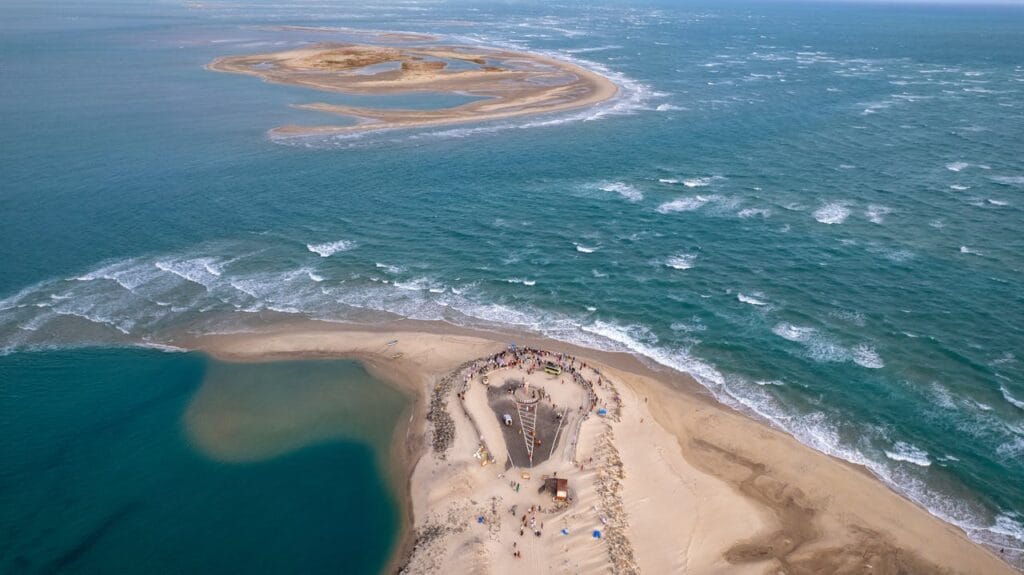
Discover Morocco’s coastline from Tangier to Dakhla through ocean systems, history, and coastal life The Morocco Atlantic coast extends for more than 1,000 kilometers along the western edge of North Africa. It stretches from the Strait of Gibraltar in the north to the desert lagoon systems in the south. This coastline has shaped Morocco’s economic, cultural, and environmental history for centuries. Unlike inland regions, coastal areas developed through interaction with the ocean, maritime trade, and ecological systems. Geographers and historians explain that coastal regions often act as interfaces between land-based societies and global exchange networks. In Morocco, this role appears clearly along the Atlantic shoreline. Ports, fishing settlements, and coastal cities grew in response to ocean conditions, trade routes, and political strategies. The Atlantic coast therefore offers a different perspective on Moroccan identity, one defined by movement, exchange, and adaptation. Geographic Structure and Ocean Systems The Morocco Atlantic coast forms part of the eastern boundary of the Atlantic Ocean. It includes a wide variety of landscapes. Rocky cliffs dominate the northern sections, while sandy beaches and lagoons appear further south. Arid coastal plains emerge as the coastline approaches the Sahara. Oceanographic research highlights the influence of the Canary Current, a cold ocean current that flows southward along the northwest African coast. This current reduces sea surface temperatures and creates nutrient-rich upwelling systems. These systems support marine ecosystems and sustain fishing industries. They also shape climate conditions along the coast. The presence of upwelling explains why the ocean remains relatively cool even in summer. It also explains the abundance of fish species such as sardines and mackerel. These natural conditions influenced where people settled and how they organized economic activity. Historical Development of the Atlantic Coast The Morocco Atlantic coast has long connected inland regions to maritime networks. Archaeological evidence suggests that early populations used natural harbors for navigation and exchange. Phoenician traders and later Roman settlements established points along the coast to facilitate trade. During the Islamic period, coastal towns became part of broader trade systems linking the Sahara, the Mediterranean, and the Atlantic. Goods moved across the desert and reached ports where they could travel further by sea. This created a dynamic relationship between inland routes and coastal markets. From the 15th century onward, European powers established fortified positions along the coast. Portuguese influence appears in several coastal cities. These interventions introduced new architectural forms and defensive structures. In later centuries, coastal cities expanded as commercial ports. Infrastructure development reinforced their economic importance and integrated them into global trade systems. Northern Coastal Cities and Maritime Exchange Tangier occupies a unique geographic position at the meeting point of the Atlantic Ocean and the Mediterranean Sea. This location gave the city a central role in maritime exchange and diplomacy. Its function as a gateway between Europe and Africa shaped its identity. The city developed a diverse urban structure influenced by multiple cultures. Its architecture reflects both local traditions and external influences. The presence of international communities over time reinforced its role as a contact zone between continents. Further south, Rabat combines coastal geography with political autority. The city developed as an administrative center while maintaining a strong connection to the ocean. Its urban organization reflects planned development rather than organic growth. Wide avenues and structured districts contrast with traditional medinas. Coastal fortifications and historical sites demonstrate how rulers used the coastline for defense and control. Rabat’s role as a capital highlights the continued importance of the Atlantic coast in modern governance. Casablanca represents the economic core of the Morocco Atlantic coast. The city developed into the country’s main port and industrial hub. Its growth reflects the integration of Morocco into global economic systems. The port handles large volumes of trade, linking Morocco to international markets. The urban landscape shows modern infrastructure and large-scale development. Casablanca’s characteristics illustrate how coastal cities can transform into economic engines while maintaining their maritime foundations. Central Coast and Planned Port Cities Essaouira offers a different example of coastal development. Founded in 1765 by Sultan Mohammed III, the city was designed as a strategic port. European engineers contributed to its layout, creating a structured grid pattern combined with traditional Moroccan elements. Its role as a trade hub connected inland regions to Atlantic routes. Strong winds, caused by Atlantic atmospheric systems, shape daily life and influence economic activities such as fishing and wind-based sports. The city’s architecture, with fortified walls and open spaces, reflects both defensive needs and commercial functions. Moving south, coastal lagoons and smaller settlements appear. These areas support fishing communities that depend on marine ecosystems. The lagoon systems provide sheltered environments for marine life and human activity. Local economies revolve around fishing, small-scale trade, and resource management. These settlements illustrate how people adapt to specific environmental conditions along the Morocco Atlantic coast. Argan Landscapes and Coastal Adaptation Between Essaouira and Agadir, the coastline intersects with argan tree ecosystems. The argan tree is endemic to Morocco and adapted to semi-arid coastal environments. Its deep root system allows it to survive in dry conditions while stabilizing soil and preventing erosion. Local communities developed agricultural systems around this tree. Argan oil production became an important economic activity. This relationship between environment and human activity shows how coastal regions support unique forms of adaptation. The presence of argan landscapes adds another layer to the diversity of the Morocco Atlantic coast. Southern Transition Morocco Atlantic Coast: From Coastal Plains to Desert Systems Southern Atlantic Coast: From Agadir to the Sahara South of Agadir, the coastline becomes more arid and less densely populated. The landscape shifts gradually from coastal plains to desert environments. Despite these dry conditions on land, the Atlantic Ocean remains highly productive due to strong upwelling systems that support marine life. Sidi Ifni: Colonial Heritage and Coastal Life Sidi Ifni reflects a period of Spanish colonial presence in the 20th century. Its urban layout shows modernist planning with wide streets and administrative buildings. The city acts as a coastal outpost where maritime activity connects with regional governance.
Morocco Imperial Cities: History, Architecture & Powe
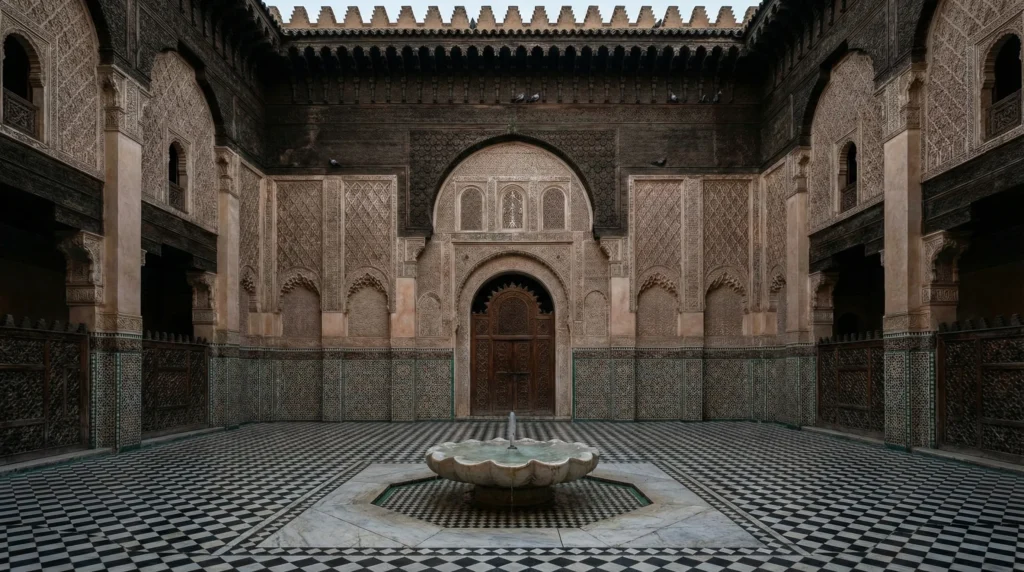
What Are The Morocco Imperial Cities? The Morocco imperial cities form the backbone of the country’s historical and political identity. These cities; Fes, Marrakech, Meknes, and Rabat—served as capitals under different dynasties from the 8th century to modern times. Each city reflects a distinct phase in Moroccan state formation, urban planning, and architectural development. Rulers did not choose these cities randomly. They built them to secure power, control trade, organize religion, and defend territory. Their locations follow strategic routes between mountains, deserts, and coastal plains. Over time, these cities became centers of governance, knowledge, commerce, and military control. This article explores the Morocco imperial cities through historical context, architectural forms, and urban functions, using academic perspectives on how cities evolve under political authority. What Defines the Morocco Imperial Cities? The term “imperial city” refers to cities that served as political capitals under ruling dynasties. Morocco has four: Each city reflects a specific political strategy: Urban historians emphasize that Moroccan imperial cities follow Islamic urban planning principles: Fes – Intellectual, Spiritual and Urban Complexity Founded between 789 and 808, Fes stands as the oldest of the Morocco imperial cities. Idris I and Idris II established it as a political and religious center. Historical Role Fes became the intellectual capital of Morocco. Scholars, jurists, and theologians gathered here. The city hosted one of the earliest universities in the Islamic world, the University of al-Qarawiyyin, founded in 859. Fes controlled trade routes linking: Dynasties such as the Marinids reinforced its role by building madrasas and religious institutions. Architecture Fes developed organically. The medina, Fes el-Bali, remains one of the largest and most complex medieval urban systems. Builders used: Architecture focused on interior space. Houses open inward to courtyards. Streets remain narrow to reduce heat and provide shade. Medina Structure The medina divides into functional zones: This organization reflects a guild-based economic system. Mellah and Royal Protection The Jewish quarter (mellah) in Fes developed later near the royal palace. Authorities placed it there to ensure protection under the Sultan. This proximity also allowed economic interaction between Jewish merchants and royal administration. Characteristics Fes represents knowledge, religion, and continuity. Marrakech – Trade, Power and Monumental Visibility Founded in 1062 by the Almoravids, Marrakech emerged as a strategic capital linking desert trade and northern regions. Historical Role Marrakech became the economic engine of Morocco. It connected trans-Saharan trade routes that transported: Under the Almohads, Marrakech expanded into a political capital controlling parts of North Africa and Al-Andalus. Architecture Marrakech introduced monumental architecture. Builders used: The city earned the name “Red City.” Major structures include: Urban Design Unlike Fes, Marrakech features: The famous Jemaa el-Fnaa developed as a central market and social space. Mellah and Royal Proximity The mellah in Marrakech developed near the royal palace during the Saadian period. Authorities placed it there for protection and administrative control. Jewish communities played key roles in trade and diplomacy. Characteristics Marrakech reflects power through visibility and economic influence. Meknes: Military Authority and Controlled Urban Design Meknes became an imperial capital in the 17th century under Sultan Moulay Ismail (1672–1727). Historical Role Moulay Ismail aimed to centralize authority and create a strong state. He built Meknes as a military and administrative capital. The city housed: Architecture Meknes stands out for its planned urban design. Builders constructed: Materials include: Construction relied on large labor forces and centralized planning. Urban Structure The city separates: This reflects a controlled urban model, unlike the organic layout of Fes. Mellah and Protection System The mellah in Meknes developed close to the palace complex. This ensured security for Jewish communities while maintaining economic links with the royal court. Characteristics Meknes represents discipline, control, and royal power. Rabat: Political Continuity and Modern Governance Founded in the 12th century by the Almohads, Rabat evolved into Morocco’s modern capital. Historical Role The Almohads planned Rabat as a grand imperial capital. Construction slowed after the ruler’s death. The city regained importance under the Alaouites. In 1912, Rabat became the official capital during the French protectorate. It remained the capital after independence. Architecture Rabat combines: Key structures include: Builders used: Urban Characteristics Rabat differs from other imperial cities: Mellah and Urban Integration The mellah in Rabat followed the same principle. It developed near the center of power to ensure protection and economic interaction. Characteristics Rabat represents stability and governance. Mellahs and Royal Protection System Across the Morocco imperial cities, mellahs share a common principle. Authorities placed Jewish quarters near royal palaces. This decision served several purposes: The proximity allowed Jewish communities to: Urban historians view mellahs as part of the political and social structure of imperial cities. Comparing the Morocco Imperial Cities Each city reflects a different function: Together, they form a complete system of governance. Architecture and Materials Across Imperial Cities Common elements include: Techniques: These techniques reflect both environmental adaptation and cultural identity. Why the Morocco Imperial Cities Matter Today The Morocco imperial cities remain active urban centers. They preserve centuries of knowledge about: They also demonstrate how cities evolve while maintaining cultural continuity. The Morocco imperial cities provide a clear narrative of the country’s evolution. Each city reflects a distinct phase of power, culture, and architecture. From the intellectual depth of Fes to the trade-driven expansion of Marrakech, from the military strength of Meknes to the political stability of Rabat, these cities define Morocco. Understanding them means understanding the foundations of Moroccan identity.