
Discover the Heart of Morocco’s Imperial Red City
Marrakech is one of Morocco’s most famous destinations. Known as the Red City, it combines history, architecture, culture, and trade in one vibrant place. As one of Morocco’s four imperial cities, Marrakech played a major role in shaping the country’s political and economic history.
This Marrakech historical city guide explores the city’s origins, its walls and gates, its economic importance, and its most famous monuments, including the Koutoubia Mosque, Menara Gardens, El Badi Palace, and Bahia Palace.
History and Foundation of Marrakech
Marrakech was founded between 1070 and 1072 by the Almoravid dynasty. The city was created by Abu Bakr ibn Umar, a leader of the Almoravids, who chose this area because of its strategic position near caravan trade routes between the Sahara and northern Morocco.
The city quickly became an important political and military center. The Almoravids built mosques, markets, homes, and defensive structures. Marrakech later became the capital of a vast empire that extended across North Africa and into Muslim Spain.
Because of its location, Marrakech became a meeting point for merchants, scholars, and travelers. Gold, salt, leather, spices, and textiles passed through the city from sub-Saharan Africa and the Mediterranean world.
Today, the city remains one of the most important destinations in any Marrakech historical city guide.
Political and Economic Importance of Marrakech
For centuries, Marrakech was one of the most powerful cities in Morocco. Under the Almoravids and later the Almohads, it served as the political capital of large empires.
The city was not only a center of government. It was also a major economic hub. Trade caravans crossed the Sahara and brought wealth to Marrakech. The city’s markets became famous for crafts, textiles, leather goods, metalwork, and spices.
During the Saadian dynasty in the 16th century, Marrakech reached another golden age. Wealth from trade and diplomacy funded large palaces, gardens, and mosques.
Even after the capital moved to other cities, Marrakech remained an important commercial center. Its traditional souks still support thousands of artisans today.
This long economic history is a key part of every Marrakech historical city guide.
Marrakech Walls and Gates: Purpose and Defense
One of Marrakech’s most famous features is its red defensive walls. These walls stretch for nearly 19 kilometers around the old medina.
The walls were mainly built during the 12th century under the Almoravid ruler Ali ibn Yusuf. They were designed to protect the city from attacks and control access to the medina.
The walls were made from local red clay and lime, which gave Marrakech its nickname: The Red City.
Several historic gates still stand today:
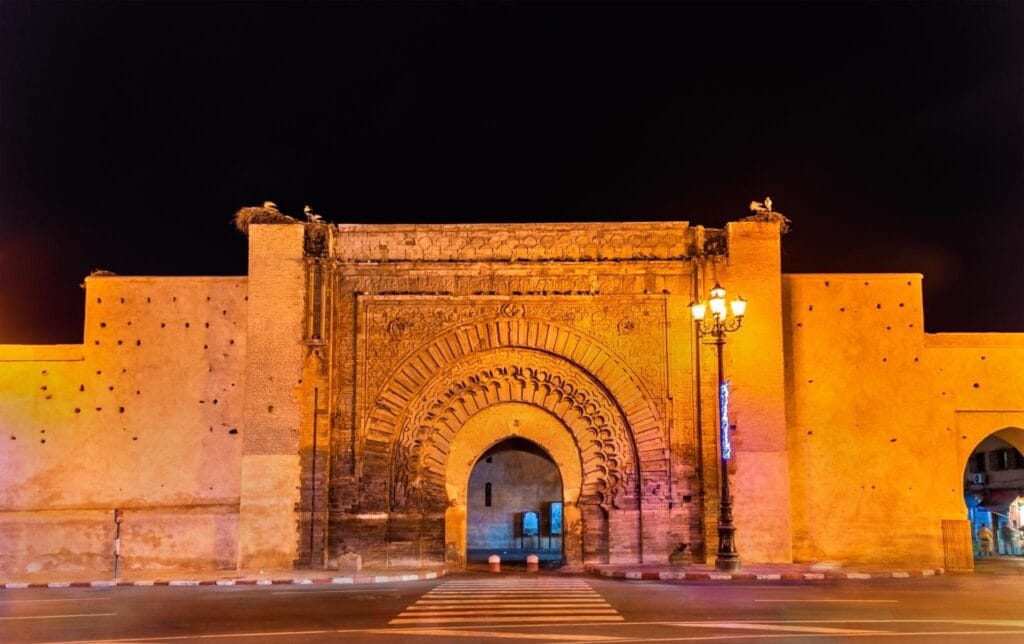
Bab Agnaou
Bab Agnaou is one of the most beautiful gates in Marrakech. Built during the Almohad period in the late 12th century, it served as the ceremonial entrance to the royal Kasbah district.
Bab Doukkala
This gate connected Marrakech with routes leading toward northern Morocco. It was an important entrance for travelers and merchants.
Bab el-Khemis
This gate became famous for trade and weekly markets. Merchants and caravans used it to enter the city.
The walls and gates helped protect political power, economic wealth, and the population of Marrakech. They remain an essential part of the city’s identity and any Marrakech historical city guide.
The Three Main Parts of Marrakech
Modern Marrakech can be divided into three main areas. Each one reflects a different period of the city’s history.
1. The Medina
The medina is the historic center of Marrakech. It is filled with narrow streets, traditional houses, markets, and historic monuments.
This area contains the famous souks, Jemaa el-Fna square, and many old riads. The medina is also a UNESCO World Heritage Site.
The medina represents the traditional heart of Marrakech and remains central to every Marrakech historical city guide.
2. The Kasbah District
The Kasbah was the political and royal area of Marrakech. It included palaces, administrative buildings, and military structures.
This district contains important monuments such as:
- El Badi Palace
- Saadian Tombs
- Bab Agnaou
The Kasbah symbolized royal authority and imperial power.
3. Ville Nouvelle (New City)
The Ville Nouvelle was developed during the French Protectorate in the 20th century.
Unlike the medina, this area has:
- Wide boulevards
- Modern buildings
- Cafés and hotels
- European-style urban planning
Today, neighborhoods like Gueliz and Hivernage are part of this modern side of Marrakech.
Iconic Historical Sites of Marrakech
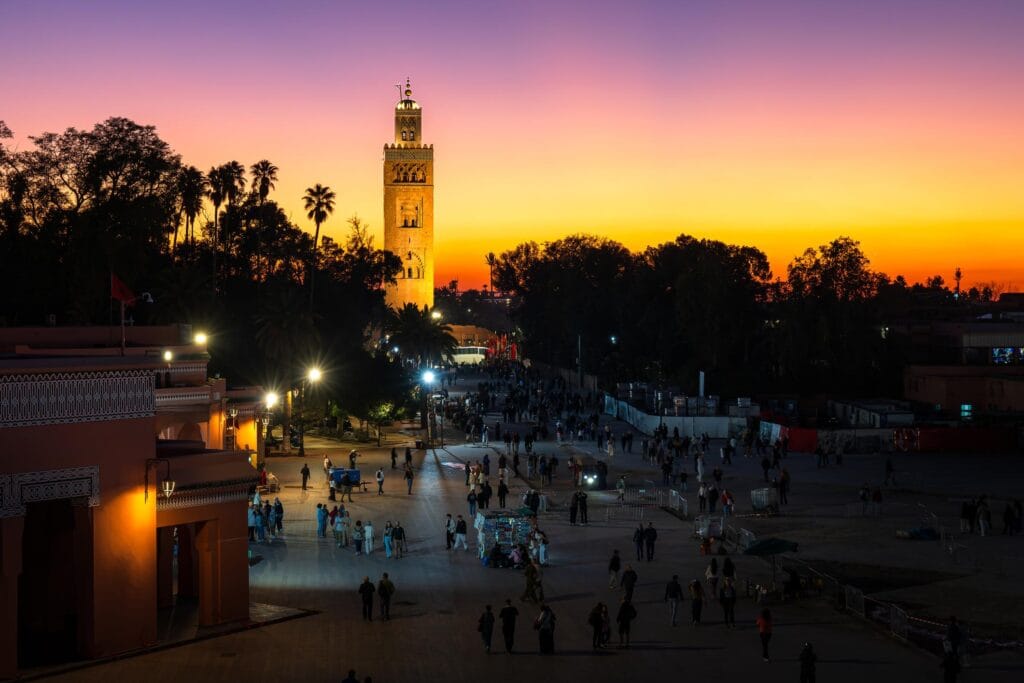
Koutoubia Mosque
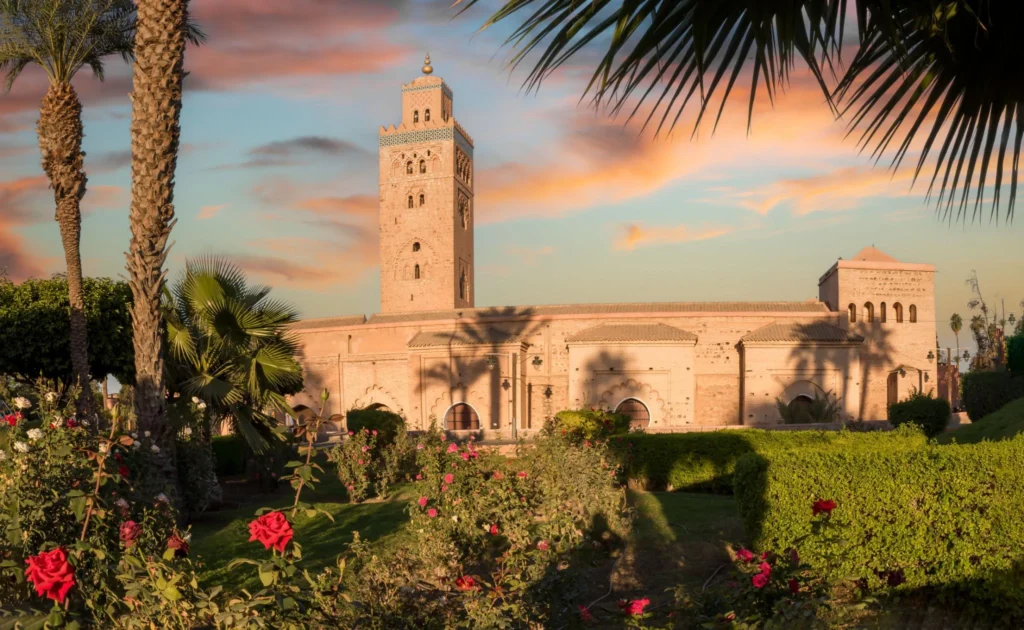
The Koutoubia Mosque is the most famous monument in Marrakech. Built during the 12th century by the Almohads, it became a symbol of the city.
Its minaret rises about 77 meters high and can be seen from many parts of Marrakech.
The mosque is known for:
- Almohad architecture
- Decorative arches
- Balanced geometric design
- Historic importance
The name “Koutoubia” comes from the Arabic word for booksellers because many manuscript sellers once worked nearby.
The Koutoubia Mosque influenced later Islamic monuments, including the Giralda in Seville.
Today, it remains one of the top attractions in every Marrakech historical city guide.
Menara Gardens
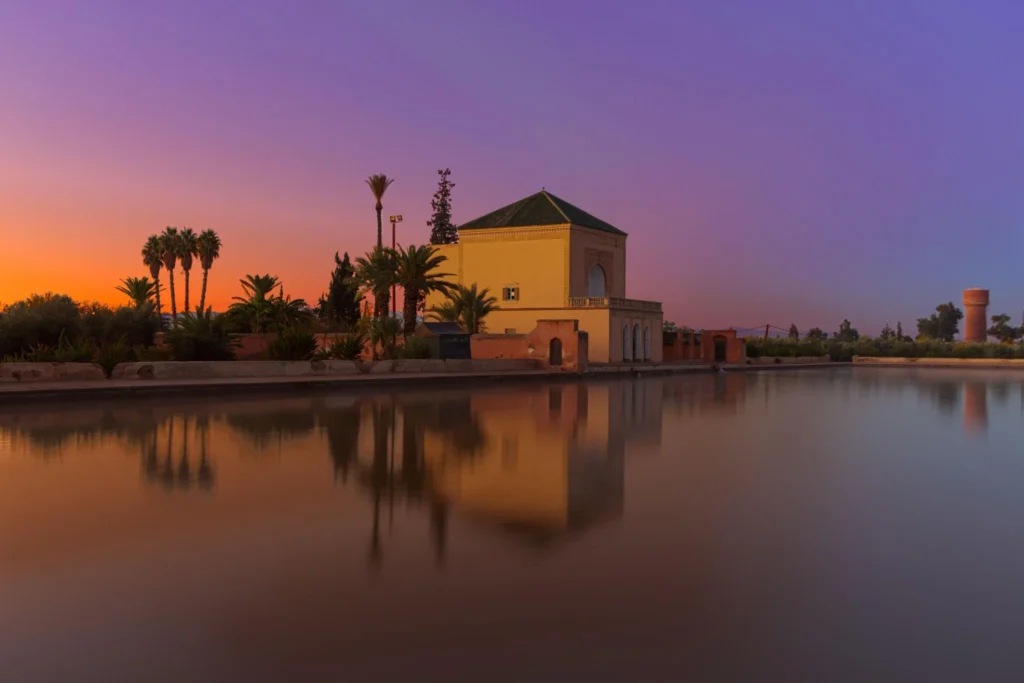
The Menara Gardens were created during the Almohad period in the 12th century.
The gardens were designed as:
- Agricultural land
- A royal retreat
- A place for irrigation experiments
At the center is a large water basin connected to underground irrigation systems that brought water from the Atlas Mountains.
The famous pavilion near the basin was added later and became one of Marrakech’s most photographed landmarks.
The Menara Gardens show how nature, engineering, and architecture worked together in medieval
Morocco.
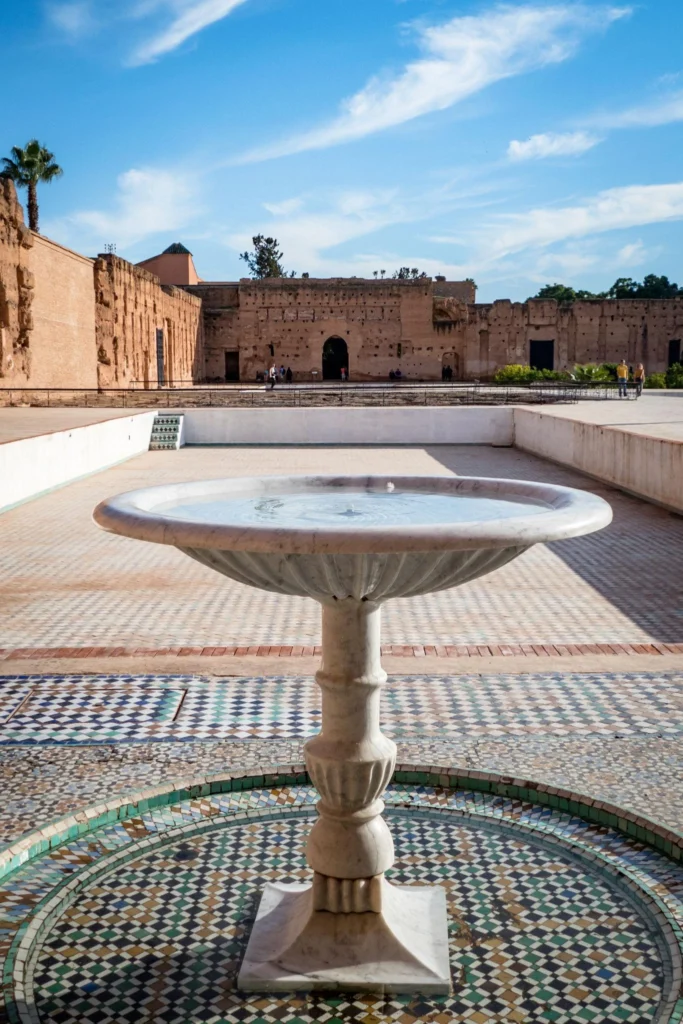
El Badi Palace
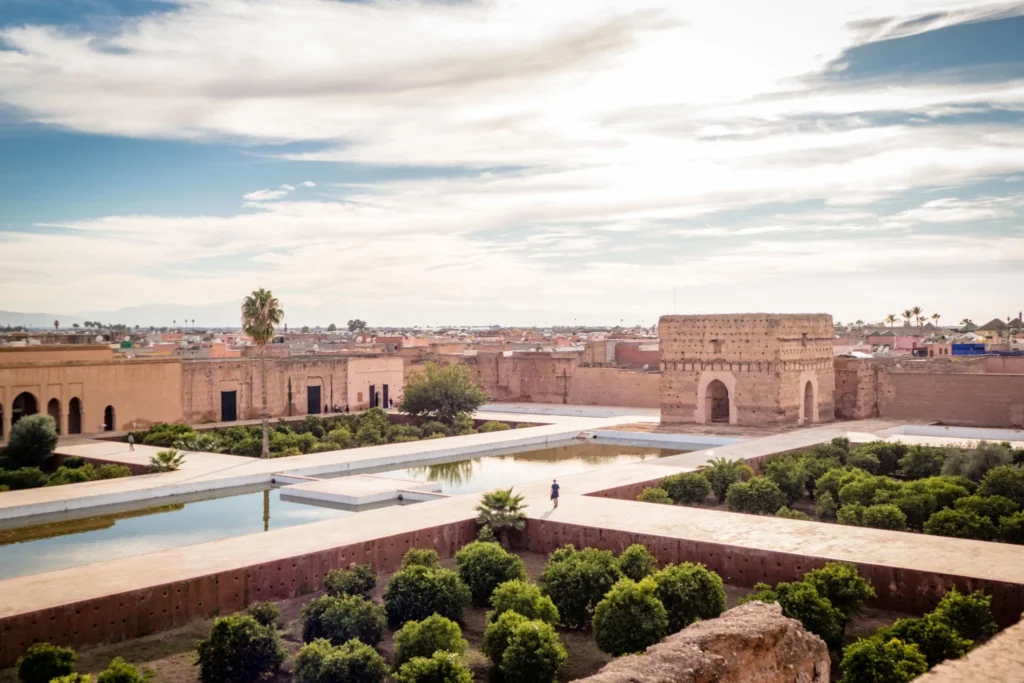
The El Badi Palace was built in the late 16th century by the Saadian Sultan Ahmad al-Mansur.
The palace celebrated his victory at the Battle of the Three Kings in 1578.
El Badi was once one of the most luxurious palaces in Morocco. It included:
- Marble decorations
- Large courtyards
- Reflecting pools
- Precious materials imported from Europe and Africa
Although much of the palace was later destroyed, its ruins still show the scale of Saadian wealth and ambition.
Today, visitors can walk through the enormous courtyards and imagine the palace’s former glory.
Bahia Palace
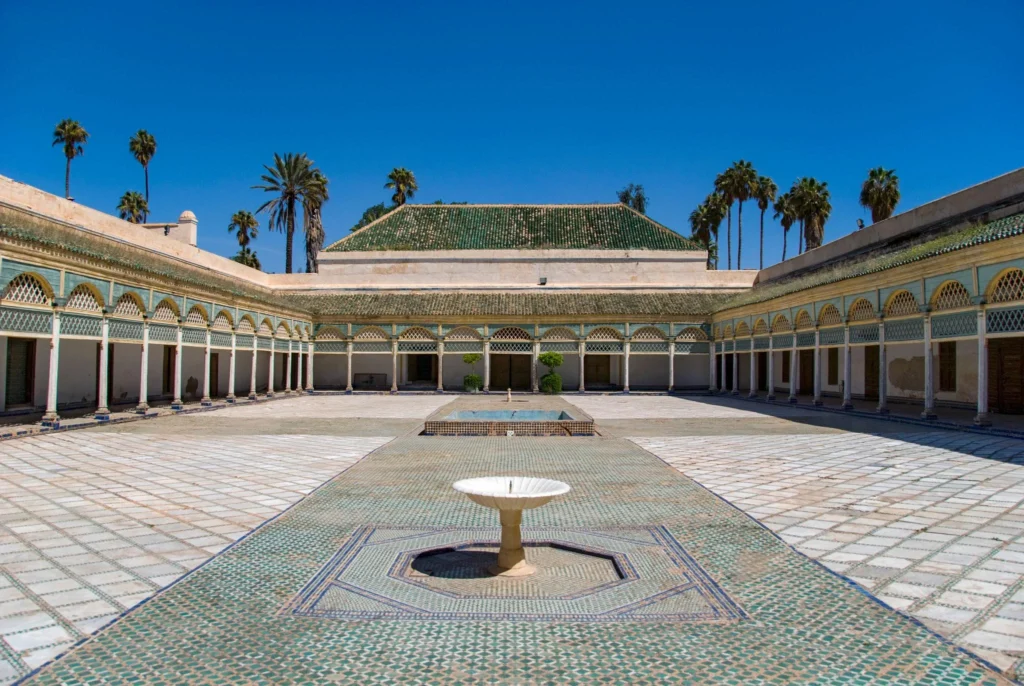
The Bahia Palace was built during the 19th century and represents Moroccan art at its finest.
It was constructed by Si Moussa and expanded by his son Ba Ahmed, a powerful grand vizier.
The palace includes:
- Beautiful courtyards
- Painted cedar ceilings
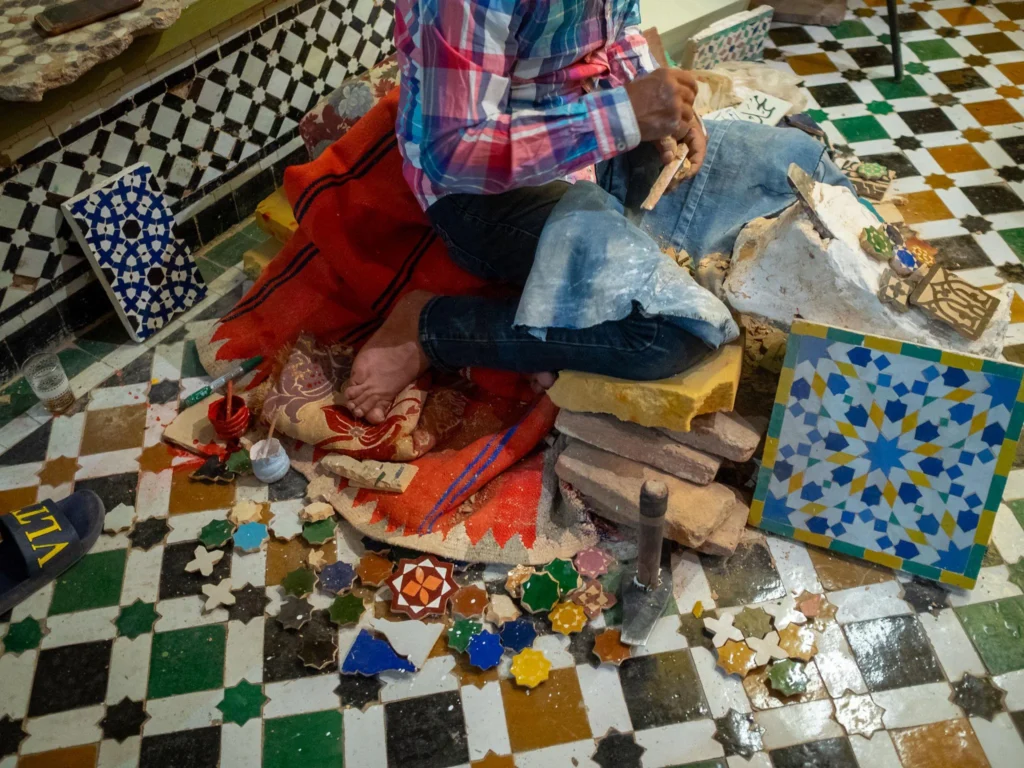
- Colorful zellij tiles
- Traditional gardens
The name “Bahia” means brilliance or beauty.
Unlike El Badi Palace, Bahia Palace remains well preserved. It gives visitors a clear picture of elite life in Marrakech during the late 19th century.
Its decoration and craftsmanship make it one of the city’s most important cultural sites.
Marrakech as a Commercial and Cultural Hub
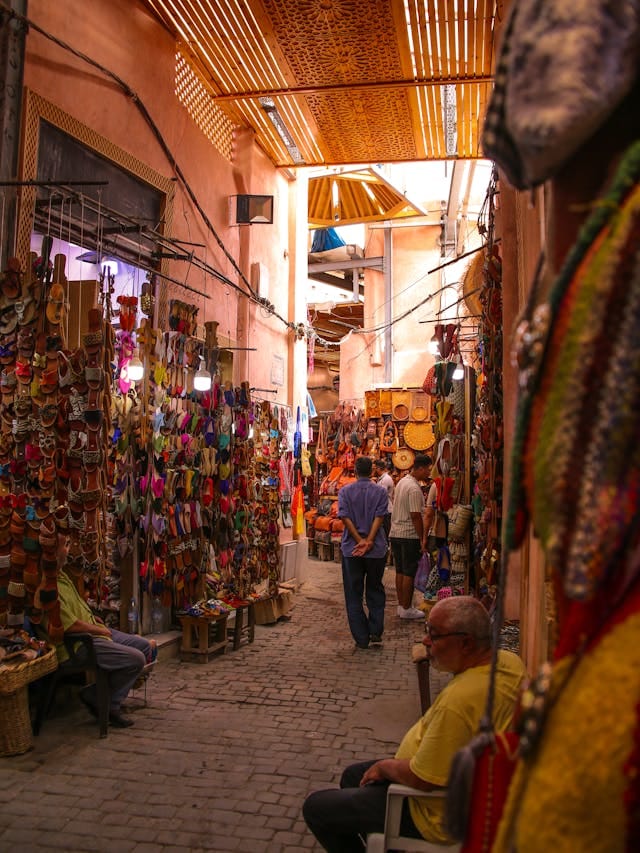
Marrakech has always been connected to trade and culture.
For centuries, merchants arrived from:
- Sub-Saharan Africa
- Andalusia
- The Middle East
- Europe
The city became famous for:
Metalwork
Leather production
Carpets
Pottery
Textiles
Its markets and caravan routes helped Marrakech grow into one of the wealthiest cities in North Africa.
Today, tourism continues this tradition by bringing visitors from around the world.
The city’s cultural festivals, architecture, and traditional crafts still support the local economy.
Marrakech is more than a destination — it’s a living historical narrative. From its 11th-century founding, through imperial power shifts, to its iconic sites like the Koutoubia Mosque, Menara Gardens, El Badi Palace, and Bahia Palace, the city offers a multi-layered journey through time. Each corner of the medina walls, every gate, and all historic sites contribute to a richer understanding of Marrakech historical city guide — a phrase that captures not only a place but centuries of culture, commerce,