You will probably read the word “riad” many times before visiting Morocco. Every travel guide mentions riads. Hotels use the term everywhere. Social media presents riads as symbols of luxury and exotic design. Yet many travelers still do not really understand what a riad is or why it became such an important part of Moroccan urban culture. That’s why I will Try to talk about Moroccan Riad history, architecture, its role through the time and differente other related sides.
The study of Moroccan riad history reveals much more than beautiful decoration. Riads explain how Moroccan cities functioned socially, climatically, and architecturally for centuries. These homes protected family privacy, regulated interior temperatures, and reflected social organization inside medieval medinas.
Unlike modern hotels, riads originally served as private urban residences for wealthy families, merchants, scholars, and political elites. Their architecture developed slowly through the influence of Amazigh construction traditions, Islamic urban planning, and Andalusian artistic heritage.
Today, riads attract travelers searching for authentic experiences. However, their true historical role remains far deeper than tourism marketing. Understanding Moroccan riad history helps explain the structure of Morocco’s imperial cities and the cultural values that shaped daily life behind medina walls.
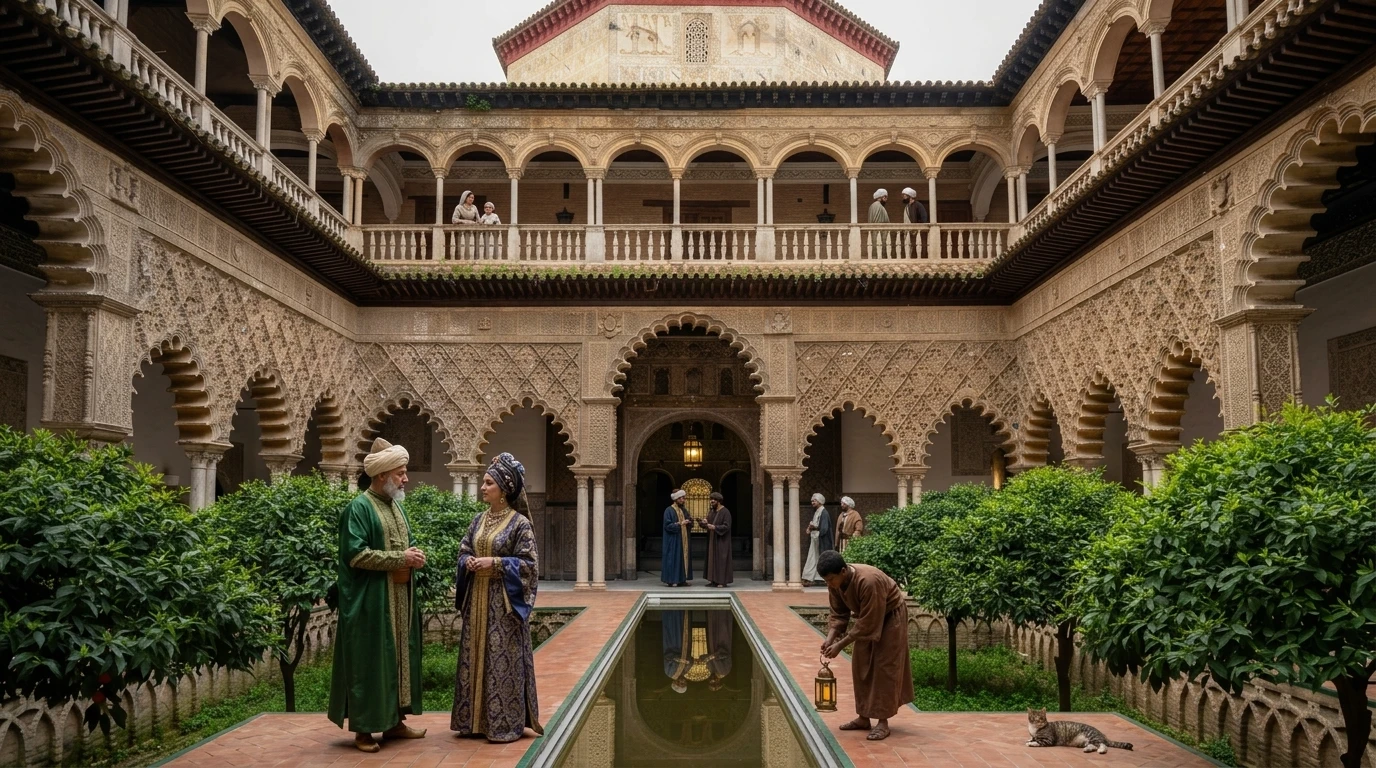
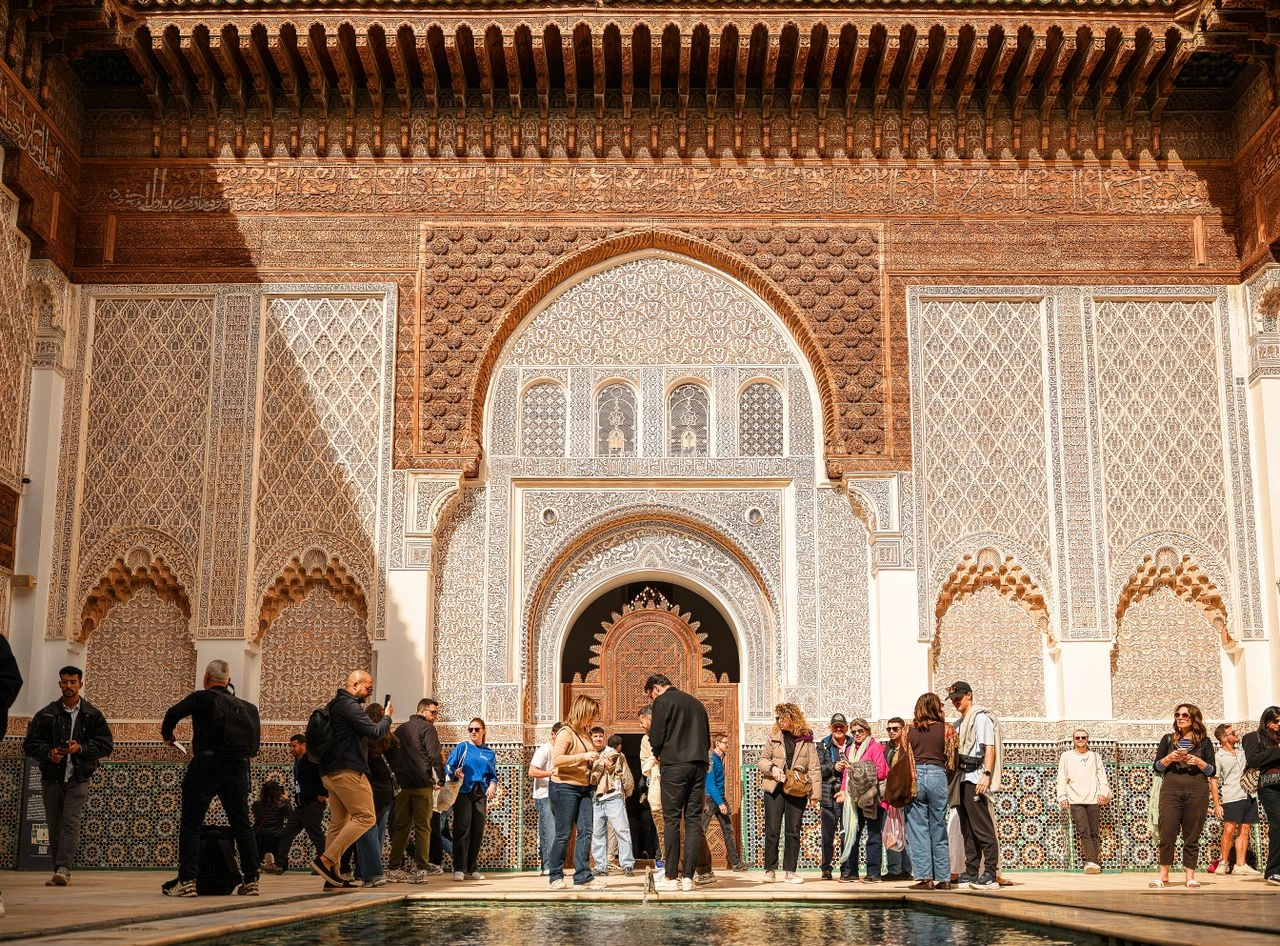
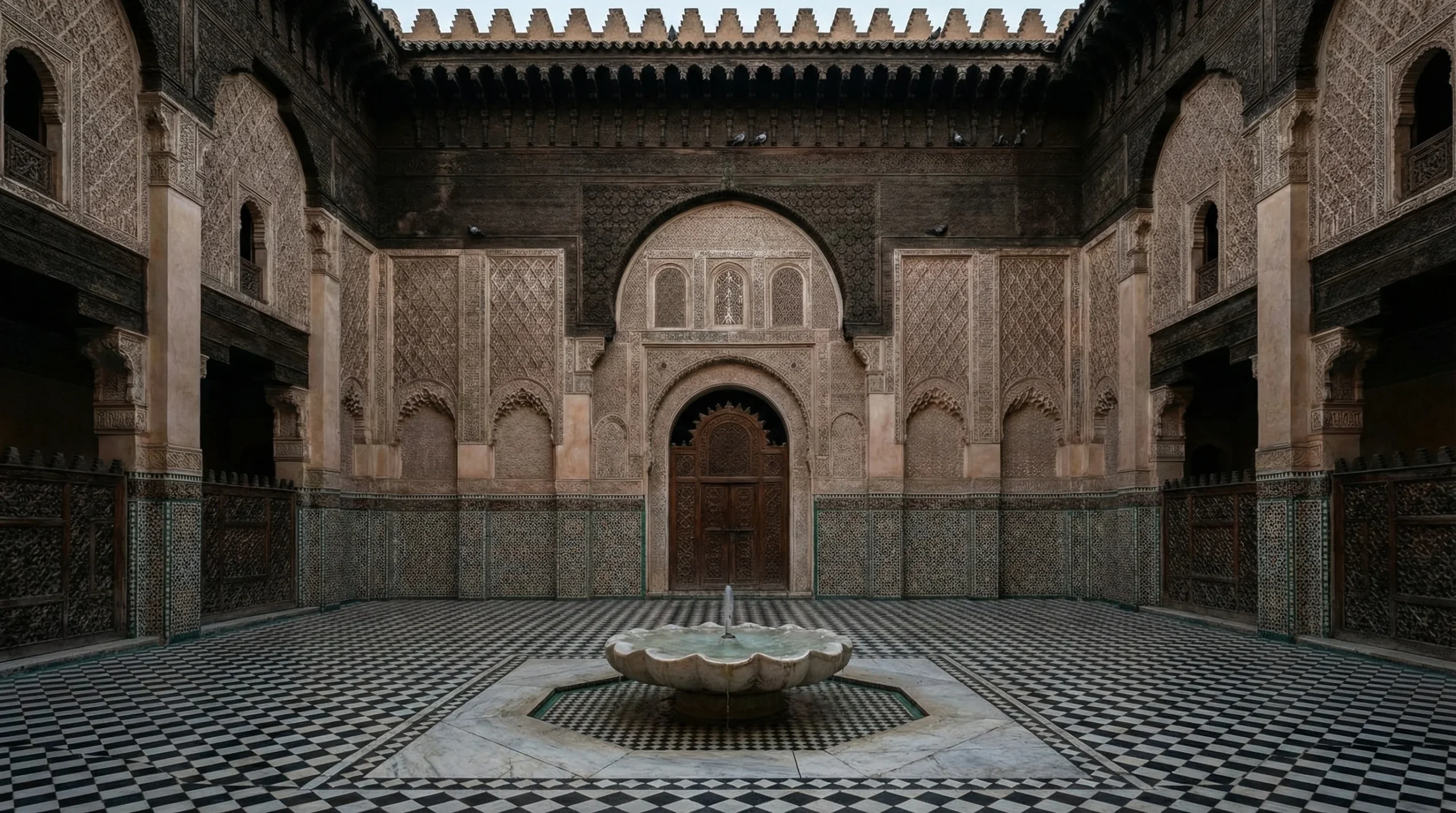
A riad is a traditional Moroccan house organized around a central courtyard. The word “riad” comes from the Arabic word ryad, meaning garden. This garden forms the heart of the house.
Most riads contain:
The architecture focuses inward rather than outward. Exterior walls usually appear simple and closed. Windows facing the street remain small or limited. The beauty exists inside the home.
This design reflects important cultural and environmental principles. In traditional Moroccan society, family life remained private. The house protected intimacy from the busy streets of the medina. At the same time, the courtyard improved ventilation, light, and thermal comfort.
Academic researches on Amazigh and Mediterranean urbanism explains that inward-focused homes became common because they responded efficiently to climate and social organization. In cities such as Fes and Marrakech, dense urban neighborhoods required architecture that balanced privacy with environmental adaptation.
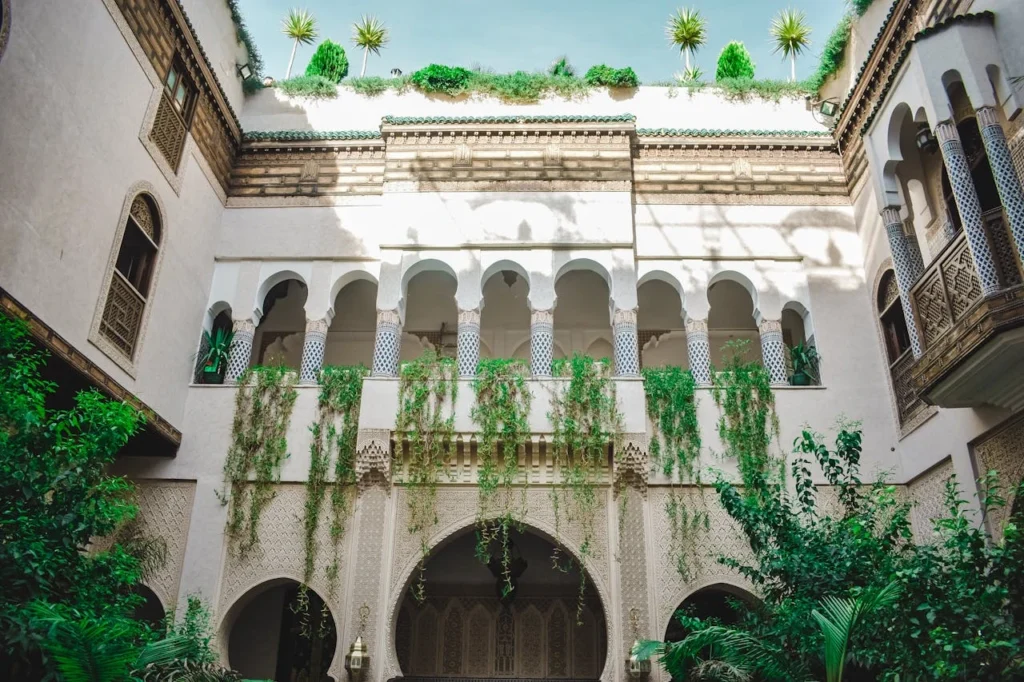
The development of riads in Morocco accelerated between the 11th and 15th centuries. This period coincided with the rise of dynasties such as the Almoravids, Almohads, and Marinids. These dynasties expanded major urban centers and strengthened commercial and intellectual networks across North Africa and Al-Andalus.
Many historians connect the evolution of riad architecture to Andalusian migration after the Christian Reconquista in Spain. Muslim and Jewish families arriving from cities such as Cordoba, Seville, and Granada brought advanced artistic and architectural traditions to Morocco.
These influences merged with local Amazigh construction methods and Moroccan urban traditions. The result created the classic riad style known today.
The oldest riads appeared mainly in wealthy districts close to mosques, markets, and political centers. Merchants, judges, scholars, and administrative elites often occupied these homes. Their social position influenced the size and decoration of the riads they built.
One of the most remarkable aspects of Moroccan riad history involves environmental adaptation. Riads function as natural climate systems designed centuries before modern air conditioning.
The central courtyard creates airflow inside the house. Thick walls reduce heat transfer during summer. Fountains and vegetation increase humidity and freshness. Shaded galleries protect rooms from direct sunlight.
This architectural intelligence becomes especially important in inland cities where temperatures rise significantly during summer months. In Marrakech, for example, traditional riads remain noticeably cooler than many modern concrete buildings.
Researchers studying sustainable architecture increasingly analyze riads because they demonstrate passive cooling strategies based entirely on spatial organization and local materials.
The inward design also reduced noise from crowded medina streets. Once the entrance door closed, the interior became calm, quiet, and protected from outside activity.
Modern tourism often confuses riads with boutique hotels. Historically, however, riads were private family homes rather than commercial accommodations.
A traditional riad differs from a standard hotel in several ways.
Hotels prioritize:
Riads prioritize:
Traditional riads rarely contain long corridors or large public lobbies. Rooms open directly toward the courtyard. This organization creates a more intimate atmosphere.
Riads also differ from ordinary medina houses. Wealthier families usually occupied riads because they required larger plots of land and expensive decorative craftsmanship.
Many riads included:
These artistic elements reflected the social and economic status of the family living inside the house.
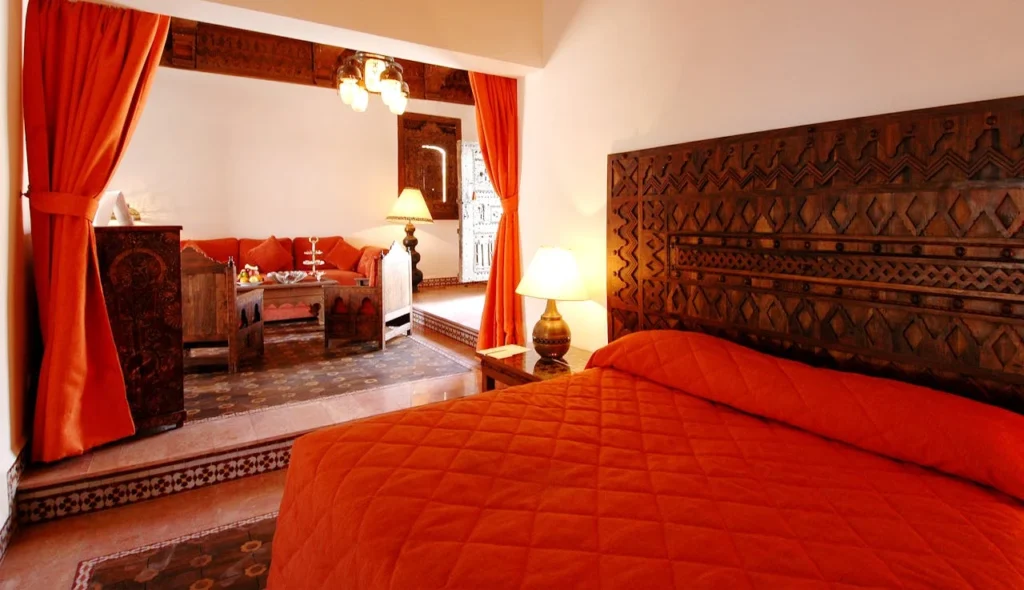
The social history of riads reveals the structure of traditional Moroccan urban society. Riads generally housed:
Their position inside medinas allowed direct access to commercial and intellectual life.
Large families often lived together around the same courtyard. Several generations shared different floors and rooms while remaining connected through the central patio.
The organization of interior spaces reflected social customs. Reception salons near entrances welcomed male guests and business visitors. Private family areas remained deeper inside the residence.
Women also played an important role in riad life. The inward architectural design allowed domestic and social activities to develop privately while maintaining natural light and open space.
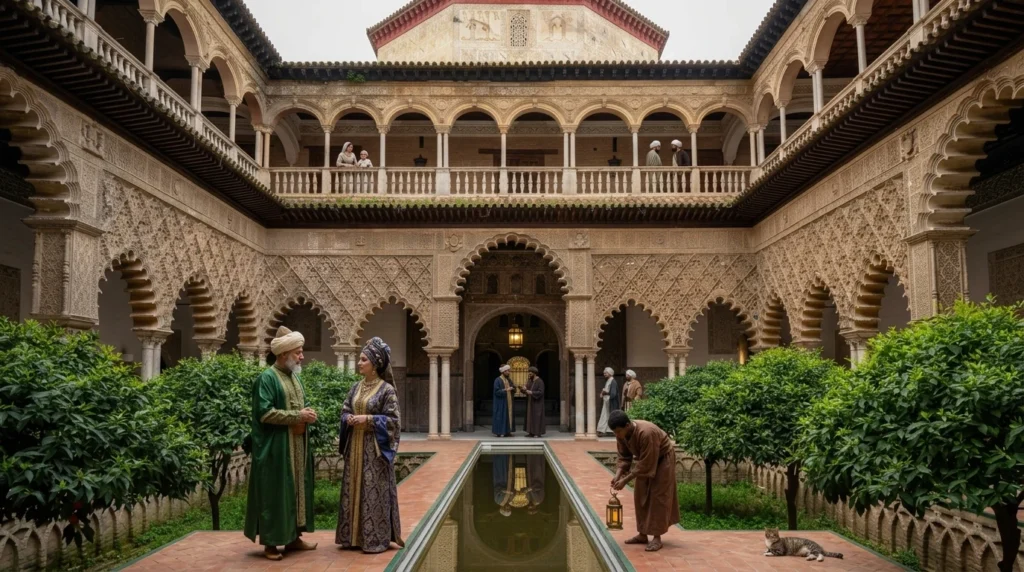
Riads exist mostly inside Morocco’s historic medinas, especially in imperial cities shaped by dynastic power and urban growth.
The largest concentrations appear in:
Each city developed its own architectural variations according to climate, political role, and available materials.
Fes contains one of the oldest and largest medinas in the world. Riads in Fes often reflect intellectual prestige and religious influence. Many families connected to scholarship and administration occupied these residences.
The architecture emphasizes refined decoration, carved woodwork, and dense urban integration.
Marrakech developed as a commercial capital connected to trans-Saharan trade routes. Riads there often contain larger courtyards and gardens due to warmer climate and urban expansion.
Merchant families invested heavily in craftsmanship and decorative arts inside their homes.
During the Alaouite period, Meknes became an imperial capital under Sultan Moulay Ismail. Riads near royal and administrative zones housed military elites and influential officials connected to the court.
Riads combine several traditional Moroccan construction techniques.
Builders used:
Roofs relied on:
Decoration required specialized artisans skilled in:
The fountain often occupied the center of the courtyard. Beyond aesthetics, water symbolized freshness, purity, and paradise imagery within Islamic artistic traditions.
Traditional riad construction reflected collaboration between multiple artisan guilds. This craftsmanship became one of the defining characteristics of Moroccan urban architecture.
Many visitors describe riads as peaceful and calming spaces. This atmosphere comes partly from architectural proportions and material choices.
Modern buildings often prioritize speed, density, and commercial efficiency. Riads prioritize:
The inward spatial organization separates interior life from urban intensity outside the walls. Natural materials also create softer textures and more stable temperatures.
This human scale explains why riads continue attracting travelers searching for authentic and immersive experiences.
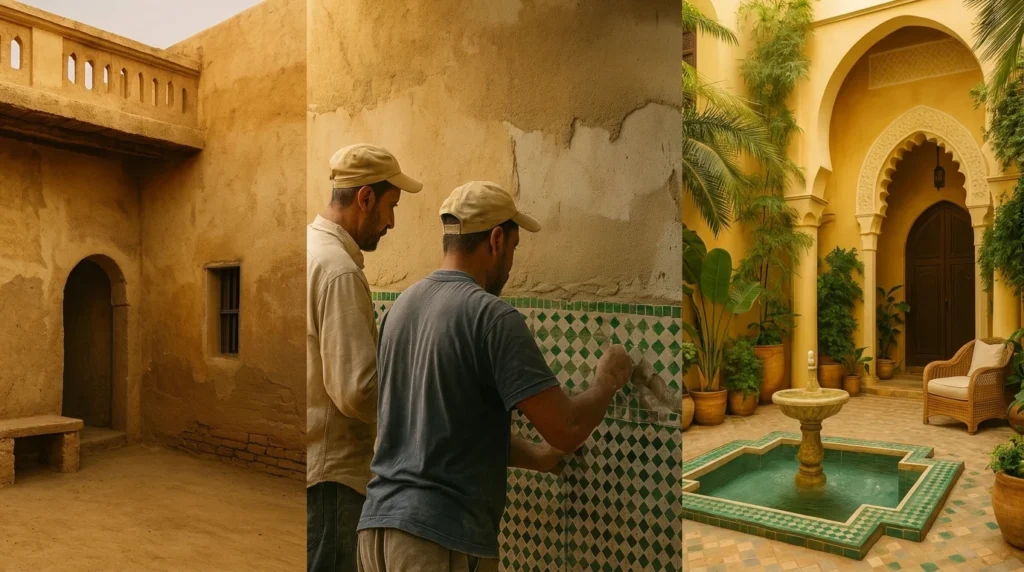
During the 20th century, many historic riads became abandoned as wealthy families moved toward modern neighborhoods outside medinas.
Later, Moroccan entrepreneurs and foreign investors restored numerous riads, especially in Marrakech and Fes. These renovations transformed old family residences into boutique guesthouses and cultural spaces.
This process helped preserve important architectural heritage. However, it also changed medina economies and property markets.
Some restorations carefully preserve traditional materials and craftsmanship. Others introduce modern construction methods that alter historical authenticity.
Preservation specialists continue debating how riads should evolve while maintaining architectural integrity.
Riads became symbols of Morocco because they combine:
Unlike standardized hotels, riads reflect local identity directly through their structure and decoration.
Each riad also preserves traces of Morocco’s dynastic, commercial, and social history. Staying inside a riad allows travelers to experience medina life from within rather than simply observing monuments from outside.
Understanding Moroccan riad history therefore means understanding the deeper organization of Moroccan cities themselves.
The story of Moroccan riad history extends far beyond tourism trends and decorative aesthetics. Riads reflect centuries of adaptation to climate, urban density, family organization, and cultural values.
Their hidden courtyards preserve an architectural philosophy centered on interior harmony rather than public display. Their walls contain traces of merchants, scholars, artisans, and dynasties that shaped Morocco’s imperial cities across generations.
Today, riads continue connecting visitors with the deeper identity of Moroccan medinas. They offer more than accommodation. They offer direct immersion into one of the oldest urban traditions in North Africa.