
Moroccan Kasbah Architecture, Materials, Techniques and History
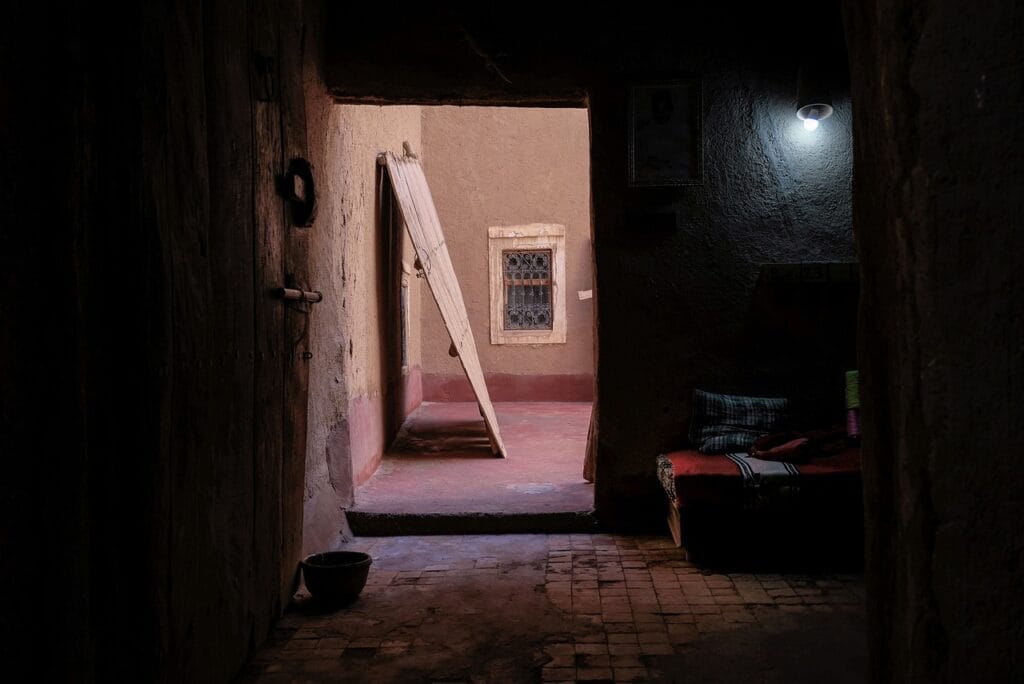
The study of Moroccan kasbahs architecture reveals a deep connection between environment, society, and construction techniques. Kasbahs are not simply buildings. They are systems shaped by climate, local materials, and historical needs. These structures appear mostly in southern Morocco, especially in pre-Saharan regions, where communities adapted to harsh conditions through intelligent design.
Unlike monumental stone architecture found in imperial cities, kasbahs rely on earth. Builders used what the land provided. They transformed soil into walls, palm trunks into roofs, and geometry into defense. This architecture reflects a balance between function and environment. It also reflects social organization, where power, protection, and trade intersect.
To understand kasbahs, one must examine how they are built, where they exist, and why they played such an important role in Moroccan history.
What Is a Kasbah?
A kasbah is a fortified residence, often associated with local leaders or powerful families. It differs from a ksar, which refers to a fortified village. While ksour group multiple families within defensive walls, kasbahs usually serve as private strongholds or administrative centers.
These structures often rise above surrounding landscapes. They stand near oases, valleys, or strategic routes. Their placement allows control over movement, resources, and trade. In many regions, kasbahs acted as both homes and symbols of authority.
Construction Materials: Building from the Earth
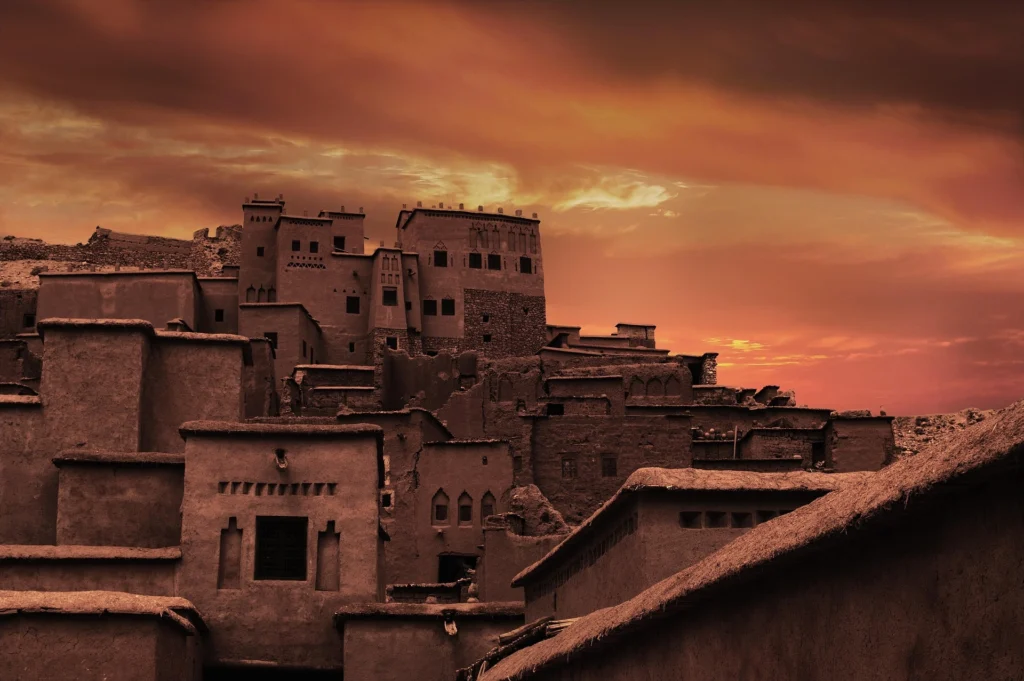
Moroccan kasbahs rely on earthen construction techniques, especially rammed earth, also known as pisé or tabia. This method uses compacted soil mixed with water and organic materials such as straw.
Builders collected soil directly from the surrounding area. They selected mixtures based on local composition. Clay provided cohesion. Sand reduced cracking. Straw improved flexibility. In some regions, lime was added to increase durability and resistance.
The process followed several steps:
- Workers placed damp earth into wooden molds
- They compressed it layer by layer
- Each layer hardened before adding the next
- Walls gradually rose to significant heights
This technique created thick walls, often exceeding one meter at the base.
Mudbrick also appeared in some kasbahs. Builders shaped bricks from clay and dried them in the sun. These bricks formed structural and decorative elements.
Wood played a secondary but essential role. Palm trunks and cedar beams supported roofs and ceilings. Reeds and branches filled gaps and added flexibility.
The result was a structure entirely integrated into its environment. The color of the kasbah matched the surrounding land because it came from that land.
Thermal Intelligence and Environmental Adaptation
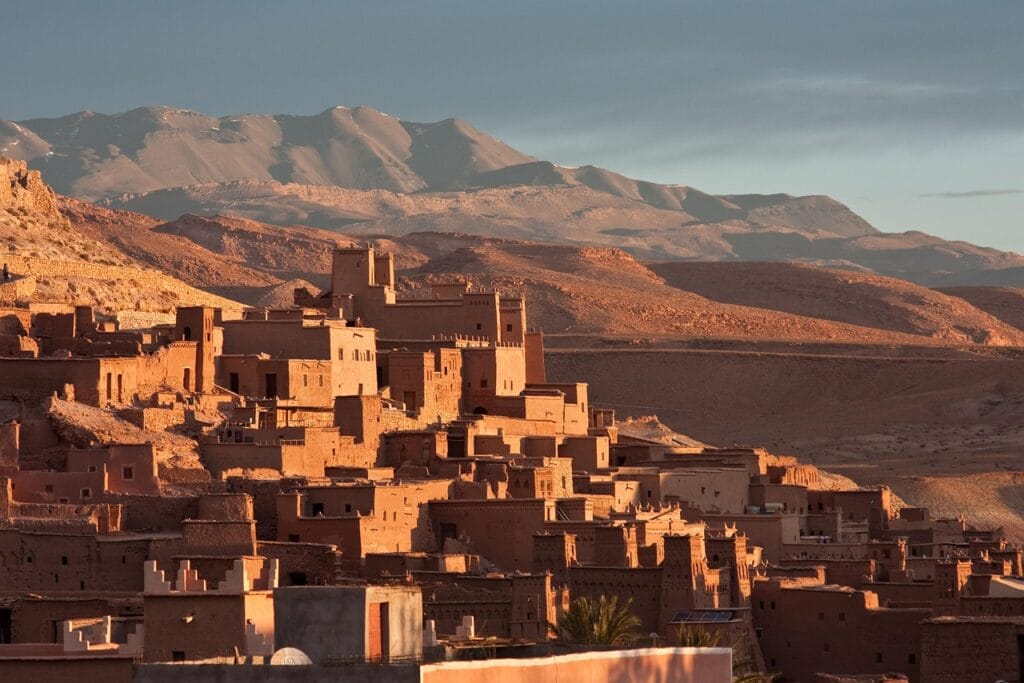
Kasbah construction reflects a deep understanding of climate. Thick earthen walls act as natural insulation. They absorb heat during the day and release it slowly at night. This process keeps interiors cool in summer and warm in winter.
Builders also designed small windows to reduce heat exposure. Courtyards allowed air circulation. Towers captured wind and improved ventilation. These features show how architecture responded to environmental constraints without modern technology.
The use of earth also created breathable walls. Unlike concrete, earthen materials regulate humidity. This improves indoor comfort and preserves structural stability.
Structural Design and Defensive Features
Kasbahs were built with defense in mind. Their design reflects constant concern for security.
Most kasbahs include:
- High perimeter walls
- Corner towers for surveillance
- Narrow entrances for control
- Elevated positions overlooking valleys or routes
These features allowed inhabitants to monitor movement and respond to threats.
The towers often display geometric decoration. These patterns serve both aesthetic and symbolic purposes. They also reinforce structural stability by distributing weight.
Inside, the layout follows a hierarchical organization. Lower levels store goods and animals. Upper levels house living spaces. Rooftops provide observation points.
Interior Architecture and Decorative Elements
While the exterior appears austere, the interior of kasbahs can be highly refined. Some kasbahs include:
- Carved stucco walls
- Painted ceilings
- Wooden lattice structures
- Decorative arches
In examples like Kasbah Taourirt, interiors show influence from imperial architecture. Rooms feature intricate ornamentation, combining functionality with artistic expression.
Ceilings often use reed frameworks covered with earth or plaster. This technique reduces weight while maintaining insulation. It also reflects local craftsmanship and available materials.
Geographic Distribution of Kasbahs in Morocco
Kasbahs appear mostly in southern Morocco. They concentrate in regions where environmental and historical conditions required fortified structures.
Draa Valley
The Draa Valley contains one of the highest concentrations of kasbahs. Thousands once lined this oasis corridor.
This region connected trans-Saharan trade routes with northern cities. Kasbahs here controlled access to water, land, and trade goods.
Dadès and Todra Valleys
These valleys feature kasbahs built along river systems. Their position allowed control over agricultural land and movement through narrow passages.
Ouarzazate and Surroundings
This region became a major center for kasbah construction. Famous examples such as Aït Benhaddou illustrate large-scale fortified settlements linked to trade routes.
Skoura Oasis
The Skoura palm grove hosts numerous kasbahs integrated into agricultural landscapes. These structures combine defense with resource management.
High Atlas Foothills
Kasbahs also appear in mountain regions. Here, they serve as defensive residences and administrative centers controlling access between regions.
Role in Trade and Economic Systems
Kasbahs played a key role in Morocco’s historical trade networks. Many stood along routes connecting the Sahara with northern cities.
Caravans transported goods such as:
- Gold
- Salt
- Textiles
- Spices
Kasbahs provided protection and storage. They also acted as checkpoints where goods were taxed or controlled.
Their strategic placement allowed local leaders to influence trade flows. This economic role reinforced their political power.
Political and Social Role
Kasbahs functioned as centers of authority. They housed local leaders, known as caïds or tribal chiefs. These figures controlled land, resources, and populations.
The architecture reflects this hierarchy. Larger kasbahs indicate greater power. Their scale and decoration signal status and influence.
Kasbahs also served administrative functions. They hosted meetings, stored records, and organized defense. In many regions, they became symbols of governance.
Kasbahs and Dynastic Influence
During different historical periods, Moroccan dynasties influenced construction techniques.
The Almoravids and Almohads expanded the use of rammed earth in large-scale architecture. They applied these techniques to walls, fortifications, and cities.
Later dynasties continued this tradition while introducing decorative elements. This continuity shows how kasbah architecture evolved while maintaining its core principles.
Relationship Between Kasbahs and Ksour
Kasbahs often exist alongside ksour. While kasbahs represent individual authority, ksour represent collective organization.
A ksar includes:
- Dense housing clusters
- Shared defensive walls
- Communal spaces
A kasbah may stand within or near a ksar. It acts as a center of control within the larger settlement.
This relationship reflects the balance between community and authority in traditional Moroccan society.
The Life Cycle of a Kasbah
One of the most unique aspects of kasbah architecture is its temporary nature. Unlike stone buildings, earthen structures require constant maintenance.
Rain and wind gradually erode walls. Without repair, the structure slowly returns to the earth.
This process does not represent failure. It reflects a different approach to architecture. Buildings exist as part of a natural cycle. They are constructed, maintained, and eventually reintegrated into the environment.
Modern Challenges and Preservation
Today, many kasbahs face abandonment. Modern materials such as concrete replace traditional techniques. This shift reduces the need for maintenance but changes architectural identity.
Preservation efforts aim to protect significant sites. Some kasbahs have been restored using traditional methods. Others have been adapted for tourism or cultural purposes.
However, restoration raises questions. Using modern materials can alter the original structure. Maintaining authenticity requires knowledge of traditional techniques.
Kasbahs as Sustainable Architecture
Recent studies highlight the sustainability of earthen construction. Rammed earth uses local materials and requires low energy. It also provides natural climate regulation.
These qualities make kasbah architecture relevant today. Architects and researchers study these techniques as models for sustainable design.
Cultural Meaning of Kasbahs
Kasbahs represent more than architecture. They embody a way of life shaped by environment, trade, and social organization.
They reflect:
- Adaptation to climate
- Control of resources
- Expression of authority
- Integration with landscape
Their presence across southern Morocco creates a unique cultural landscape where architecture and nature merge.
The study of Moroccan kasbah architecture reveals a complex system built on simplicity. Earth, water, and human knowledge combine to create structures that respond to climate, defend communities, and organize society.
From the valleys of the south to the edges of the Sahara, kasbahs stand as evidence of adaptation and ingenuity. Their materials come from the land. Their forms respond to necessity. Their history reflects centuries of trade, power, and cultural exchange.
Understanding kasbahs allows a deeper understanding of Morocco itself. It shows how architecture can emerge from environment and function while maintaining beauty and meaning.