
Before talking about the American Legation Tangier History, it is important to mention that the city is one of the most fascinating places in Morocco. For centuries, it connected Africa, Europe, and the Mediterranean world. Traders, diplomats, explorers, and empires all passed through this coastal city.
At the center of this international history stands the American Legation. The building is one of the most important diplomatic landmarks in Morocco. It also represents a unique chapter in American history. The American Legation became the first overseas property owned by the United States government.
The story of the Legation is closely tied to Tangier’s strategic location and Morocco’s early relationship with the United States. This article explores the American Legation Tangier history, the rise of Tangier as an international city, and the origins of Moroccan-American diplomacy.
A Brief History of Tangier
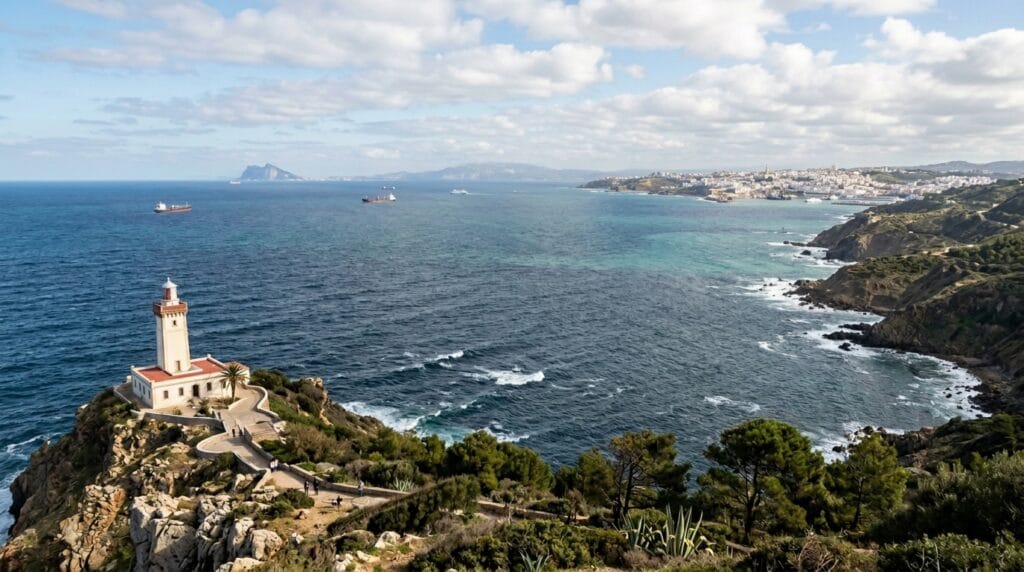
Tangier is among the oldest cities in North Africa. Its history stretches back more than two millennia. Many civilizations controlled the city because of its strategic position near the Strait of Gibraltar.
The Phoenicians first developed trading activity in the region. Later, the Carthaginians and Romans expanded the city’s influence. During Roman rule, Tangier was known as Tingis. It became an important administrative center in Roman North Africa.
In the 7th century, Muslim dynasties brought Tangier into the Islamic world. The city became linked to Andalusia, the Mediterranean basin, and trans-Saharan trade routes.
Tangier later attracted European powers. Portugal occupied the city in the 15th century. In 1661, Tangier passed to England through a royal marriage alliance.
The British abandoned Tangier in 1684 after pressure from Sultan Moulay Ismail. The city then returned to Moroccan authority.
During the 18th and 19th centuries, Tangier grew into a major diplomatic and commercial center. Foreign powers established consulates and trade offices there because of the city’s geopolitical importance.
Today, Tangier remains one of Morocco’s most historic and international cities.
American Legation Tangier History and the Strategic Importance of Tangier
Tangier occupies one of the most strategic locations in the world. The city overlooks the Strait of Gibraltar, where the Atlantic Ocean meets the Mediterranean Sea.
Only a short distance separates Morocco from southern Spain. This narrow maritime corridor became essential for trade, military power, and diplomacy.
For centuries, Tangier controlled access between:
- Europe and Africa
- The Atlantic and the Mediterranean
- Western and Eastern trade networks
Its position made the city attractive to empires and commercial powers.
Merchant ships traveling between continents often passed near Tangier. Caravan routes from sub-Saharan Africa also connected to the city’s port.
Products transported through Tangier included:
- Gold
- Leather
- Spices
- Tea
- Textiles
- Ceramics
Because of this strategic importance, several nations sought diplomatic influence in Tangier.
The United States understood this geopolitical value very early. This explains why the city became central to the American Legation Tangier history.
Morocco and the United States: A Historic Diplomatic Friendship
The relationship between Morocco and the United States began shortly after American independence.
In 1777, Sultan Sidi Mohammed Ben Abdallah officially recognized the United States of America. Morocco became one of the first countries to recognize the new American republic.
This recognition happened only one year after the American Declaration of Independence.
At that time, the United States was still searching for international legitimacy. Morocco’s decision carried diplomatic and economic importance.
The Moroccan Sultan wanted to encourage peaceful trade and maritime cooperation with the United States.
In 1786, both nations signed the Moroccan-American Treaty of Friendship.
The treaty established:
- Diplomatic relations
- Commercial cooperation
- Maritime protection
- Peaceful engagement
Today, this agreement remains one of the oldest active diplomatic treaties in American history.
This friendship later led to the creation of the American Legation in Tangier.
Why the United States Opened the American Legation in Tangier
During the 18th and 19th centuries, diplomatic missions were often called legations instead of embassies.
Tangier became an ideal location for an American diplomatic presence. The city already hosted several foreign consulates and international representatives.
The United States needed a secure diplomatic center in North Africa to:
- Protect American merchants
- Support maritime trade
- Handle political relations
- Assist American citizens abroad
Tangier’s coastal position also allowed easier communication with Europe and the Atlantic world.
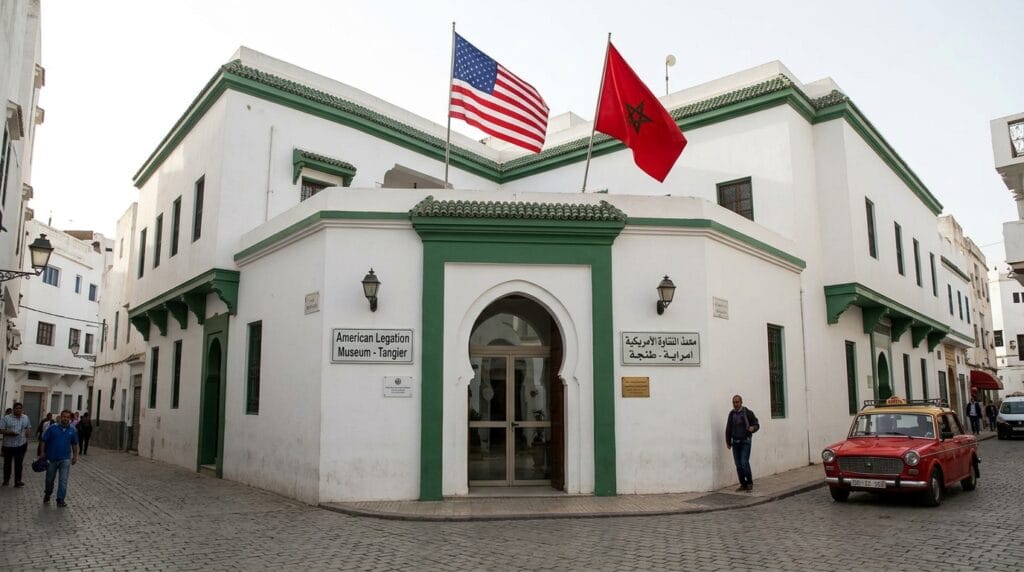
In 1821, Sultan Moulay Suleiman officially gifted a building in Tangier to the United States government.
This diplomatic gift symbolized the friendship between Morocco and America.
The building became the American Legation and entered diplomatic history as the first overseas property owned by the United States.
This moment remains central to the American Legation Tangier history.
The American Legation Building in Tangier
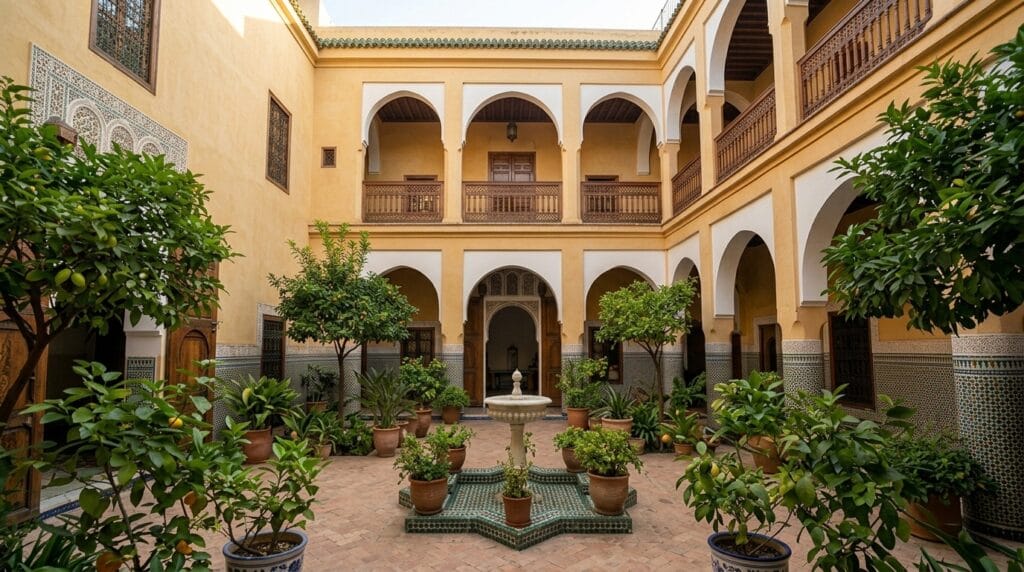
The American Legation is located inside Tangier’s historic medina. The building combines Moroccan architectural traditions with diplomatic history.
Over time, the property expanded through renovations and nearby acquisitions.
The complex includes:
- Traditional courtyards
- Decorative zellij tiles
- Carved wooden ceilings
- Arched galleries
- Diplomatic reception rooms
- Historical collections
The architecture reflects the international character of Tangier while preserving Moroccan artistic traditions.
Unlike modern embassies, the American Legation feels intimate and cultural. The structure resembles a traditional Moroccan riad.
Today, the building serves several purposes:
- Museum
- Cultural center
- Historical archive
- Research institution
It remains one of the most important landmarks connected to the American Legation Tangier history.
The Diplomatic Role of the American Legation
For decades, the American Legation served as the center of American diplomacy in Morocco.
Diplomats working there managed:
- Political negotiations
- Trade discussions
- Maritime affairs
- Diplomatic communication
- Protection of American citizens
Tangier’s international environment gave the Legation additional strategic value.
During the late 19th and early 20th centuries, several European powers competed for influence in Morocco. Diplomats in Tangier closely monitored international developments.
The Legation became an important point of contact between Morocco and the United States during periods of political transformation.
It also strengthened long-term cooperation between both nations.
Tangier as an International Diplomatic City
Tangier became famous worldwide for its international atmosphere.
During the 19th and 20th centuries, the city attracted:
- Diplomats
- Journalists
- Writers
- Artists
- Merchants
- Travelers
Its strategic location and multicultural identity transformed Tangier into a cosmopolitan center.
Several famous cultural figures spent time in Tangier, including:
- Paul Bowles
- Tennessee Williams
- William S. Burroughs
- Henri Matisse
The city developed a reputation for intellectual exchange and international culture.
The American Legation became part of this unique diplomatic environment.
American Legation Tangier History Through Museum Collections
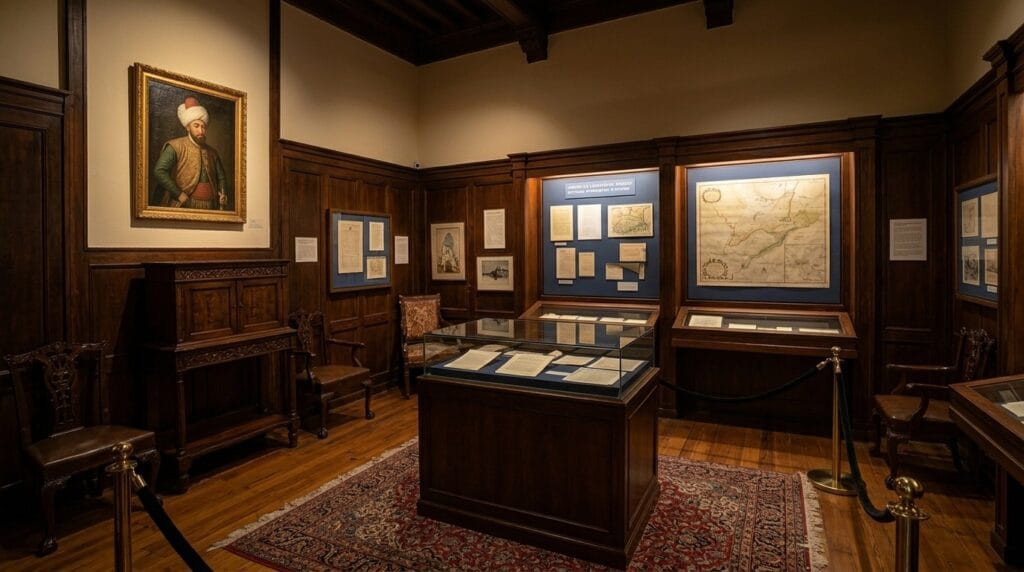
Today, the American Legation preserves important collections linked to Moroccan-American relations.
Visitors can discover:
- Diplomatic archives
- Historical letters
- Paintings
- Maps
- Photographs
- Decorative arts
- Political documents
One exhibition explains the Moroccan-American Treaty of Friendship. Another explores the diplomatic history of Tangier.
The museum also highlights Morocco’s multicultural heritage and international connections.
Researchers consider the Legation an important academic resource for studying diplomacy and North African history.
This educational role increases the historical importance of the American Legation Tangier history.
Moroccan Architecture Inside the American Legation
The American Legation showcases traditional Moroccan craftsmanship and Andalusian artistic influences.
Visitors can admire:
- Zellij mosaics
- Carved stucco decoration
- Wooden craftsmanship
- Interior courtyards
- Horseshoe arches
These decorative elements create a peaceful atmosphere inside the building.
The architecture reflects artistic traditions that developed in Morocco after the arrival of Andalusian communities from Muslim Spain.
The Legation therefore serves both as a diplomatic monument and an example of Moroccan heritage architecture.
The American Legation During the 20th Century
The role of the Legation evolved during the 20th century.
As modern diplomacy expanded, larger embassies replaced smaller diplomatic missions.
After Morocco gained independence in 1956, the United States transferred its main embassy operations to Rabat.
However, the Tangier Legation remained historically important.
American scholars, diplomats, and cultural organizations later worked to preserve the building and its collections.
Today, the site is managed by the Tangier American Legation Institute for Moroccan Studies (TALIM).
The institution supports:
- Academic research
- Historical preservation
- Cultural exchange
- Educational programs
Its mission continues the spirit of Moroccan-American friendship established centuries ago.
Visiting the American Legation in Tangier Today
Today, the American Legation is one of Tangier’s most important cultural attractions.
Visitors can explore:
- Historic diplomatic rooms
- Museum exhibitions
- Moroccan architecture
- Art collections
- Research spaces
The site offers a quieter and more educational experience than many tourist attractions.
It is especially interesting for travelers interested in:
- Diplomacy
- International history
- Moroccan culture
- Architecture
- Political history
Its location inside the medina also allows visitors to experience Tangier’s historic streets and local atmosphere.
Why the American Legation Still Matters Today
The American Legation represents much more than a diplomatic building.
It symbolizes:
- Morocco’s early recognition of the United States
- One of America’s oldest diplomatic friendships
- Tangier’s geopolitical importance
- Centuries of cultural exchange
Very few diplomatic sites in the world preserve such a continuous historical relationship.
The Legation remains a symbol of cooperation between Morocco and the United States.
Its story also reflects Tangier’s role as a bridge between continents and civilizations.
Conclusion
Tangier has long connected Africa, Europe, and the wider Mediterranean world. Its strategic location transformed the city into an international center of diplomacy and trade.
The American Legation reflects this global history perfectly.
From Morocco’s recognition of American independence to the creation of America’s first overseas diplomatic property, the Legation tells a remarkable story of friendship and political cooperation.
The American Legation Tangier history continues to attract historians, researchers, and travelers interested in diplomacy, architecture, and Moroccan heritage.
Today, the American Legation remains one of Tangier’s most valuable cultural and historical landmarks.