
- Overview
- Trip Outline
- Trip Includes
- Trip Excludes
- Gallery
- Reviews
- Booking
- FAQ
The Northern Morocco Cultural Tour traces the historical corridor that shaped Morocco’s Atlantic, Mediterranean, and imperial identity. Over nine days, you travel from Roman archaeological sites to Almohad capitals, from Andalusian-influenced medinas to Morocco’s oldest religious institutions. This itinerary connects political power, trade networks, scholarship, and architecture across centuries.
A licensed guide leads visits in Tangier and Fes, while your private driver accompanies you through Chefchaouen and between historical sites. This structure allows deeper historical understanding without rushing the experience.
No details found.
Itineraries
Day 1
Casablanca → Rabat (1 Night)
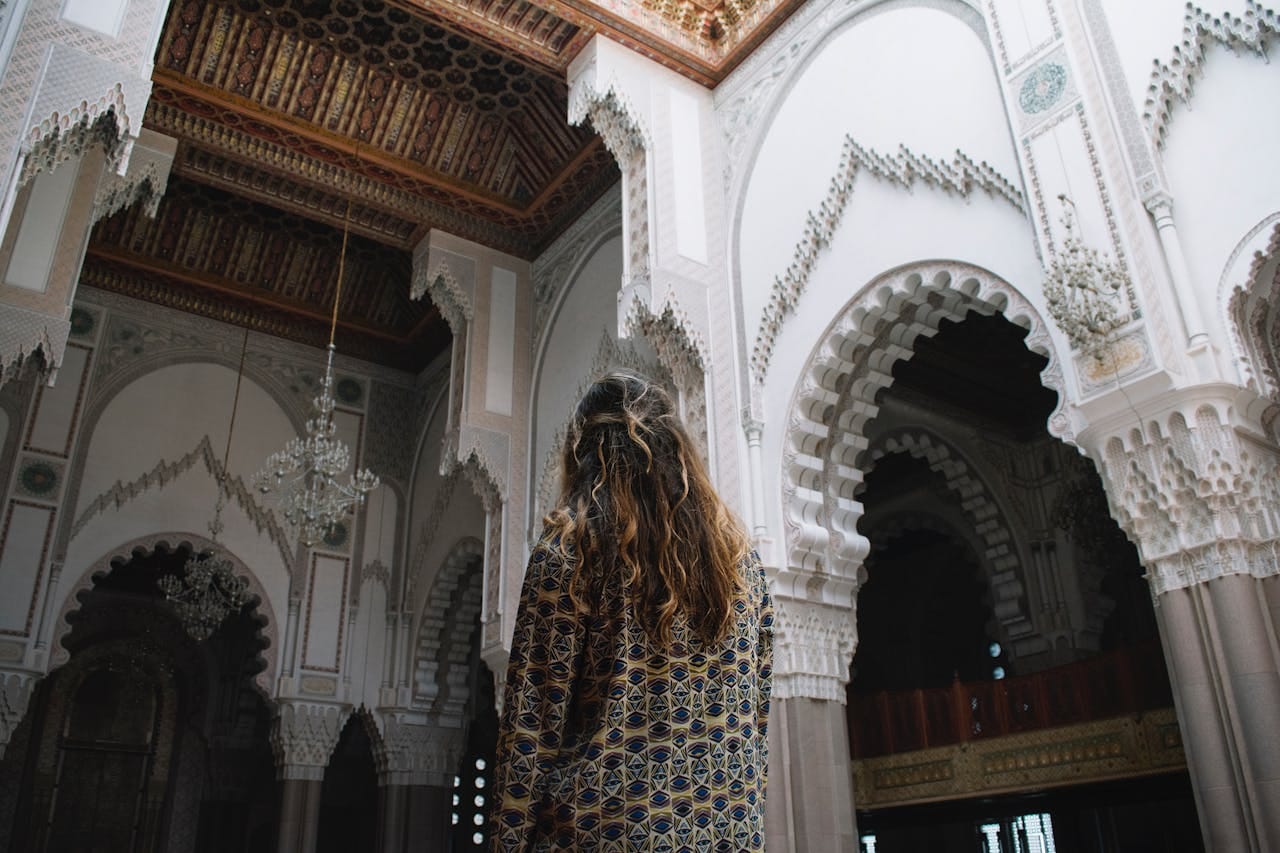
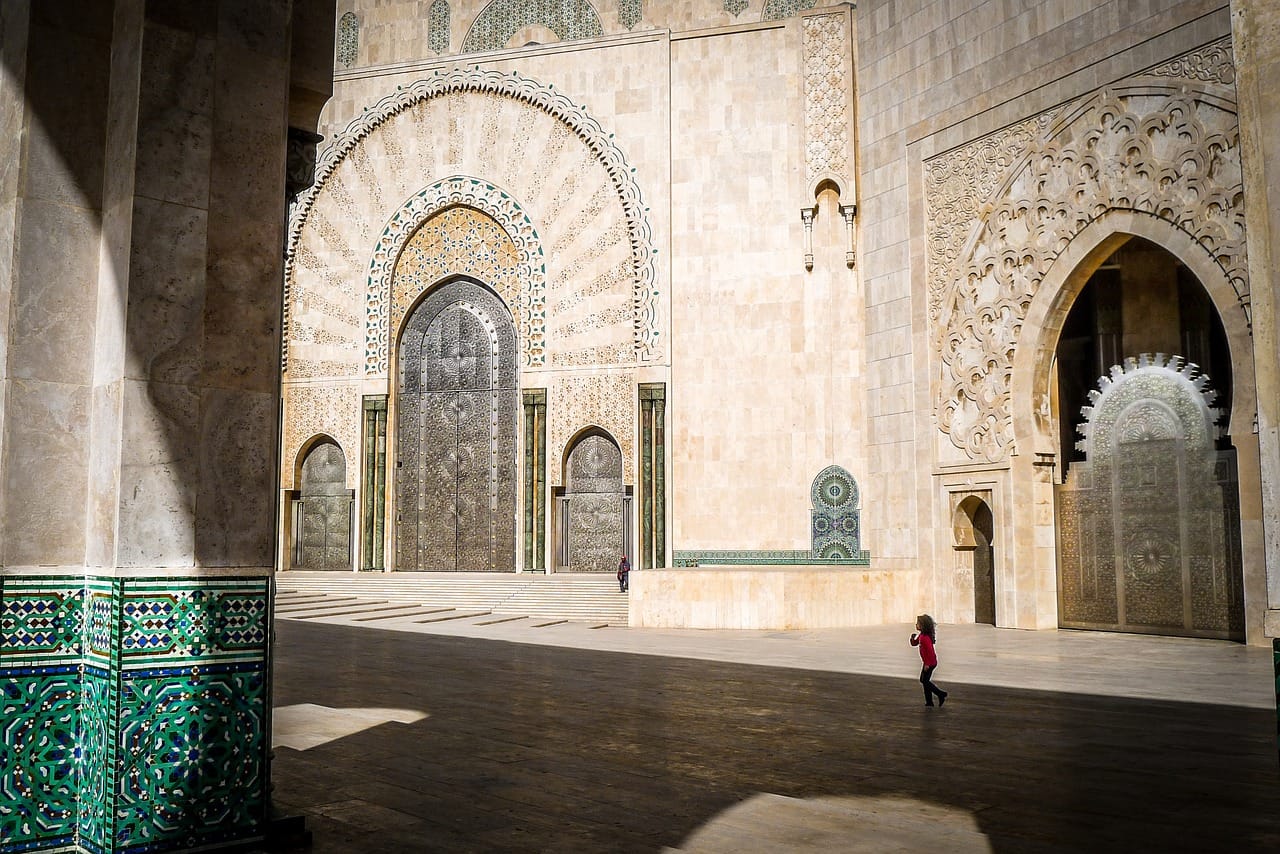
In Casablanca, visit the Hassan II Mosque (completed 1993). Architect Michel Pinseau designed the mosque using traditional Moroccan craftsmanship combined with modern engineering. Artisans carved cedarwood ceilings, shaped marble columns, and assembled intricate zellige tilework using geometric techniques rooted in Moroccan-Andalusian design.
Continue to Rabat, which the Almohads developed in the 12th century as an imperial project and which later became the administrative capital during the French Protectorate in 1912.
Overnight in Rabat.
Day 2
Rabat → Tangier (2 Nights)
Explore Rabat’s key monuments:
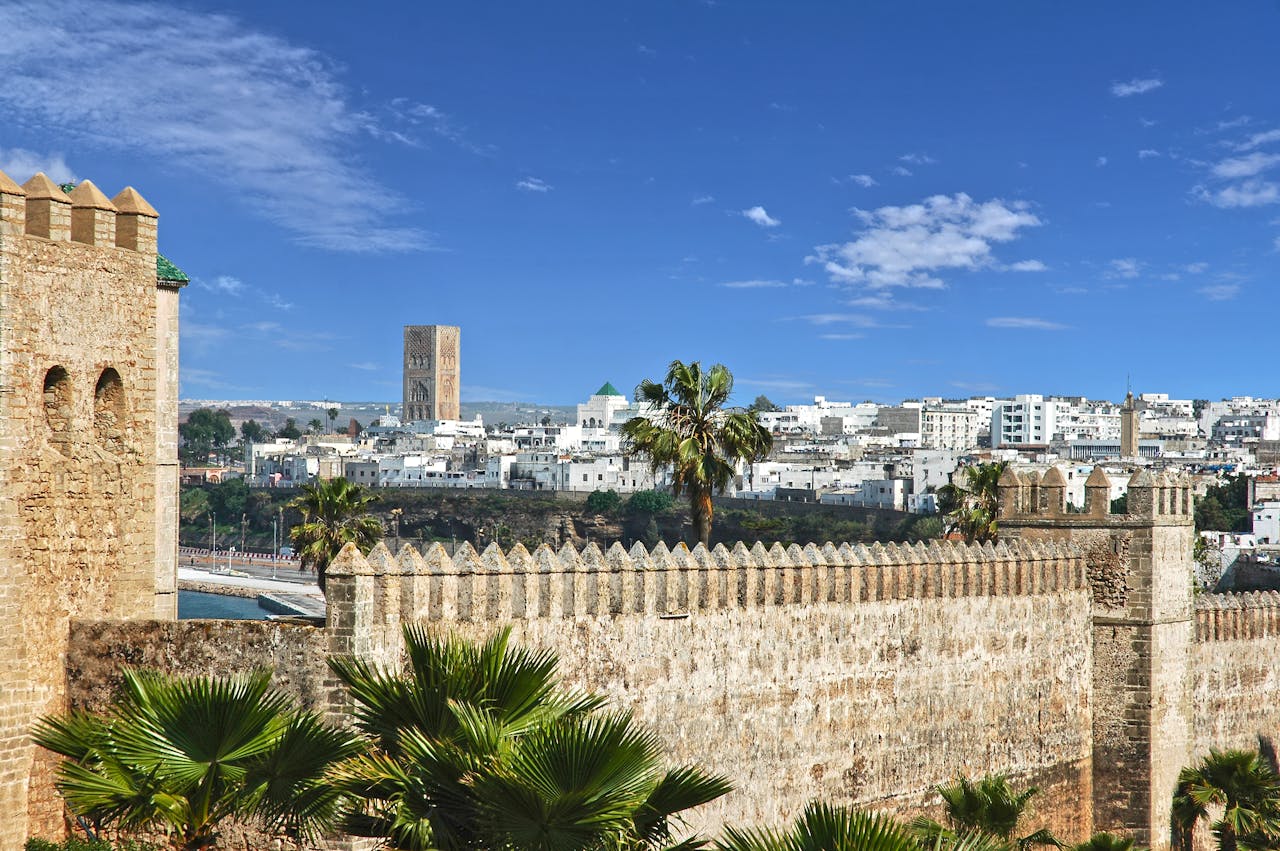
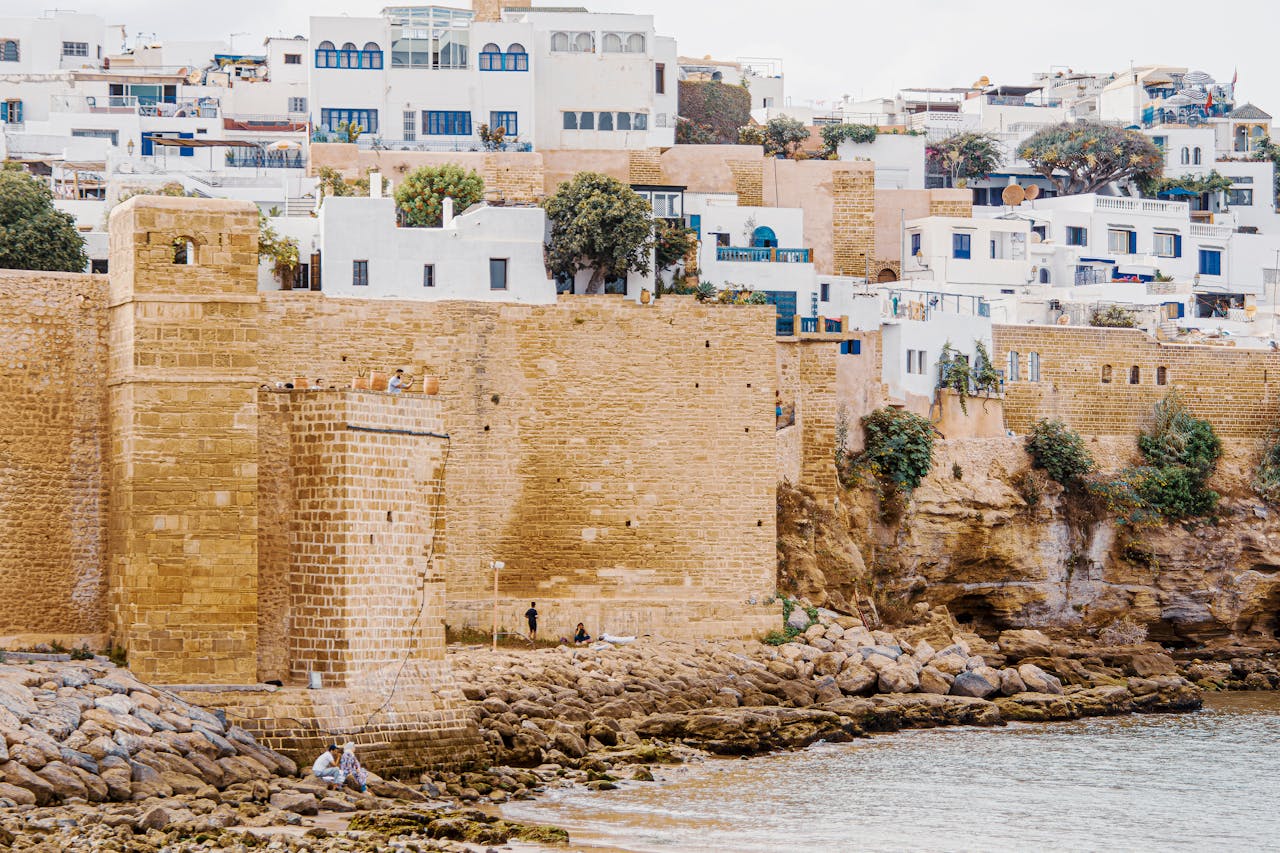
- Kasbah of the Udayas (12th century): Almohad rulers constructed this fortress using sandstone walls and defensive gates overlooking the Bou Regreg River.
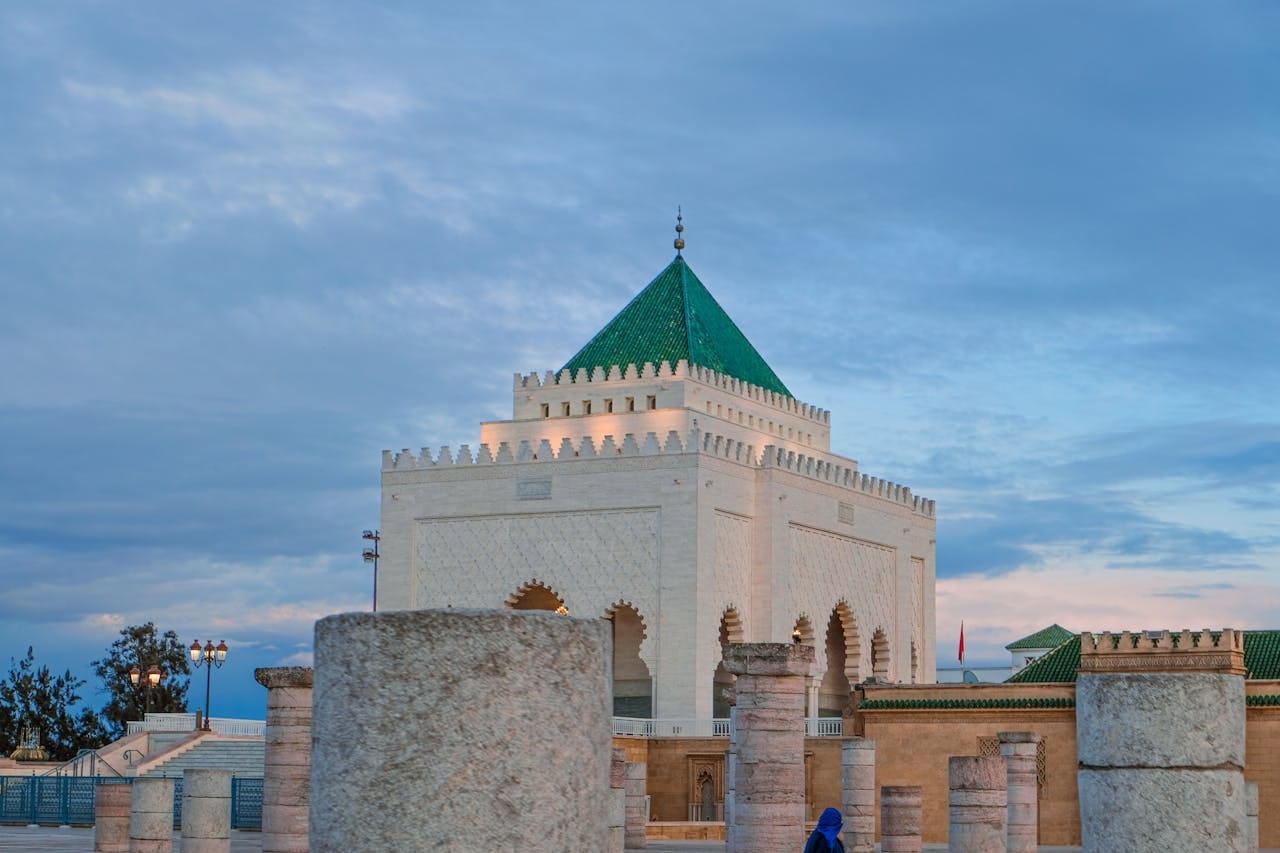
- Hassan Tower (1195): Caliph Yaqub al-Mansur began this monumental minaret as part of an ambitious mosque complex. Builders used red sandstone and carved decorative motifs directly into the structure.
- Chellah: Romans first established Sala Colonia here in the 1st century CE; the Marinids later transformed the site into a royal necropolis in the 14th century.
Drive north to Tangier.
Day 3
Tangier with Licensed Guide
Tangier occupies a strategic position at the Strait of Gibraltar. Between 1923 and 1956, international powers governed the city as a diplomatic zone.
Visit:
- American Legation Tangier (1821), which symbolizes early Moroccan-American relations.
- Kasbah Museum Tangier, a former sultan’s palace displaying Phoenician, Roman, and Islamic artifacts.
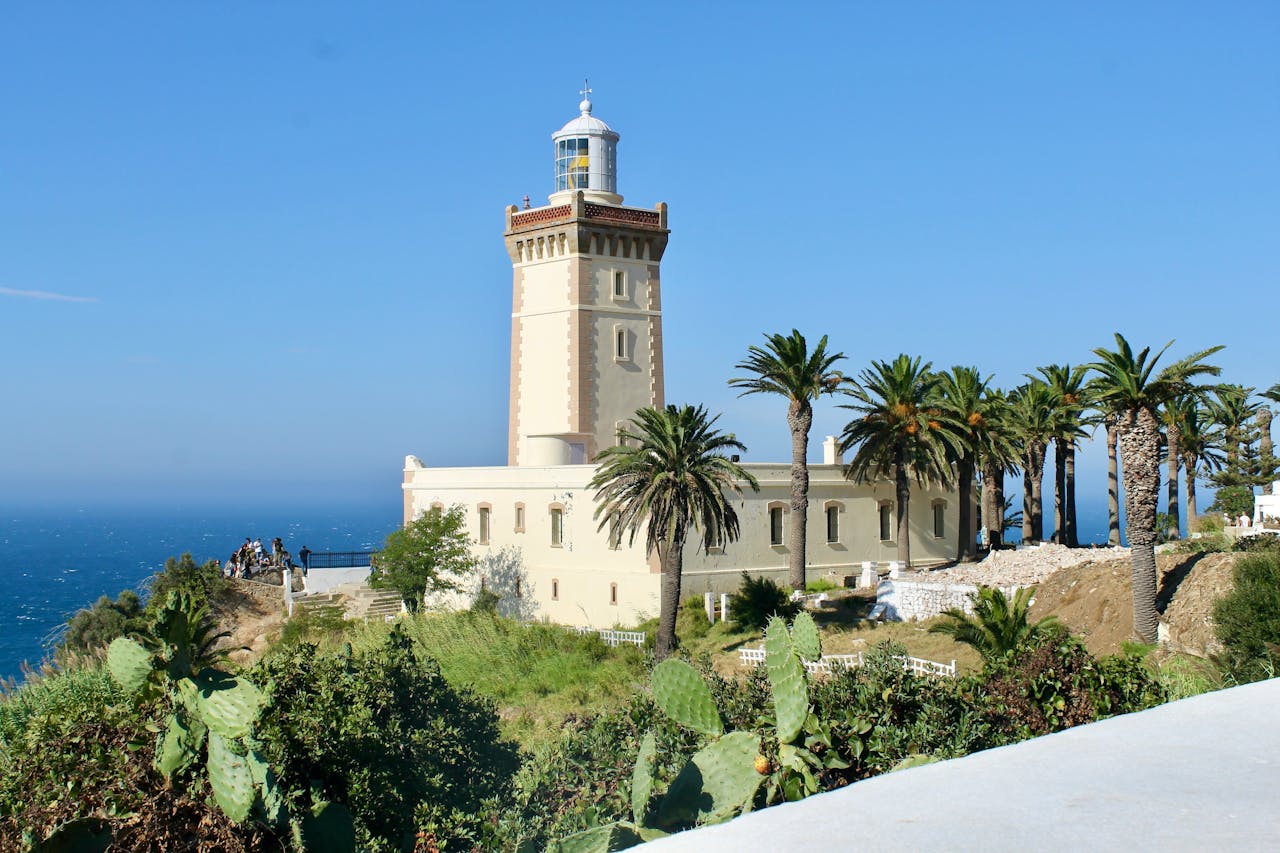
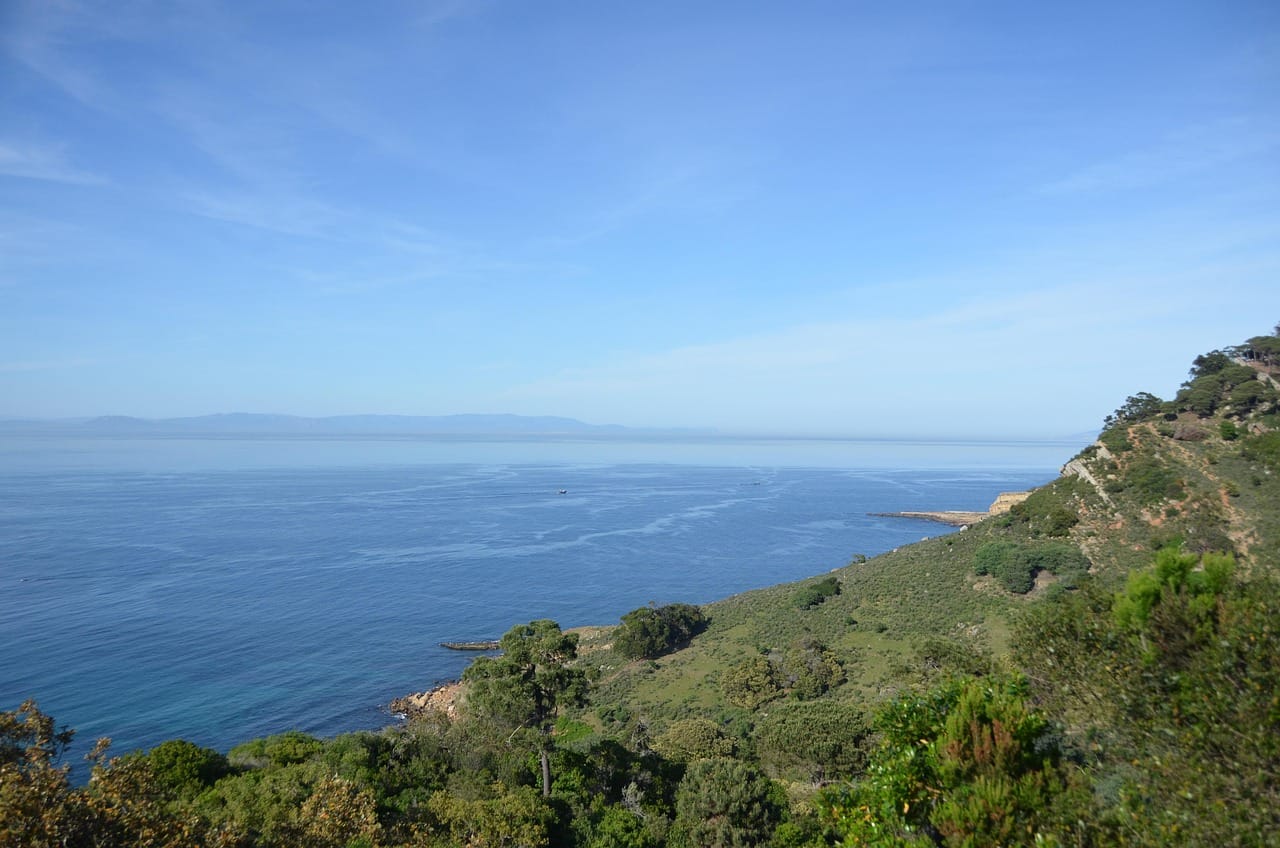
- Cap Spartel, where the Atlantic meets the Mediterranean.
Overnight in Tangier.
Day 4
Tangier → Tetouan → Chefchaouen (2 Nights)
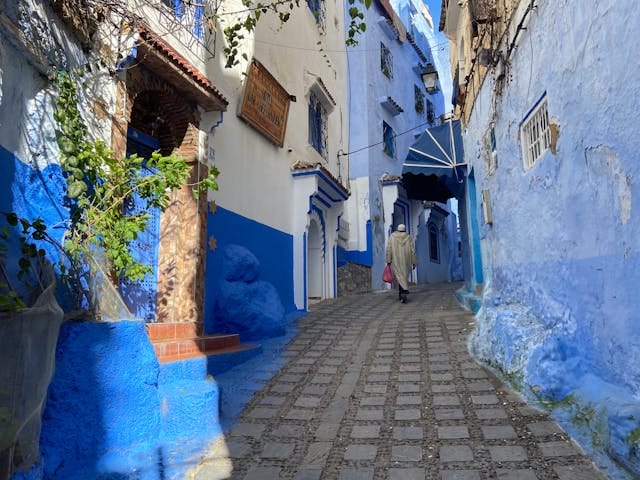
Travel to Tetouan, whose Andalusian refugees rebuilt the medina after 1492. The city reflects Hispano-Moorish urban planning, with whitewashed facades and internal courtyards structured around narrow streets.
Continue to Chefchaouen, founded in 1471 as a defensive stronghold against Portuguese expansion. Local builders adapted Andalusian courtyard traditions to the Rif Mountains, creating compact houses with interior gardens and lime-washed walls.
Overnight in Chefchaouen.
Day 5
Chefchaouen Exploration
Visit:
- The 15th-century Kasbah, built with rammed earth and stone
- The Grand Mosque, known for its rare octagonal minaret
- Ras El Maa spring, which supplies mountain water to the medina
- The Spanish Mosque hill for panoramic views of Rif architecture
Day 6
Chefchaouen → Volubilis → Meknes → Fes (2 Nights)
Day 6 –
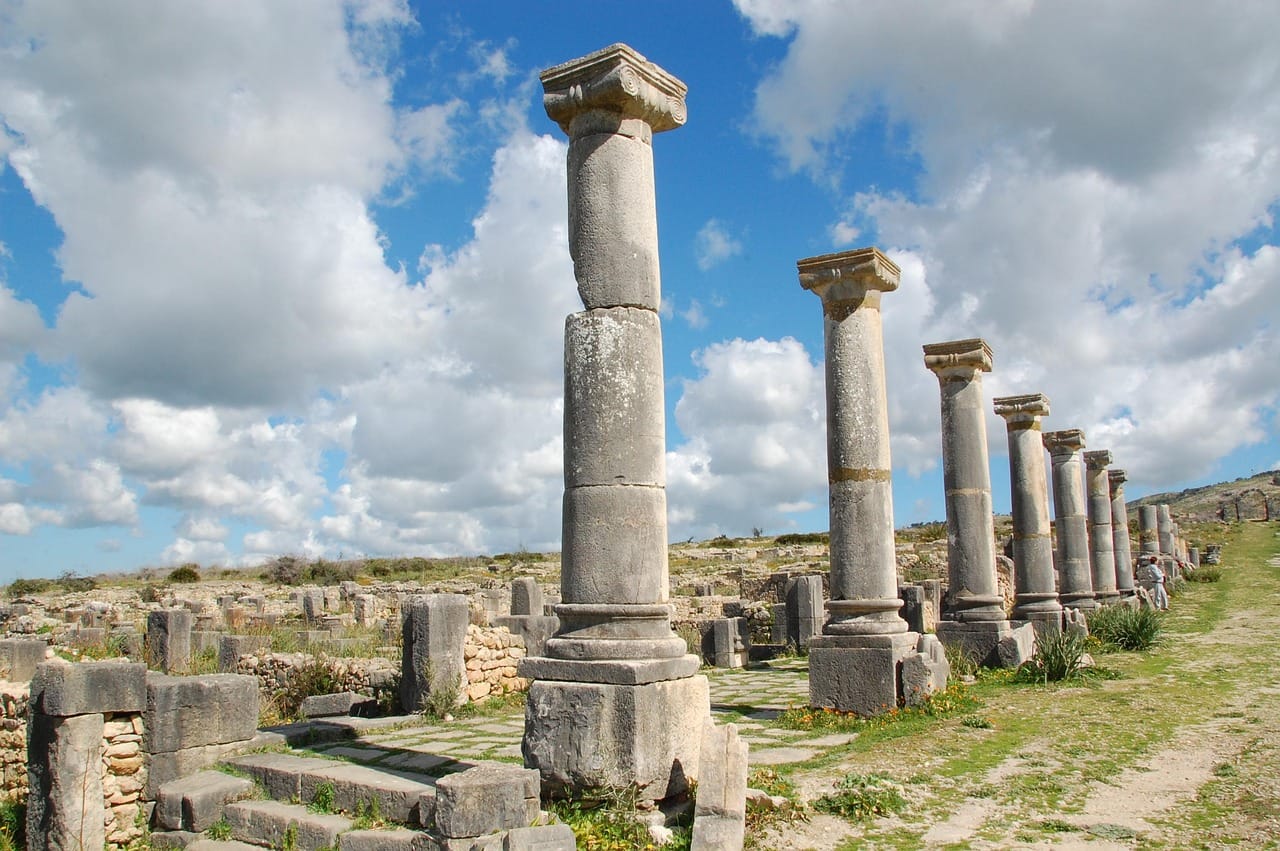
Explore Volubilis, founded in the 3rd century BCE and later integrated into the Roman Empire. Engineers constructed triumphal arches, basilicas, and mosaic floors depicting Roman mythology and daily life.
Continue to Meknes, which Sultan Moulay Ismail transformed into an imperial capital in the 17th century. He built massive ramparts, granaries, and monumental gates such as Bab Mansour using stone, brick, and decorative zellige.
Arrive in Fes.
Day 7
Fes with Licensed Guide
Idris I founded Fes in 789, and the city soon became Morocco’s religious and intellectual center.
Visit:
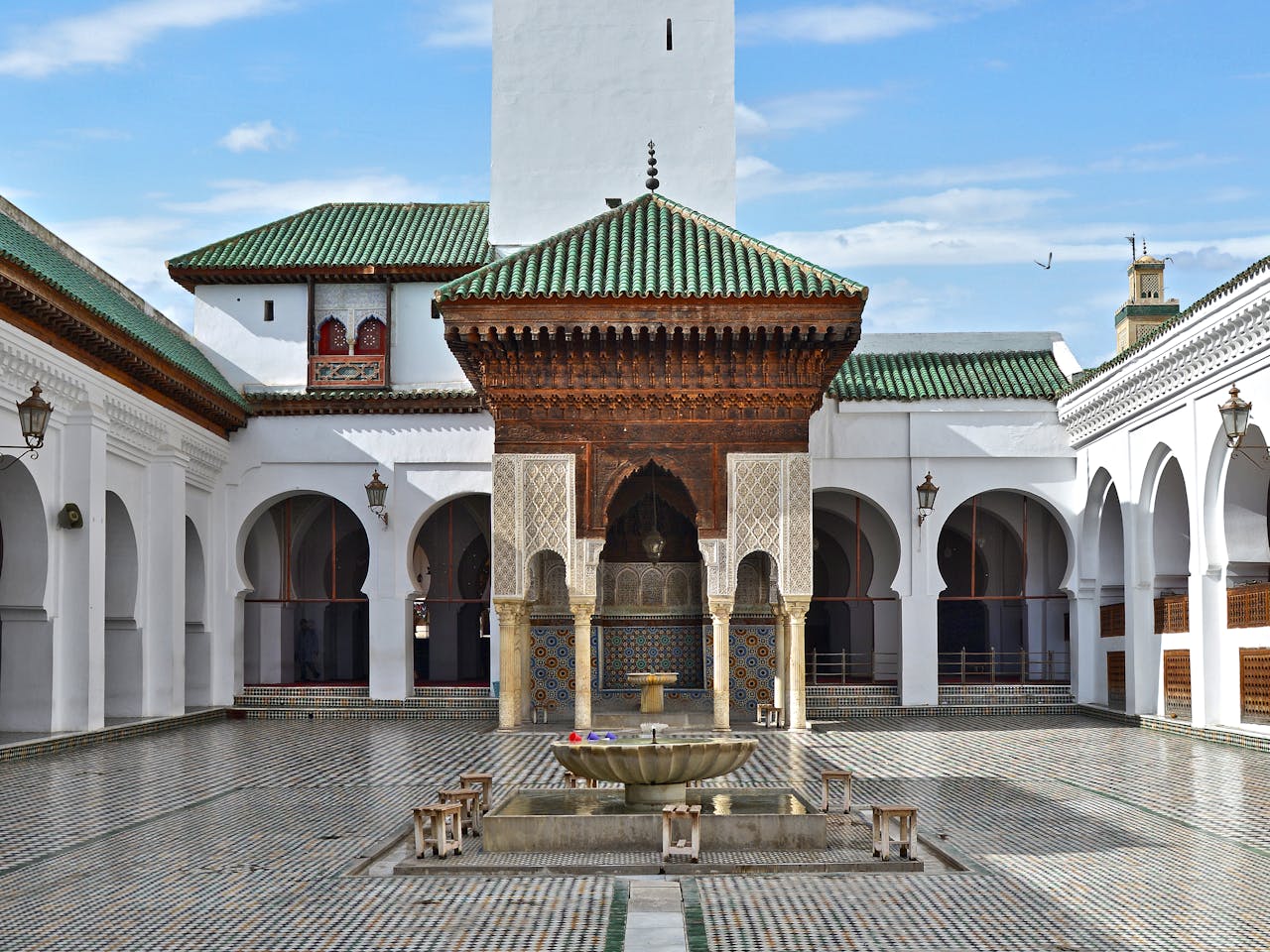
- Al Quaraouiyine University (859 CE), one of the oldest continuously operating universities.
- Bou Inania Madrasa (1351–56), showcasing Marinid carved cedarwood and stucco craftsmanship.
- Chouara Tannery, where artisans still use medieval leather-dyeing techniques.
- The Mellah, established in the 15th century.
Day 8
Fes Exploration with Driver
Visit artisan quarters, Andalusian neighborhoods, and panoramic viewpoints overlooking the medina’s dense urban fabric.
Day 9
Departure
Transfer to Casablanca or your departure city.
No details found.
No details found.
No Details Found
There are no reviews yet.