
- Overview
- Trip Outline
- Trip Includes
- Trip Excludes
- Gallery
- Reviews
- Booking
- FAQ
No details found.
Itineraries
Day1 – Arrival in Marrakech
Your Plan
Overnight: Family Riad
Founded in 1062 by Youssef Ibn Tachfin, Marrakech was created as the capital of the Almoravid dynasty to control Saharan trade routes and unify southern Morocco. Its layout reflects a city built for movement, exchange, and learning. The historic medina remains an open classroom for families discovering Moroccan life.
Koutoubia Mosque
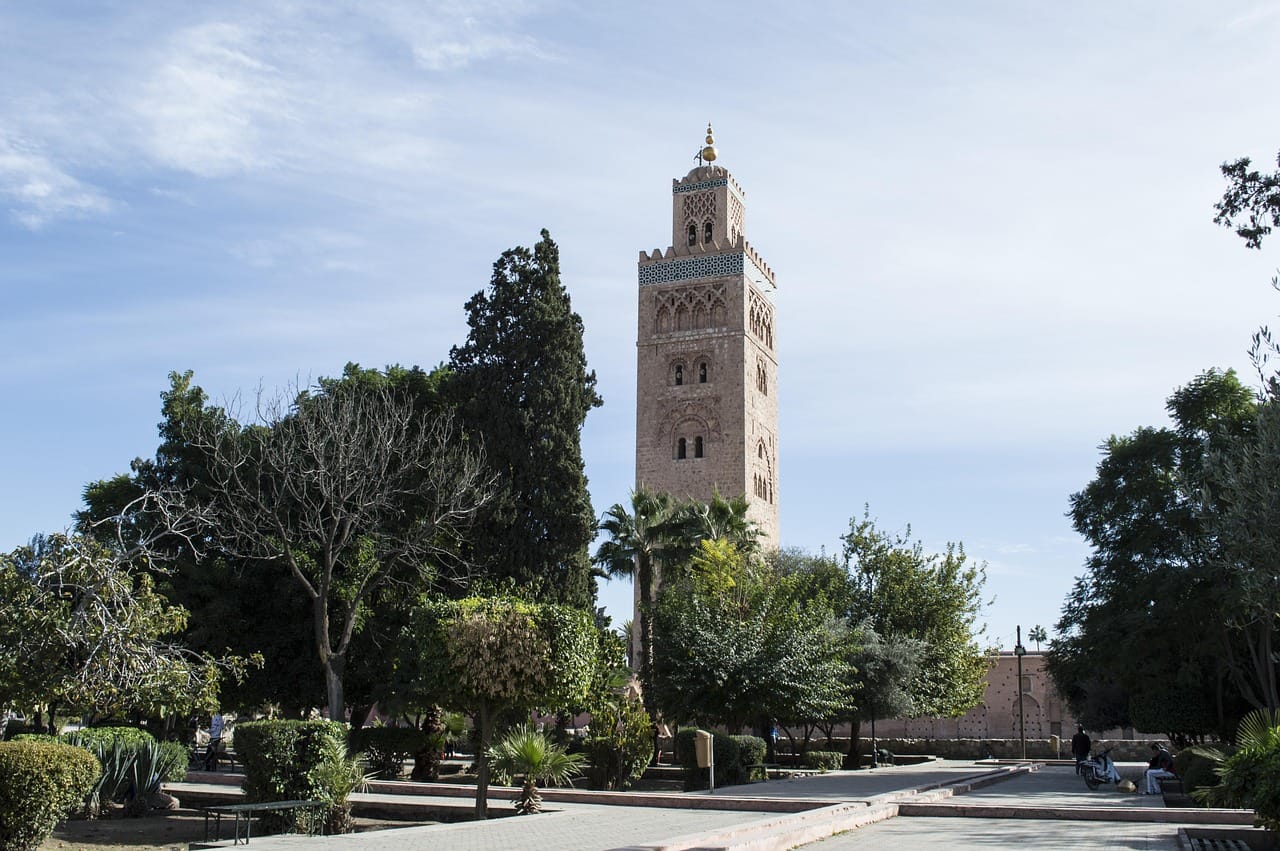
Built in the 12th century under the Almohad dynasty, the Koutoubia Mosque served as the city’s spiritual and intellectual center. Its minaret became a model for later mosques across North Africa and Andalusia. The mosque reflects the importance of faith, geometry, and public space in Moroccan cities. Families learn how architecture guided daily life and community rhythm.
Saadian Tombs
Dating back to the late 16th century, these tombs were created as the burial place of the Saadian rulers. Hidden for centuries, they reveal refined decoration and funerary traditions. The site offers a quiet space where families learn about dynasties, continuity, and respect for ancestry. It contrasts with the lively streets outside.
El Badi Palace
Constructed in 1578 by Sultan Ahmed al-Mansour, El Badi Palace was built to display imperial power after a major military victory. Once lavishly decorated, it now stands as a vast open ruin. Children enjoy the scale and openness, while adults learn how power was expressed through architecture. The palace explains Morocco’s global connections at the time.
Bahia Palace
Built in the late 19th century, Bahia Palace was designed as a residence rather than a fortress. Its layout reflects family life, privacy, and harmony. The palace teaches visitors how Moroccan homes were organized around comfort and beauty. It offers a gentle introduction to domestic architecture.
Day 2
Marrakech to Casablanca to Rabat
Overnight: Rabat
The route connects Morocco’s former and present capitals, showing the evolution from traditional rule to modern governance.
Hassan II Mosque – Casablanca
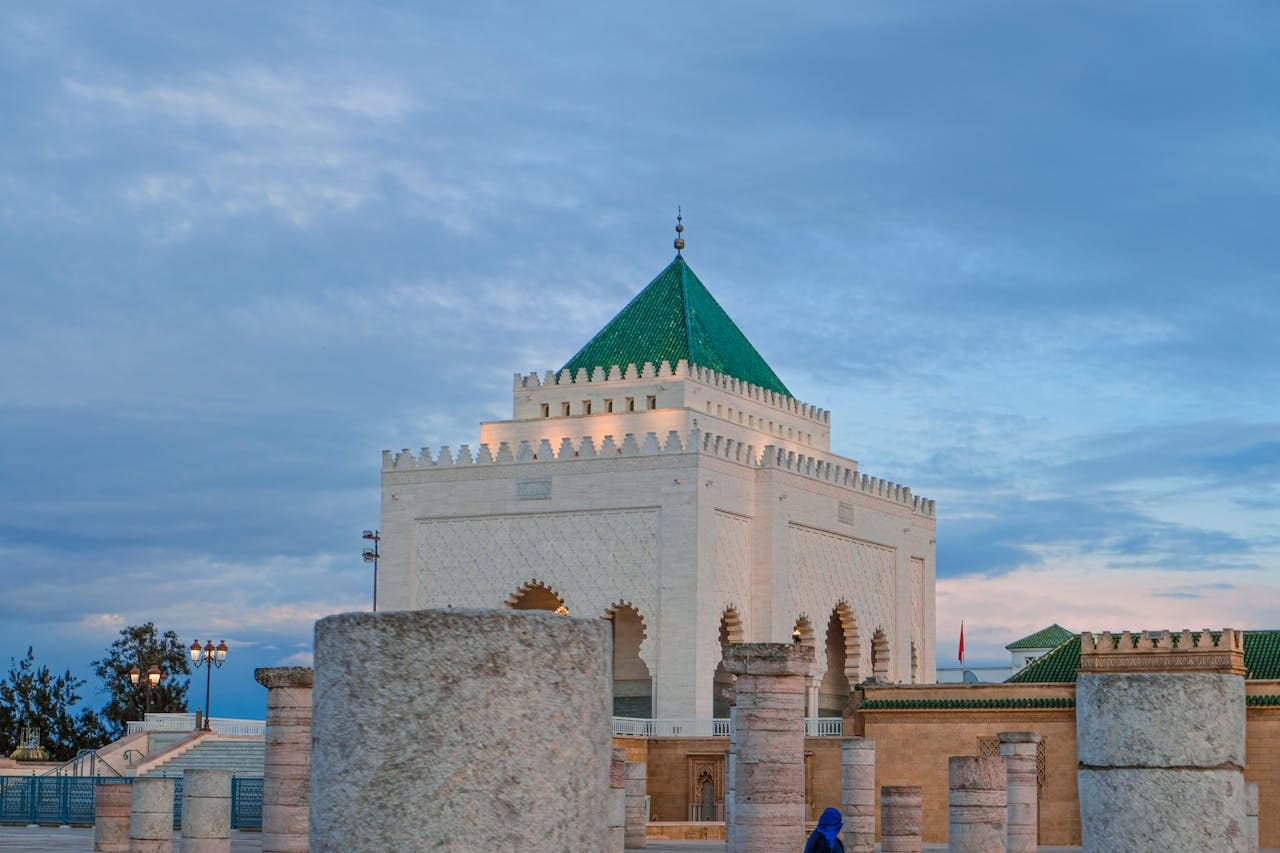
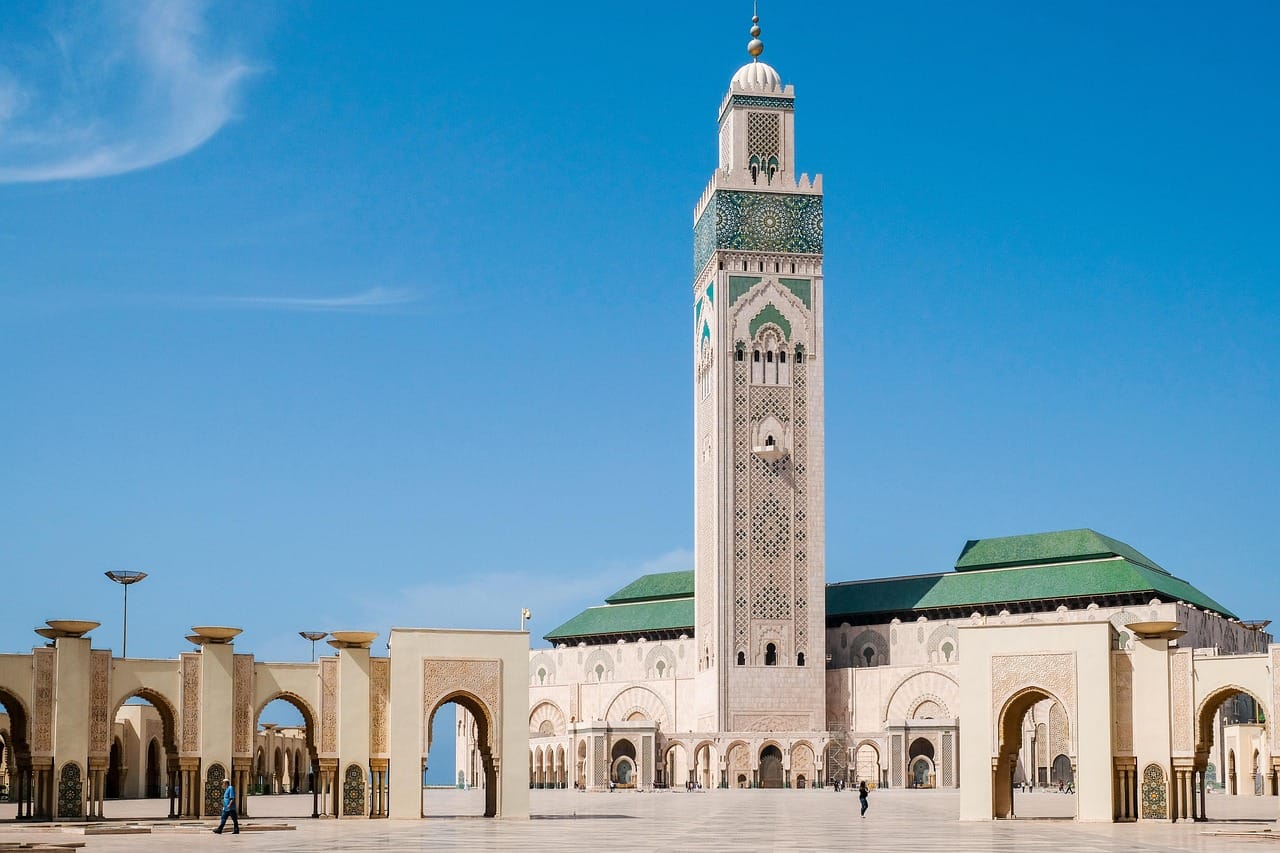
Completed in 1993, this mosque was built to affirm Morocco’s spiritual identity in a modern city. Positioned over the Atlantic Ocean, it symbolizes openness and faith. The craftsmanship reflects centuries-old techniques adapted to contemporary scale. Families gain insight into how tradition continues in modern Morocco.
Kasbah of the Oudayas – Rabat
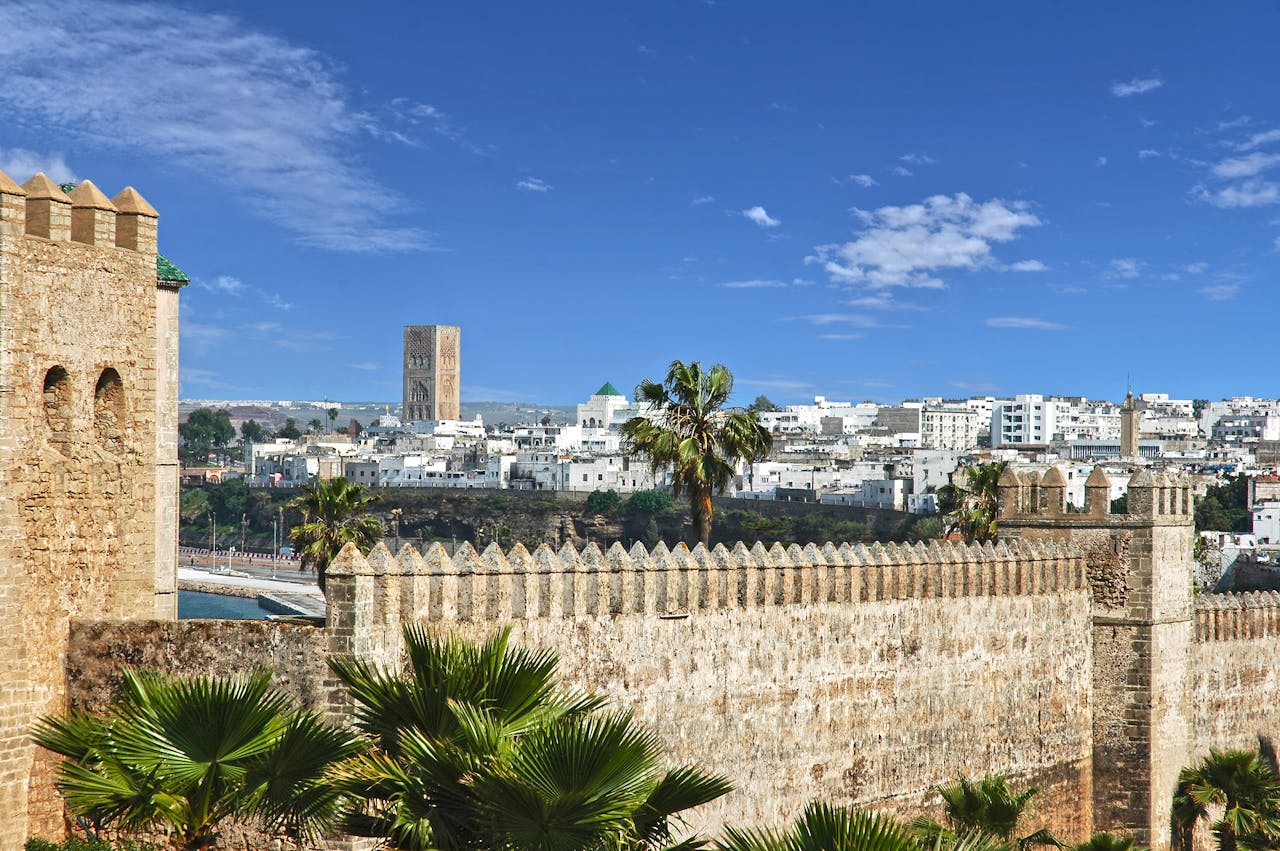
Built during the 12th century, the Kasbah served as a military fortress guarding the Atlantic coast. Today it is a peaceful residential quarter. The narrow streets and ocean views make it ideal for family exploration. It illustrates how defensive spaces evolved into living communities.
Chellah Necropolis
Originally a Roman settlement, Chellah later became a medieval Islamic burial site. It was created as a sacred space combining memory, nature, and spirituality. The ruins offer an open-air learning environment where children connect history with landscape. It shows how civilizations layer over time.
Royal Palace Area
The Royal Palace reflects Morocco’s continuous monarchy, one of the oldest in the world. While not entered, the exterior explains the country’s political stability. Families learn about governance and symbolism. It connects past dynasties to present leadership.
Day 3
Rabat to Fes
Overnight: Riad in the Medina
The journey east crosses agricultural plains that sustained Morocco’s early capitals. Arrival in Fes marks a shift toward scholarship and spirituality.
Day 4
Guided Discovery of Fes
Overnight: Fes
Founded in 789 by Idris I, Fes became Morocco’s religious and intellectual heart. Its medina was designed to support learning, trade, and worship within walking distance.
Bab Boujloud
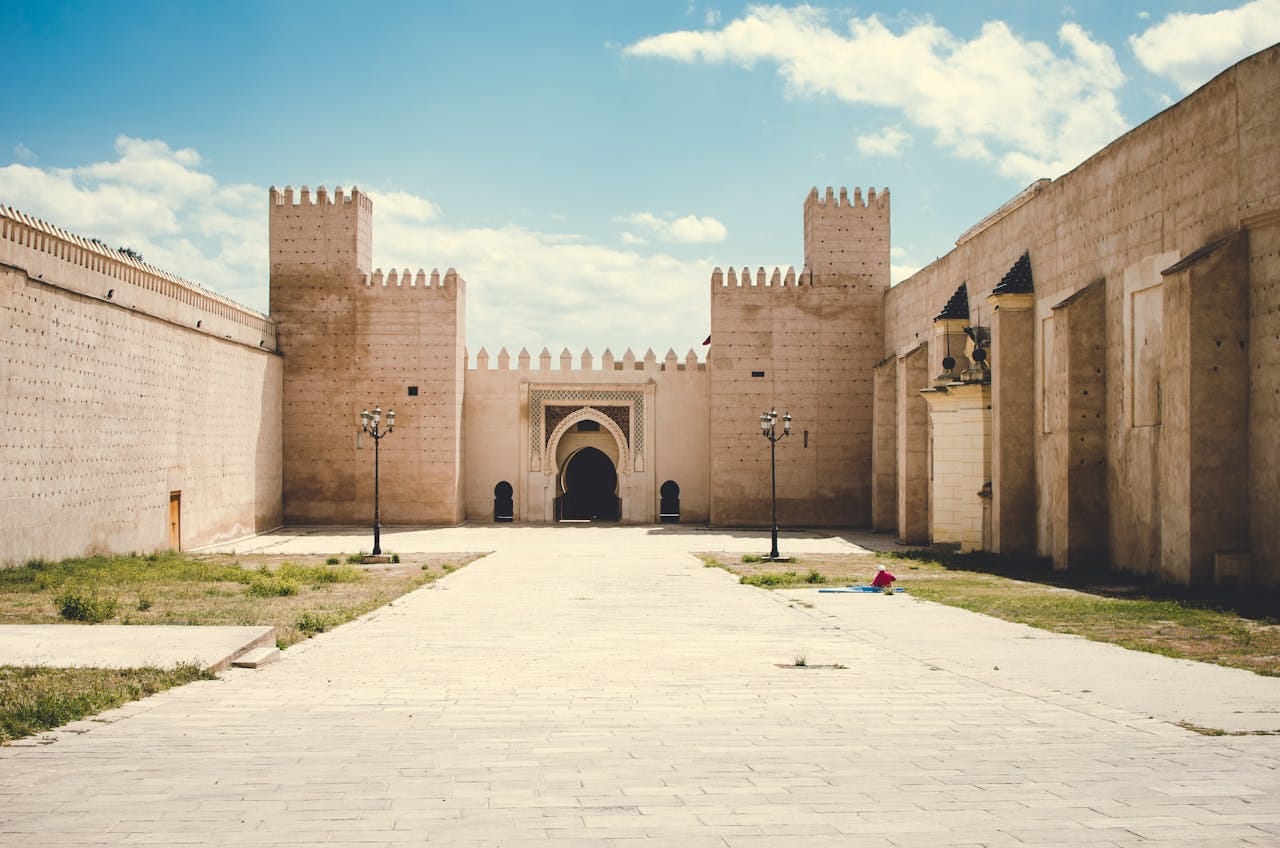
This ceremonial gate marks the entrance to the old city. Built in the early 20th century, it reflects traditional Moroccan design. It introduces families to the structure of medieval cities. The gate sets the tone for exploration.
Fes Souks
The souks were organized by craft guilds to maintain quality and order. Each street reflects a profession passed through generations. Families observe daily life unchanged for centuries. The souks explain how economy and community were connected.
Tanneries
Located near water sources, the tanneries processed leather using natural methods. This industry supported trade across North Africa and Europe. The visit explains sustainability before modern industry. It offers a vivid learning experience.
Madrasas
Madrasas were built as centers of higher learning, teaching religion, science, and law. Their architecture reflects balance and focus. Families learn about education before modern universities. These spaces show how knowledge shaped society.
Al-Qarawiyyin University
Founded in 859 by Fatima al-Fihri, it is considered one of the world’s oldest universities. Created to promote learning, it attracted scholars from across regions. The site highlights the role of women in history. It connects Morocco to global intellectual heritage.
Artisan Workshops & Panoramic View
Workshops preserve techniques in pottery and metalwork. The panoramic view reveals the dense medina layout. Together they explain how craft, geography, and community interlink.
Day 5
Fes to Merzouga via Ifrane & Middle Atlas
Overnight: Desert Camp
Ifrane
Built in the 1930s, Ifrane was designed as a mountain town with a cooler climate. Its layout reflects colonial planning adapted to Moroccan context. It offers a nature break for families. The contrast highlights Morocco’s diversity.
Middle Atlas Mountains
Historically used by pastoral communities, the Middle Atlas supported seasonal movement. Cedar forests provided resources and shelter. The landscape introduces children to rural life. It marks a transition toward desert culture.
Merzouga & Camel Ride
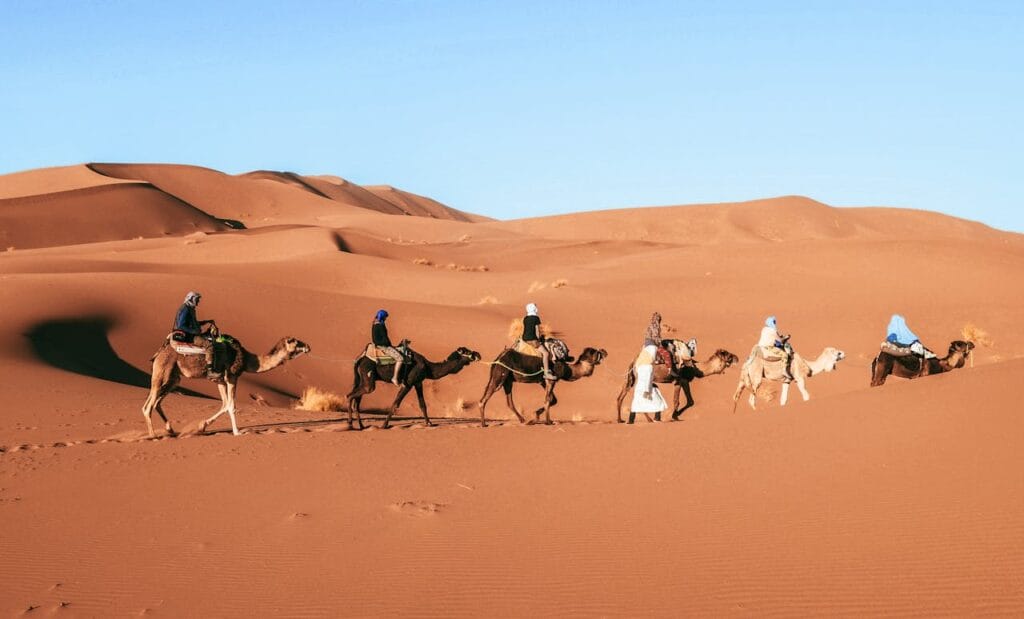
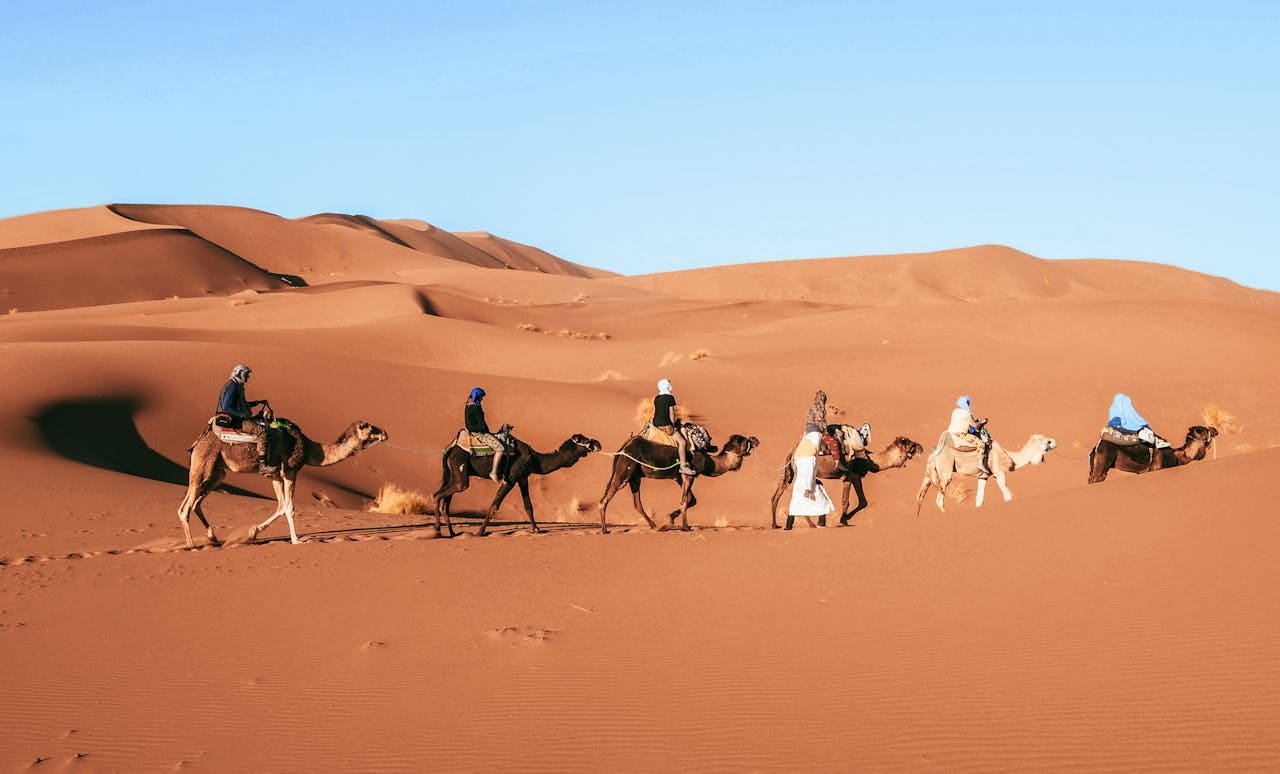
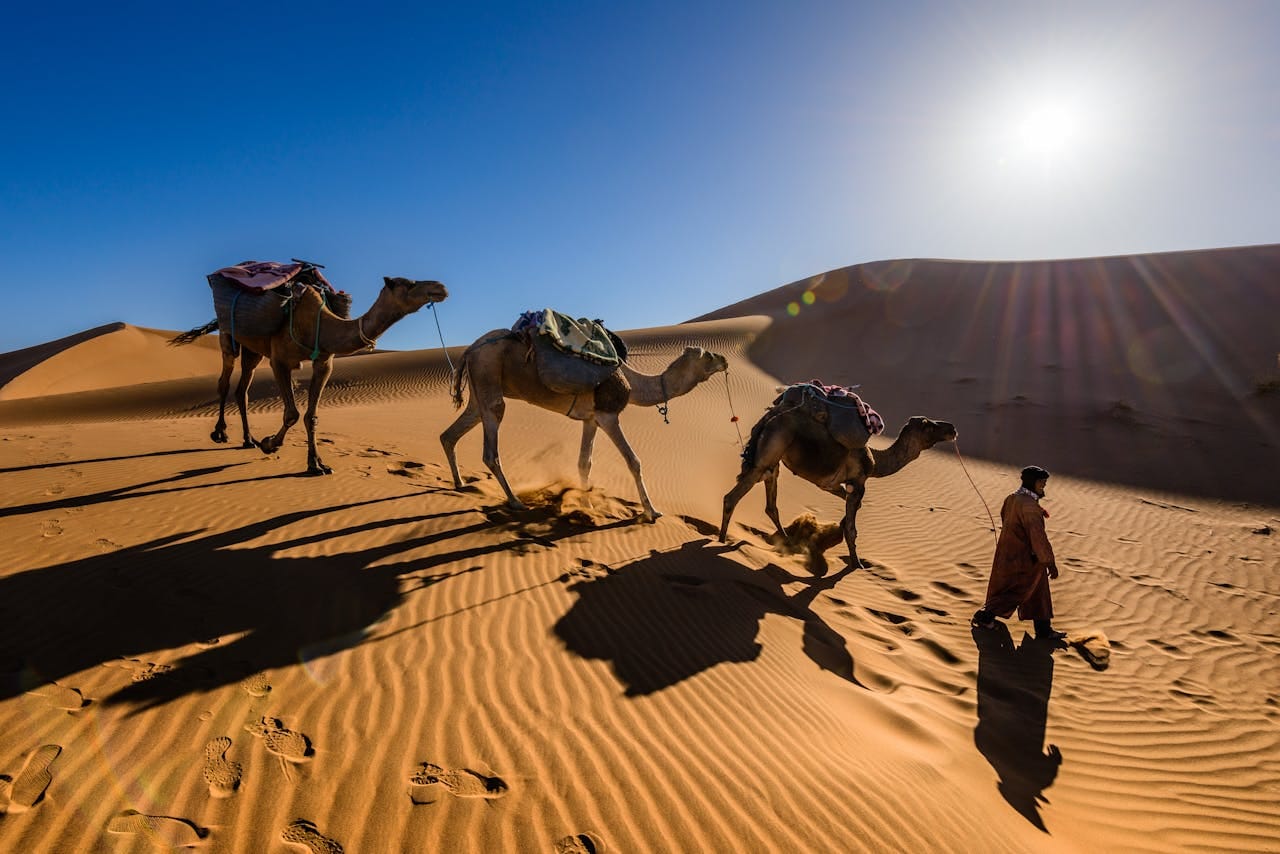
Merzouga developed near the Erg Chebbi dunes, once part of trans-Saharan trade routes. Camel caravans connected north and south. The camel ride reflects traditional desert transport. Families experience slow travel and silence.
Day 6
Merzouga Desert Discovery
Overnight: Desert Hotel
Berber Villages
Built near water sources, these villages relied on cooperation. Architecture reflects climate adaptation. Families learn about desert resilience. Daily life remains deeply connected to nature.
Khamlia Village
Founded by descendants of Sub-Saharan Africans, Khamlia preserves Gnawa music traditions. Music served as spiritual expression and storytelling. Children connect through rhythm and performance. Culture becomes interactive.
Desert Activities
Sandboarding, guided walks, meditation, and cooking classes are adapted for families. Activities encourage curiosity without risk. They deepen understanding of desert life. Learning happens through participation.
Day 7
Merzouga to Ouarzazate
Overnight: Ouarzazate
Kasbah Taourirt
Built in the 19th century, it served as a residence for regional rulers. It controlled caravan routes and trade. The structure explains power and protection. Families explore history through space.
Ait Ben Haddou
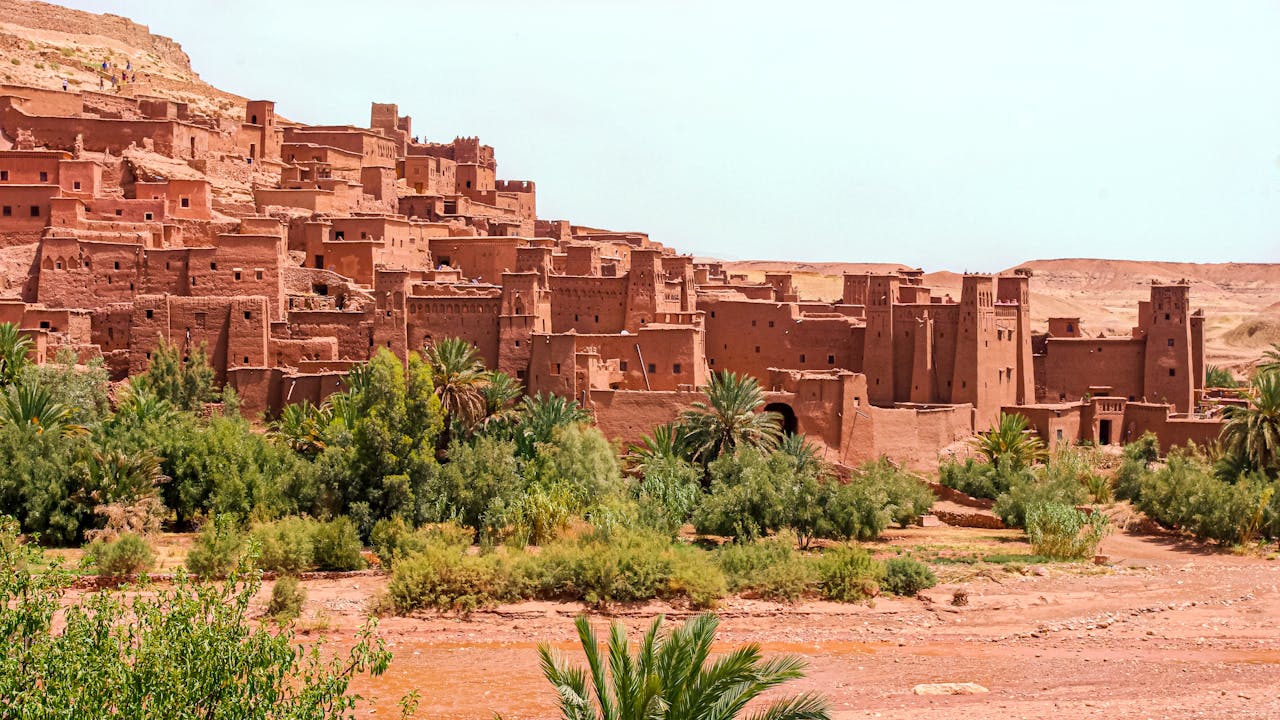
Established as a fortified ksar, it protected merchants and families. Built with earth and straw, it reflects sustainable architecture. The site explains collective defense. It is a visual history lesson.
Cinema Studios
Ouarzazate became a film center due to its light and preserved architecture. Studios show how history inspires modern storytelling. Children enjoy the creative connection. Reality meets imagination.
Day 8
Ouarzazate to Marrakech via High Atlas
Overnight: Marrakech or Departure
The High Atlas Mountains historically linked desert and city. The route reveals dramatic altitude changes. The journey ends where it began, completing a full circle. Families return with shared understanding and memories.
- Botteled Water in the car or van
- Transportation along the tour, in the city from site to site
- guided tours in Marrakech, Merzouga and fes
- accomodation
- Dinner and breakfast in the accomodation
- Driver
- site tickets
- tour guide for hikers
- meals on the road
- lunch
- coffe in the stops
- tour guide in Rabat, Meknes, Tanger,
- dinner out
No Details Found
Related Trips
Morocco Atlantic Coastal Trip: 8 Days Ocean Journey
This Morocco atlantic coastal trip explores the country’s western shoreline as a historical and economic corridor shaped by maritime exchange, climate, and cultural
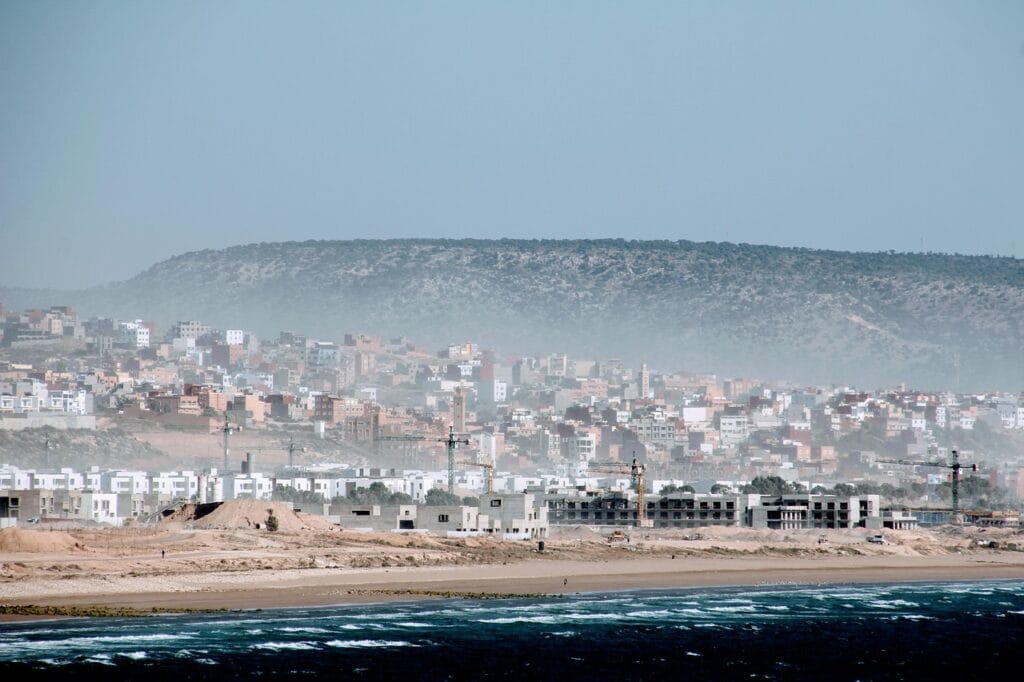
Marrakech Agadir Family Tour – Culture & Atlantic Adventure
The Marrakech Agadir Family Tour combines imperial history, outdoor adventure, Atlantic culture, and hands-on activities designed for families who want both education and
There are no reviews yet.